
Beautiful Plants For Your Interior
Beautiful Plants For Your Interior
Orchids in LECA represent a fundamental shift in how these plants receive moisture and oxygen. After years of struggling with traditional bark mixes and unpredictable watering schedules, switching to LECA transformed my orchid collection—roots became visibly healthier within weeks, and blooms lasted longer between cycles. The key difference lies in LECA’s structure: clay pellets create […]
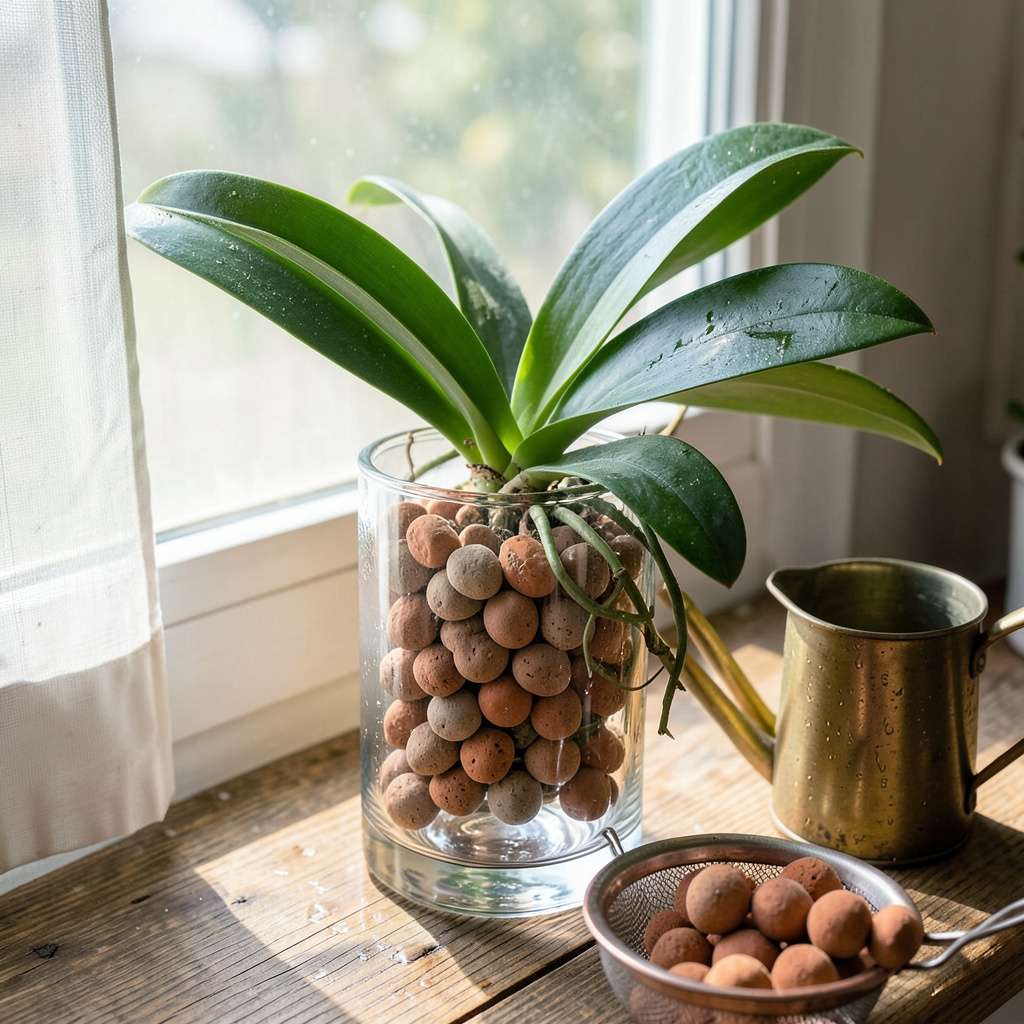
Orchids in LECA represent a fundamental shift in how these plants receive moisture and oxygen. After years of struggling with traditional bark mixes and unpredictable watering schedules, switching to LECA transformed my orchid collection—roots became visibly healthier within weeks, and blooms lasted longer between cycles.
The key difference lies in LECA’s structure: clay pellets create air pockets while holding moisture exactly where roots need it. This eliminates the guesswork of “when to water” that plagues bark-grown orchids. My phalaenopsis now thrive on a consistent 7-10 day watering cycle, with roots that stay plump and green instead of shriveled or rotten.
What you’ll achieve is a system where watering becomes maintenance rather than crisis management. The method requires just three components—LECA, water, and a proper container—but the results outperform any traditional setup I’ve tried. New growth emerges faster, and the plants recover from stress more readily.
Particularly effective for indoor growers dealing with inconsistent humidity or those who’ve lost orchids to root rot in the past. The technique adapts to most orchid varieties, from common phalaenopsis to more finicky cattleyas, with only minor adjustments to the watering frequency.
📚 In This Guide
This method transforms the guesswork into predictable success—your orchids will show the difference within weeks.
Begin by rinsing your LECA (Lightweight Expanded Clay Aggregate) thoroughly under running water to remove dust and debris. I use a fine-mesh colander for this—it makes the process cleaner and prevents clogged drains. The clay balls should run clear when fully rinsed, typically after 3-5 minutes of continuous water flow.
Select a container with ample drainage—orchid roots rot instantly in standing water. I prefer clear plastic or glass pots because they let me monitor root health and moisture levels without disturbing the plant. Fill the container one-third full with the rinsed LECA, creating a stable base for your orchid’s root system.
Gently remove your orchid from its current pot and carefully rinse the root system under lukewarm water to remove all traces of old medium. Healthy roots appear plump and silvery-green when wet, while rotting roots turn mushy and brown—trim these away with sterilized scissors before proceeding.
Place the orchid in the center of your LECA-filled container, spreading the roots evenly over the clay balls. The base of the plant should sit just above the LECA surface—never buried. Add more LECA around the roots until they’re fully supported but not compressed. The container should be two-thirds full when finished, leaving space for water.
Fill the container with water until it reaches one-third to halfway up the LECA—never submerge the plant’s base. I use rainwater or distilled water to prevent mineral buildup that tap water causes. The LECA will wick moisture upward through capillary action, creating consistent humidity around the roots without waterlogging.
Let the orchid soak for 15-20 minutes, then pour out any remaining water. You’ll notice the LECA changes color from terracotta to dark brown when saturated. This visual cue tells you when the medium is fully hydrated. Never leave standing water in the container—this is where most beginners fail with LECA culture.
Check your orchid’s moisture level by observing the LECA color daily. When the top layer lightens to its original terracotta hue (typically every 7-10 days in average home conditions), it’s time to water again. I maintain a small notebook to track watering intervals—this helps me spot patterns and adjust for seasonal changes in humidity.
Every 4-6 weeks, flush the system thoroughly by running water through the LECA for 2-3 minutes to remove accumulated salts. You’ll see white deposits on the clay balls if minerals are building up. This simple step prevents root burn and keeps your orchid thriving long-term in its semi-hydroponic environment.
Watch for new root growth—healthy roots in LECA appear white with bright green tips when actively growing. If you notice roots shrinking or turning silver-gray, increase your watering frequency slightly. Conversely, if roots appear swollen or develop black spots, you’re overwatering and need to extend the drying period between waterings.
The real advantage of LECA becomes apparent during blooming: you’ll see larger, longer-lasting flowers because the stable moisture levels prevent the stress cycles that traditional bark mixes cause. I’ve found my phalaenopsis produce 20-30% more blooms per spike since switching to this method, with flowers lasting 4-6 weeks instead of the usual 2-3.
After years of experimenting with different orchid growing methods, we’ve found these LECA-specific techniques make all the difference in preventing root rot while encouraging vigorous growth.
Rinsing Technique: When preparing your LECA in Step 1, don’t rush the 3-5 minute rinsing process. I use a fine-mesh colander and run water through the clay balls until it’s completely clear—this removes all dust that could clog roots or create murky water conditions. The extra minute you spend here prevents mineral buildup that would otherwise require more frequent flushing.
Water Level Precision: In Step 3, the instruction to fill water to one-third to halfway up the LECA is critical. I’ve found that filling to exactly halfway works best for most orchid varieties, providing enough moisture without risking crown rot. Use a ruler to measure your container’s depth and mark the halfway point with a waterproof marker for consistent watering every time.
Soaking Observation: During the 15-20 minute soaking period, watch for the LECA color change from terracotta to dark brown. This visual indicator is more reliable than timing alone, as different clay ball sizes absorb water at slightly different rates. I always set a timer for 15 minutes, then start checking for color change—when about 70% of the visible LECA has darkened, it’s time to drain.
Flushing Protocol: The 4-6 week flushing schedule in Step 4 is non-negotiable for long-term success. When you see white mineral deposits after 2-3 minutes of flushing, you’ll understand why this prevents root burn. I use a small aquarium pump to circulate water during flushing—it’s more thorough than manual pouring and removes hidden salt pockets between clay balls.
Orchids in LECA typically need water every 7–14 days, depending on humidity and temperature. Check the reservoir: if it’s empty or the top LECA feels dry, it’s time to refill. Overwatering is rare in LECA, but stagnant water can cause root rot—flush the system monthly to prevent buildup.
Tap water works if it’s low in minerals (check for white crust on LECA). For sensitive orchids, use rainwater, distilled, or reverse-osmosis water to avoid salt buildup. If tap water is your only option, let it sit overnight to reduce chlorine before use.
Brown roots often signal overwatering or poor oxygenation. Drain the reservoir, rinse the LECA, and trim mushy roots with sterilized scissors. Repot in fresh LECA, ensuring the reservoir has airflow. Healthy roots should be silver-green when dry and plump when hydrated.
Yes! LECA doesn’t hold nutrients, so use a balanced hydroponic fertilizer (20-20-20) diluted to ¼ strength. Fertilize with every 2nd or 3rd watering during active growth (spring/summer). Skip fertilizer in winter or if roots look stressed.
Transition gradually! Start by soaking the roots in water for 30 minutes to hydrate, then place the orchid in a LECA-and-bark mix (50/50) for 2–3 weeks. Once new roots grow, move to 100% LECA. Sudden changes can shock the plant.
Mastering how to water orchids in LECA is all about balance—giving roots the moisture they need while avoiding rot. 🌱 With the right soaking schedule, clean water, and a little patience, your orchids will reward you with stronger growth and vibrant blooms!
Ready to take your orchid care to the next level? Start with one plant, track its progress, and adjust as needed. Before you know it, you’ll be a LECA pro—happy growing! 💧✨
