
Beautiful Plants For Your Interior
Beautiful Plants For Your Interior
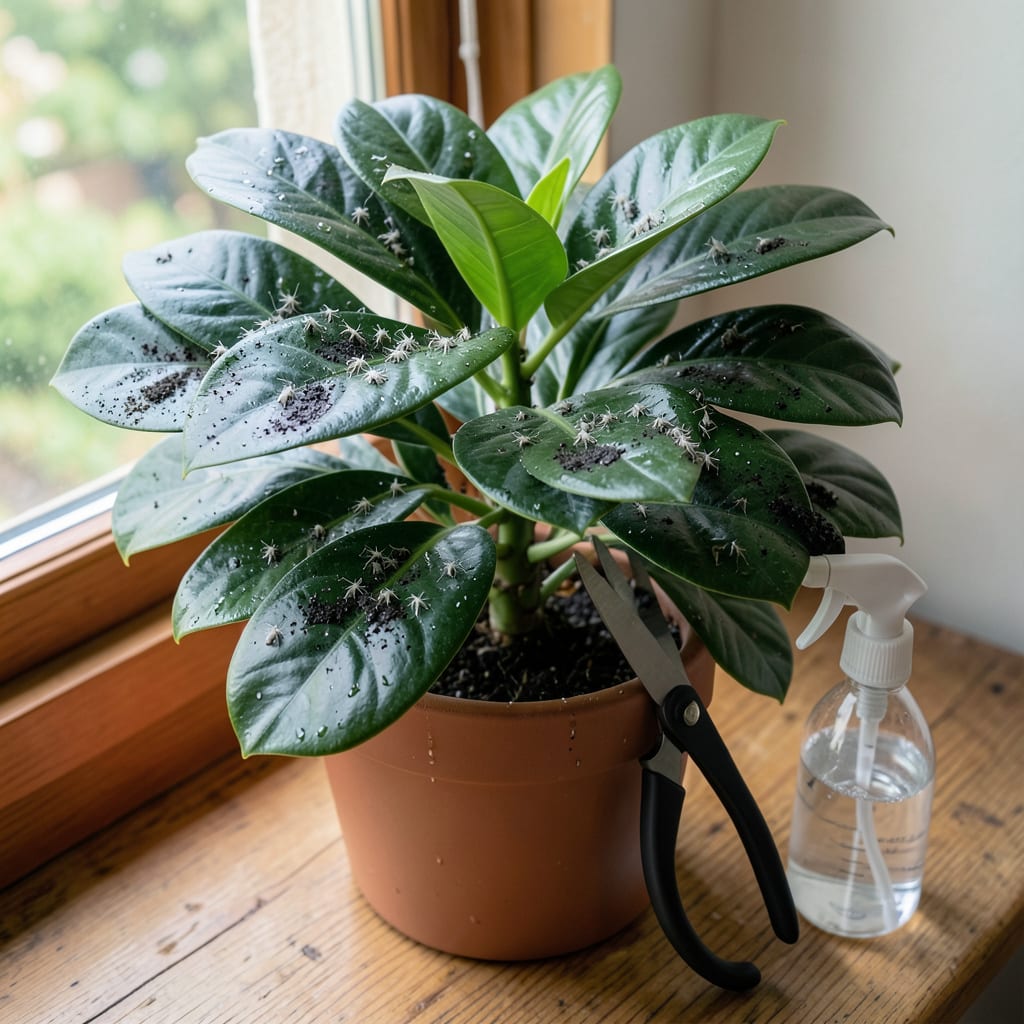
White flies swarming your plants? I’ve been there—sticky leaves, wilting growth, and that cloud of bugs when you brush past. These pests multiply fast but they’re not invincible.
The solution starts with daily inspections under leaves where they hide. A strong spray of water knocks them off immediately, and neem oil or insecticidal soap finishes the job without chemicals. Your plants will recover faster than you think.
📚 In This Guide
Here’s the method I use to tackle white fly problems naturally and effectively.
Check the undersides of leaves, especially on the top 1/3 of the plant, where white flies love to cluster. You’ll notice tiny white insects that scatter when disturbed, along with sticky honeydew residue or black sooty mold on the foliage. Catching them early prevents exponential growth.
I inspect plants weekly during warm months, as white flies thrive in temperatures above 70°F. A small hand lens helps spot eggs, which look like tiny white dots. The sooner you act, the easier the treatment.
Prune and destroy any leaves covered in white flies, eggs, or honeydew. Use clean, sharp scissors to avoid tearing the plant. Seal the removed foliage in a plastic bag and dispose of it in the trash—do not compost, as this can spread the infestation.
This reduces the population quickly and prevents further breeding. I focus on the oldest leaves first, as they’re often the most affected. After pruning, wash your hands and tools with soap to avoid transferring pests to other plants.
Take the plant outside or to a sink and spray it thoroughly with a strong jet of water, focusing on the undersides of leaves. This knocks off adult white flies and disrupts their life cycle. Repeat this every 2-3 days until you no longer see adults.
I use lukewarm water to avoid shocking the plant. For best results, do this in the morning so foliage dries quickly, reducing the risk of fungal issues. This method is simple but surprisingly effective for light to moderate infestations.
Mix 1 tablespoon of insecticidal soap per quart of water and spray it evenly over the plant, ensuring full coverage of leaves, stems, and the undersides. Reapply every 4-7 days until the infestation is gone. This suffocates the insects without harming the plant.
For neem oil, mix 1 teaspoon of oil and ½ teaspoon of mild liquid soap per quart of water. Spray in the late afternoon or early evening to avoid burning the leaves in direct sunlight. Both treatments work best when applied consistently.
I alternate between soap and neem oil to prevent resistance. Always test a small area of the plant first to check for sensitivity.
Release natural predators like ladybugs, lacewings, or parasitic wasps into your garden. These insects feed on white fly eggs and larvae, providing ongoing protection. For indoor plants, a small population of ladybugs can work wonders.
I release beneficial insects in the evening when temperatures are cooler, as this gives them time to settle. Avoid using chemical pesticides, as they can harm these helpful allies. This step ensures lasting relief and a balanced ecosystem.
Small details make a big difference when treating white fly naturally.
Early Detection Tip: Focus on the top 1/3 of the plant as mentioned in Step 1, as this is where white flies cluster. The sticky honeydew residue and black sooty mold are telltale signs that often appear before you spot the insects themselves. I check weekly during warm weather when temperatures stay above 70°F.
Pruning Strategy: In Step 2, don’t just remove the most infested leaves—prioritize the oldest ones first since they’re typically the most affected. Always seal the removed foliage in a plastic bag before disposal to prevent spreading the infestation to other plants or your compost pile.
Spray Technique: For Step 3, the timing of your water spray matters as much as the strength. Morning applications allow foliage to dry quickly, which reduces the risk of fungal issues. Lukewarm water works best to avoid shocking the plant while still dislodging adults effectively.
Treatment Consistency: When applying insecticidal soap or neem oil in Step 4, stick to the 4-7 day reapplication schedule. Alternating between the two treatments, as I do, helps prevent resistance from developing. Always test a small area first to check for plant sensitivity, especially with neem oil.
Use neem oil, insecticidal soap, or a DIY garlic/chili spray. Apply in the early morning or late evening for best results. Repeat every 3-5 days until the infestation clears.
Treat at dawn or dusk when whiteflies are less active. Avoid midday heat to prevent harming plants. Consistency is key—reapply treatments weekly for severe cases.
Yes! Mix 1 part white vinegar with 3 parts water and spray directly on leaves. Test on a small area first to avoid plant damage. Works best for mild infestations.
Whiteflies thrive in warm, humid conditions and lay eggs on leaf undersides. Remove affected leaves, improve airflow, and use sticky traps to break their life cycle.
Absolutely! Ladybugs and lacewings are natural predators. Release them in the evening near infested plants. Pair with other methods for faster, long-term control.
