
Beautiful Plants For Your Interior
Beautiful Plants For Your Interior
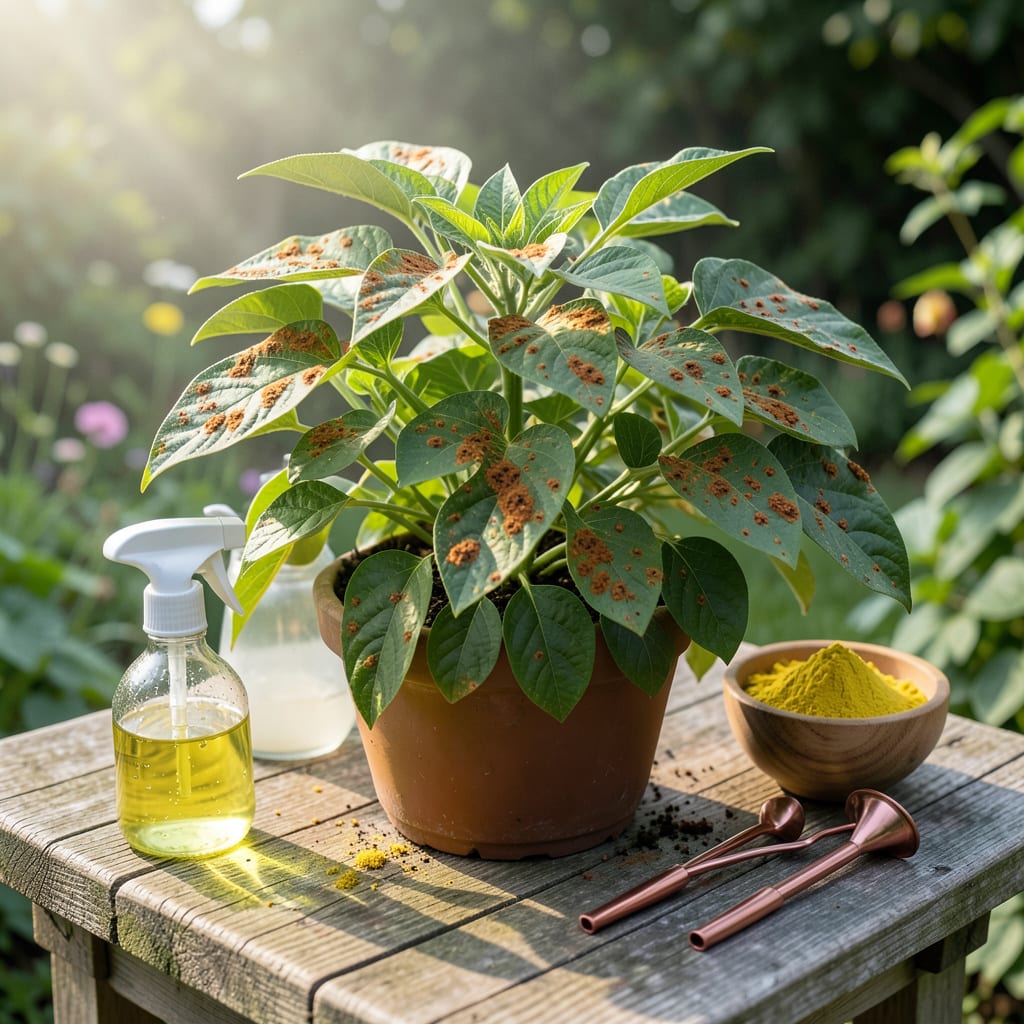
Orange spots on your leaves aren’t just ugly—they’re stealing your plant’s strength. I’ve lost entire rose bushes to rust fungus, and it spreads faster than you’d think.
This sneaky fungus thrives in damp conditions, but the fix isn’t complicated. Copper spray stops it in its tracks, while cultural controls like better airflow and cleanup prevent it from coming back.
You’ll see improvement within 7-10 days of treatment, with new growth emerging clean and healthy. The key is catching it early before it weakens the whole plant.
Works for roses, hollyhocks, beans, and dozens of other susceptible plants. Here’s how to fight back effectively.
Rust fungus thrives under specific environmental conditions, often exploiting plant vulnerabilities. Below are the primary causes behind its development.
Prolonged leaf wetness is a major trigger for rust fungus. The pathogen Puccinia spp. requires moisture to germinate and infect plant tissues. Frequent rain, overhead irrigation, or high humidity (above 75%) create ideal conditions for spores to settle and multiply. Poor air circulation exacerbates the problem by slowing evaporation.
Rust fungi favor temperatures between 60°F and 75°F (15°C–24°C). In this range, spores germinate rapidly, and infection spreads. Cooler nights with dew formation can also promote spore survival, especially in densely planted gardens or greenhouses.
Some plants are genetically predisposed to rust infections. Varieties like roses, beans, and hollyhocks are common targets. Weak or stressed plants—due to poor nutrition, drought, or root damage—are even more vulnerable, as their natural defenses are compromised.
Rust spores overwinter in plant debris, soil, or infected tools. Failing to remove fallen leaves, prune diseased stems, or disinfect gardening equipment allows the fungus to persist and reinfect plants in the next growing season.
Rust fungus can be stubborn, but these targeted solutions will help you reclaim your plants’ health. Address each cause with the right fix and follow prevention tips to keep rust at bay.
Prune overcrowded foliage to allow air to flow freely between plants. Space them properly during planting, and avoid overhead watering, which can trap moisture. Prevention tip: Thin out dense growth regularly and water at the base of plants.
Water early in the day so leaves dry quickly. Use drip irrigation or soaker hoses instead of sprinklers. If rust persists, consider a copper fungicide spray to halt spores. Prevention tip: Mulch to prevent soil splashing onto leaves, which spreads spores.
Remove and destroy infected plant debris—do not compost it. Sterilize pruning tools with rubbing alcohol between cuts. Rotate crops yearly to break the fungus’s lifecycle. Prevention tip: Clean garden tools and pots after each use to avoid cross-contamination.
Replace highly vulnerable plants with rust-resistant varieties. For example, opt for rust-resistant roses or beans if your garden struggles with recurring infections. Prevention tip: Research disease-resistant cultivars before planting.
💡 Pro Tip: Apply neem oil or baking soda spray (1 tsp baking soda + 1 quart water + a drop of soap) weekly as a gentle preventative for mild cases.
Under ideal damp conditions, rust spores can infect plants within 24-48 hours. Left untreated, it can weaken an entire plant in 1-2 weeks and spread to neighbors.
Yes, if you act fast. Prune infected leaves, apply copper fungicide, and isolate the plant. Severe cases may need removal to protect others.
Spores overwinter in debris. Remove all infected plant material and sanitize tools. Rotate crops to break the cycle.
For mild cases, neem oil or baking soda spray work well. Severe outbreaks need stronger fungicides. Always reapply after rain.
