
Beautiful Plants For Your Interior
Beautiful Plants For Your Interior
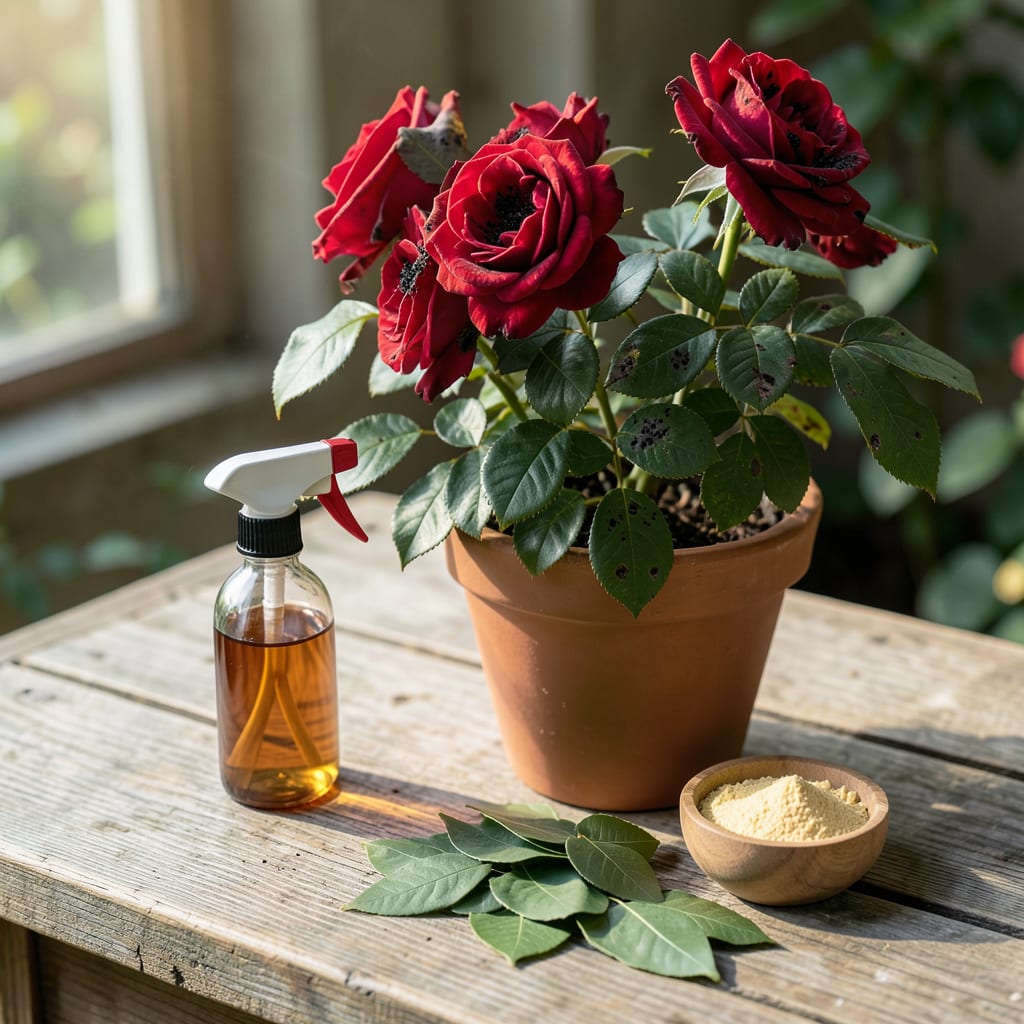
Spotted black spots on your rose leaves? I’ve been there—watching healthy bushes turn sickly overnight. This common issue doesn’t have to mean the end of your blooms.
Most fungal problems start with poor air circulation or wet foliage. The good news: organic fixes like neem oil, baking soda sprays, and proper pruning can turn things around fast.
With consistent care, you’ll see new growth in 2-3 weeks. Your roses will bounce back stronger, with vibrant green leaves and more flowers than before.
Works for all rose varieties, from climbers to shrubs. Let’s get those bushes thriving again.
Rose bush fungus thrives when conditions favor its growth. Understanding the root causes helps you prevent and treat it effectively. Below are the most common triggers.
Fungal spores require moisture to germinate and spread. Overwatering, poor drainage, or frequent rain creates a damp environment where fungi like black spot (Diplocarpon rosae) and powdery mildew (Podosphera pannosa) flourish. Waterlogged soil also stresses the plant, weakening its natural defenses.
Dense foliage or crowded plantings trap humidity around leaves, promoting fungal growth. Roses planted too closely together or in shaded, still-air areas are especially vulnerable. Prune regularly to improve airflow and reduce infection risk.
Fungi thrive in warm, humid climates (60–75°F) but can also develop in cooler, wet conditions. Sudden temperature swings stress roses, making them more susceptible. For example, rust fungus (Phragmidium mucronatum) spreads rapidly in mild, damp springs.
Fungal spores linger in infected soil, debris, or unsterilized pruning tools. Reusing contaminated tools or failing to remove fallen leaves spreads pathogens to healthy plants. Always disinfect tools with rubbing alcohol and clear garden debris.
Stressed roses—whether from nutrient deficiencies, drought, or pest damage—lack the vigor to resist fungal attacks. Over-fertilizing (especially with nitrogen) can also promote tender, fungus-prone growth. Maintain balanced soil health to bolster natural resistance.
Tackling rose bush fungus starts with identifying the issue and applying targeted solutions. Here’s how to address the most common fungal problems and keep your roses thriving.
Mix 1 tablespoon of baking soda, 1 teaspoon of dish soap, and 1 gallon of water. Spray this solution on affected leaves every 7–10 days. Prevention tip: 💡 Space plants for better airflow and water at the base to keep leaves dry.
Dilute 2 tablespoons of neem oil in 1 gallon of water and spray affected areas weekly. Remove and destroy infected leaves to stop the spread. Prevention tip: ✨ Avoid overhead watering and clean up fallen debris regularly.
Apply a copper-based fungicide as directed on the label, repeating every 10–14 days until the fungus clears. Prevention tip: 🌡️ Prune infected stems immediately and disinfect tools after use.
Thin out dense foliage and ensure roses get 6+ hours of sunlight daily. Prevention tip: 🎯 Mulch with organic matter to reduce soil-borne spores splashing onto leaves.
Consistency is key—treat early and stick to a preventative routine for the best results!
For organic sprays like neem oil or baking soda, reapply every 7-10 days until the fungus clears. For copper fungicides, follow label instructions, usually every 10-14 days. Consistency prevents regrowth.
Avoid mixing them without testing first. Some combinations can harm plants. If using both, alternate applications and wait 48 hours between treatments. Always follow label guidelines.
Remove infected leaves immediately and dispose of them in sealed bags. Disinfect pruning tools with rubbing alcohol after each cut. This prevents spores from spreading to healthy parts.
Rain washes away treatments, reducing effectiveness. Apply fungicides when 24-48 hours of dry weather is forecast. If rain occurs soon after, reapply once the foliage dries.
