
Beautiful Plants For Your Interior
Beautiful Plants For Your Interior
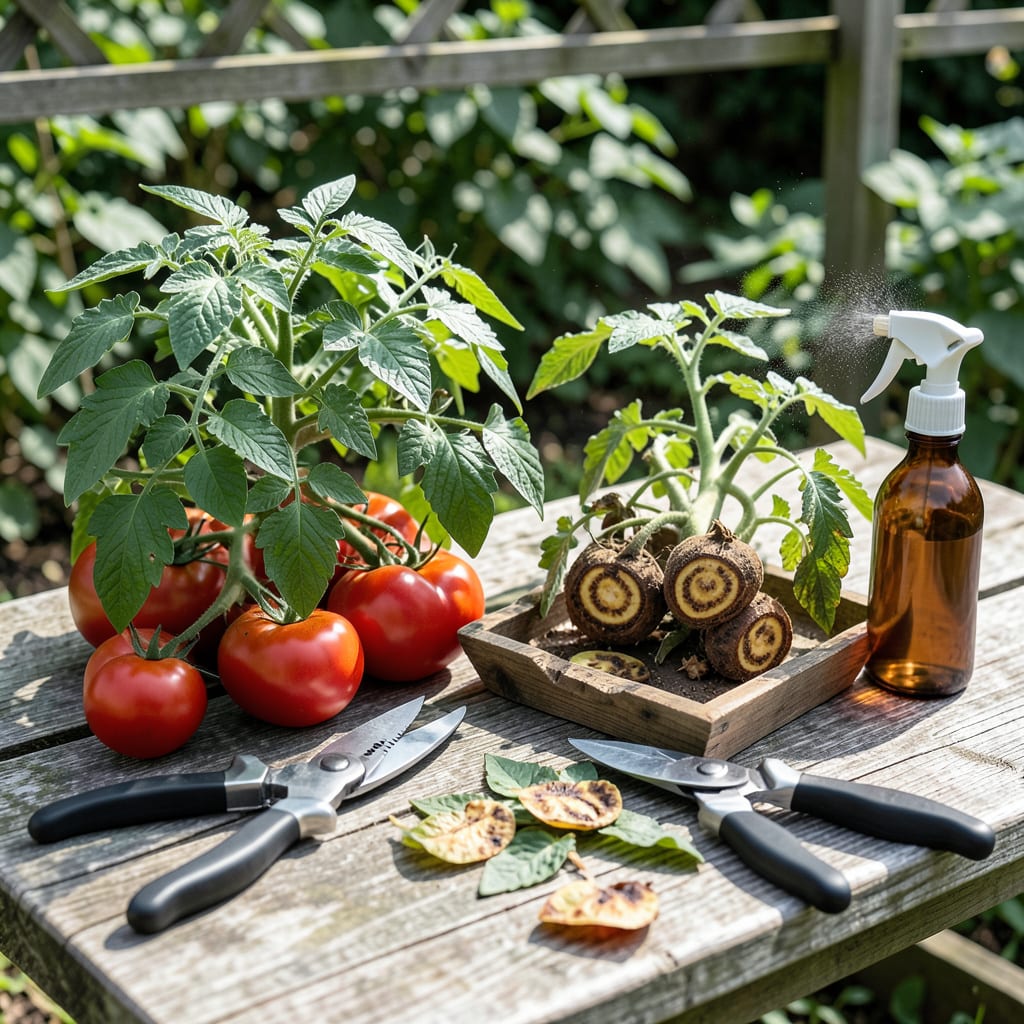
Spotted brown leaves on your tomatoes? I’ve been there—early blight hits fast, but it’s 100% treatable with the right approach. Catching it early saves your plants from a slow decline.
Organic solutions like copper sprays and proper pruning work wonders. The key is consistency: remove infected leaves, improve airflow, and stick to a weekly treatment schedule. Your plants will bounce back stronger.
📚 In This Guide
Here’s the organic method I trust to revive plants and prevent the disease from spreading.
Start by inspecting each plant carefully, focusing on the lower leaves where early blight typically appears first. Look for brown concentric rings with yellow halos—this is the telltale pattern. I use clean, sharp pruners to remove every infected leaf, cutting at the stem’s base where it meets the main branch.
Never compost these leaves—toss them in the trash or burn them to prevent spores from spreading. Disinfect your pruners with rubbing alcohol between cuts and between plants to avoid cross-contamination. This step is non-negotiable; leaving even one infected leaf will allow the disease to progress.
Early blight thrives in damp, stagnant conditions, so your next move is to increase airflow around the plants. Prune any suckers or excessive growth that’s creating dense foliage. I aim to open up the center of each plant so air can move freely through the branches.
If your tomatoes are staked, check that they’re tied loosely enough to allow movement. For caged plants, ensure the cage isn’t too tight against the main stem. You’ll notice a difference within 24-48 hours as the leaves begin to dry more quickly after watering or rain.
Mix 1 tablespoon of baking soda, 1 teaspoon of liquid soap, and 1 gallon of water in a spray bottle. This creates an alkaline environment that inhibits fungal growth. I spray this solution thoroughly on all leaf surfaces, focusing on the undersides where spores often collect.
Apply in the early morning so leaves dry quickly in the sun. Reapply every 7-10 days or after any rain. You’ll see new growth emerging healthy within 2-3 weeks if the treatment is working. For severe cases, I alternate this with a copper fungicide spray (follow package instructions carefully).
Switch to watering at the base of the plant only—no overhead watering that wets the leaves. I use a soaker hose or drip irrigation to deliver water directly to the soil. If you must use a hose, water in the morning so any accidental leaf wetting has time to dry during the day.
Check that your soil drains well; tomatoes in waterlogged conditions are far more susceptible. If you notice water pooling, improve drainage by working in some compost or creating small mounds around each plant. You’ll know your watering is correct when the top inch of soil feels dry between waterings.
Rotate your tomato plants to a new location next season—never plant them in the same spot more than once every 3-4 years. I also recommend mulching with 2-3 inches of straw or wood chips to prevent soil-borne spores from splashing onto leaves during rain or watering.
Remove all plant debris at the end of the season and clean your garden tools thoroughly. These practices break the disease cycle. You’ll find that plants grown with these preventative measures show stronger resistance to early blight in subsequent years.
These practical insights will help you implement the treatment effectively and avoid common pitfalls.
Pruning Precision: In Step 1, when removing infected leaves, make sure your cuts are clean and at the stem’s base. I learned the hard way that jagged cuts or leaving stubs can invite further infection. Disinfecting pruners with rubbing alcohol between plants isn’t just good practice—it’s essential to prevent spreading the disease to healthy plants.
Airflow Strategy: For Step 2, don’t just prune randomly—focus on opening the plant’s center. I aim to create a sort of “chimney effect” that allows air to flow upward through the plant. This is especially crucial in humid climates where early blight thrives. You should see improved leaf drying within the specified 24-48 hours if you’ve done this correctly.
Treatment Timing: The organic fungicide in Step 3 needs consistency. I set calendar reminders for the 7-10 day reapplication schedule because missing even one application can allow the fungus to regain ground. Early morning applications are non-negotiable—this gives leaves time to dry in the sun, which is critical for the treatment’s effectiveness.
Watering Discipline: Step 4’s watering changes are game-changers. I switched to drip irrigation and saw a dramatic reduction in new infections. The “top inch of soil feels dry” rule is your best guide—stick to it religiously. Overwatering not only promotes disease but can wash away your fungicide treatments before they’ve had time to work.
Look for brown, ringed spots with yellow halos on lower leaves. Leaves may turn yellow and drop, and stems can develop dark lesions. Early blight often starts on older foliage first.
Yes! A DIY spray of 1 tsp baking soda + 1 quart water + a few drops of dish soap can help slow the spread. Apply weekly, but remove heavily infected leaves first.
Start at the first sign of symptoms, ideally in the early morning so leaves dry quickly. Treat every 7–10 days, especially after rain or humid weather.
Yes, the fungus Alternaria solani spreads via wind, water, and tools. Remove infected debris, avoid overhead watering, and sanitize pruners to protect nearby plants.
For severe cases, copper-based fungicides (organic-approved) can help. Always follow label instructions, and prioritize prevention—rotate crops and improve airflow next season.
