
Beautiful Plants For Your Interior
Beautiful Plants For Your Interior
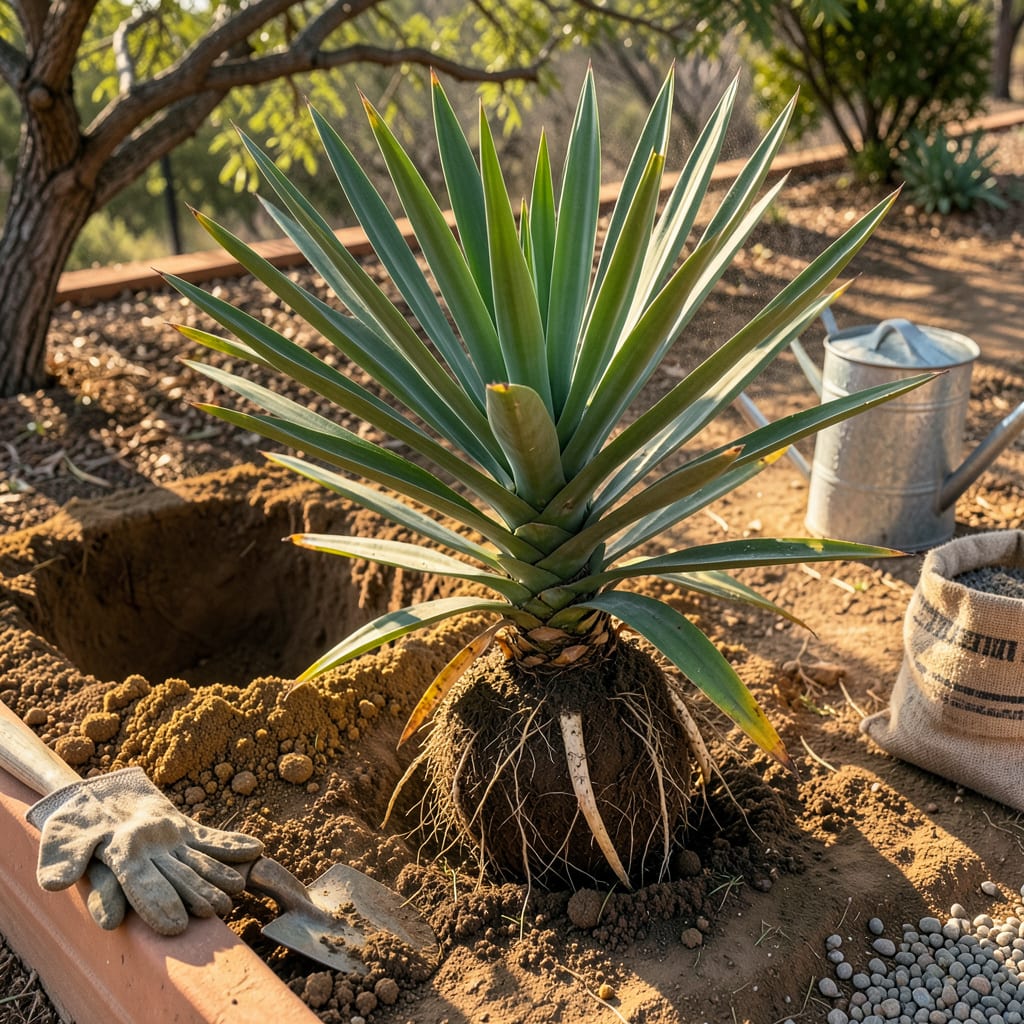
Moving a yucca feels intimidating until you realize how tough these plants really are. I’ve relocated dozens—some the size of small trees—and the ones that thrive always follow the same simple rules. Timing matters most: early spring or fall gives roots time to establish before heat or frost hits. The key isn’t babying them, but giving them the right start in their new spot.
You’ll need just a few tools—a sharp shovel, thick gloves (those leaves are no joke), and maybe a tarp for hauling. The real secret? Disturb the roots as little as possible and plant at the exact same depth it was growing before. I’ve seen yuccas bounce back from rough moves when these two things were done right. No green thumb required—just follow the steps, and your plant will thank you with new growth within weeks.
📚 In This Guide
Moving a yucca doesn’t have to be stressful—follow these clear steps for a smooth transition and healthy regrowth.
The best time to transplant yucca is in early spring before new growth begins or in early fall when temperatures are mild. Avoid transplanting during extreme heat or cold, as this stresses the plant. Water your yucca deeply 2-3 days before moving to ensure the roots are hydrated but not soggy.
Use a sharp spade to dig a wide circle around the plant, about 12-18 inches from the base, to preserve as many roots as possible. Yucca roots are tough but can break if forced. If the plant is large, tie the leaves together with soft twine to protect them and make handling easier.
Once you’ve cut a circle around the plant, angle the spade underneath to lift the root ball. Yuccas have deep taproots, so dig at least 12 inches deep to avoid severing them. If the root ball feels heavy, ask for help—lifting incorrectly can damage the plant or strain your back.
Gently shake off excess soil from the roots, but don’t wash or scrub them. This helps the plant adjust to its new location faster. If any roots are damaged during the process, trim them cleanly with pruning shears to prevent rot. Keep the root ball intact as much as possible.
Dig a hole in the new location that is twice as wide as the root ball but only as deep. Yuccas thrive in well-draining soil, so if your soil is heavy or clay-like, mix in sand or gravel to improve drainage. Avoid adding organic matter like compost—yuccas prefer lean, rocky soil.
Place the yucca in the hole, ensuring the top of the root ball sits level with the surrounding soil. If planted too deep, the base may rot. Backfill the hole with the amended soil, pressing lightly to remove air pockets but avoiding compacting the soil too tightly.
After transplanting, water the yucca deeply but slowly to help the soil settle around the roots. Use about 1-2 gallons of water, allowing it to soak in rather than pooling on the surface. This encourages the roots to spread into the surrounding soil.
Don’t water again for at least a week—yuccas are drought-tolerant, and overwatering can cause root rot. Monitor the plant for signs of stress, such as yellowing leaves, but avoid the temptation to overcare. A little neglect is better than too much attention.
For the first 2-3 weeks, keep an eye on the yucca for signs of transplant shock, like drooping or browning leaves. If the plant looks stressed, provide temporary shade using a lightweight cloth or move potted yuccas to a brighter spot indoors.
After 4-6 weeks, the yucca should show new growth, indicating it has established itself. At this point, resume normal care—watering only when the soil is completely dry and providing full sun. Yuccas are resilient, and with proper handling, yours will thrive in its new home.
Transplanting yucca becomes much easier when you know these key details that most guides overlook.
Timing is Everything: The instructions mention transplanting in early spring or early fall, and this isn’t just a suggestion—it’s critical. I learned this the hard way after losing a yucca to summer heat stress. Early spring gives roots time to establish before summer, while early fall avoids winter dormancy. That 2-3 day pre-watering window is equally important; it hydrates roots without making the soil heavy to work with.
Root Ball Protection: When digging that 12-18 inch circle in Step 1, go slowly. Yucca roots are surprisingly fragile despite their tough reputation. I’ve found that using a sharp spade and making clean cuts prevents root tearing. And when you reach the 12-inch depth in Step 2, don’t rush—this is where most people accidentally sever the taproot. If you hit resistance, work around it rather than forcing the spade through.
Soil Preparation Secret: The instruction to avoid compost in Step 3 might seem counterintuitive, but yuccas actually thrive in poor soil. When amending with sand or gravel, I use a 50/50 mix with native soil. This mimics their natural desert environment. And when placing the plant, double-check that the root ball sits exactly level with surrounding soil—even being 1 inch too deep can cause stem rot over time.
Watering Wisdom: That 1-2 gallons of water in Step 4 should be applied in stages. I water half, let it absorb, then add the rest. This prevents runoff and ensures deep penetration. The “no water for a week” rule is non-negotiable—yuccas store moisture in their roots, and overwatering is the #1 cause of transplant failure. If leaves start to yellow during that first week, resist the urge to water; it’s usually shock, not thirst.
Spring or early fall is ideal—when temperatures are mild (60–80°F) and the plant isn’t stressed by heat or frost. Avoid transplanting in summer’s peak or winter dormancy. If moving potted yuccas indoors/outdoors, acclimate them gradually over 1–2 weeks.
Yes, but it’s tricky! For yuccas over 3–4 feet tall, prune leaves by half to reduce water loss, and dig a wide root ball (12+ inches from the trunk). Use a tarp to drag it —never lift by the stem! Water deeply afterward and stake if needed.
Don’t panic—this is normal “transplant shock.” Ensure it gets bright, indirect light (not full sun) and water only when the top 2 inches of soil are dry. Trim dead leaves after 2–3 weeks. Avoid fertilizer for 4–6 weeks to let roots recover.
Yuccas thrive in poor, sandy, or rocky soil—no rich amendments needed! If your soil is heavy clay, mix in 50% perlite or coarse sand for drainage. For containers, use a cactus/succulent mix with extra grit (like pumice).
Dig up offsets (pups) from the base of the mother plant in spring. Let them dry for 24 hours, then pot in sandy soil. Or, cut a 4–6-inch stem tip, dry it for 3–5 days, and plant in perlite. Both methods root in 4–8 weeks!
