
Beautiful Plants For Your Interior
Beautiful Plants For Your Interior
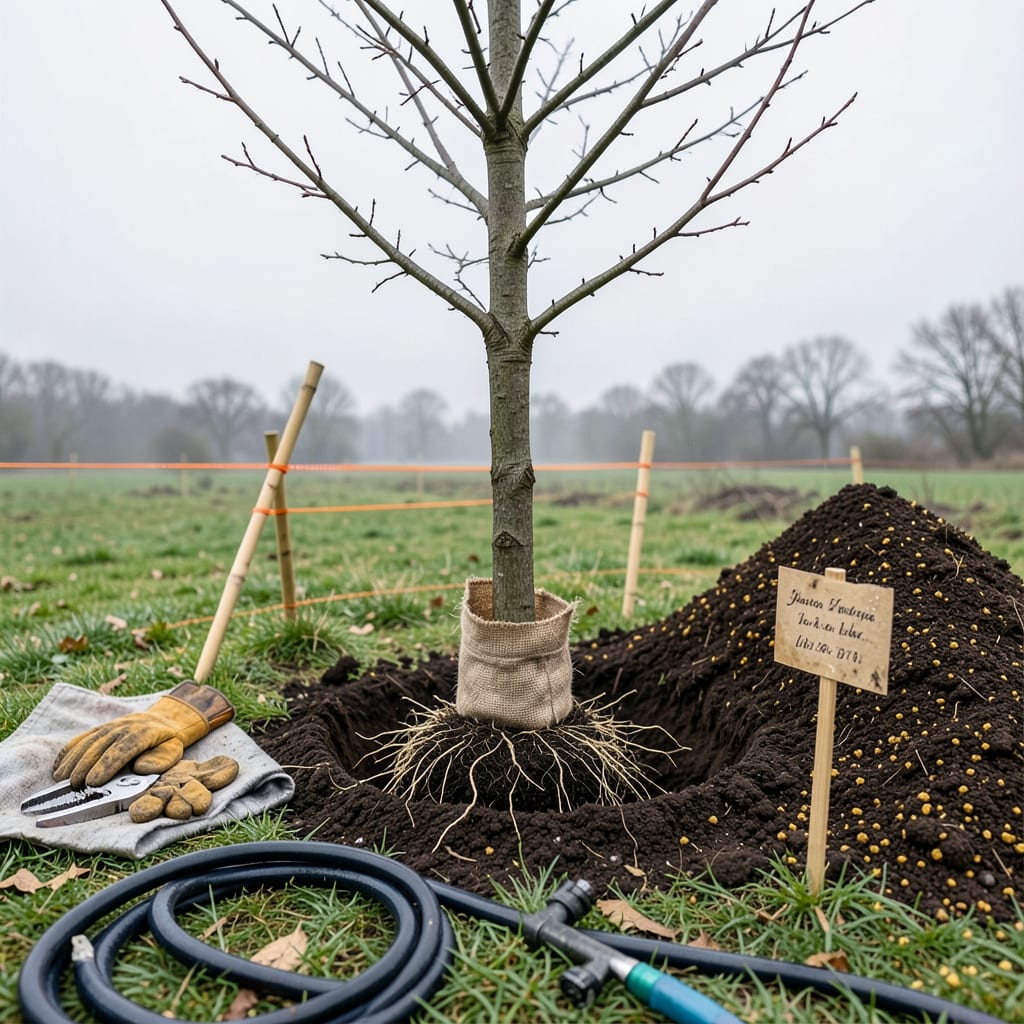
Moving a tree feels like performing surgery on your landscape. I’ve relocated everything from saplings to 20-foot maples, and the difference between success and failure comes down to timing and technique. The right approach means your tree doesn’t just survive—it thrives in its new spot, with roots that establish faster than you’d expect.
Most people stress over the digging, but the real secret is preparation: when to move it (early spring or fall is non-negotiable), how to keep the root ball intact, and why that first deep watering after transplanting makes all the difference. Do this right, and you’ll watch your tree push new growth within weeks, not months.
📚 In This Guide
Moving a tree is about preparation and timing—follow this method and your plants will establish faster with minimal shock.
Transplant in early spring before bud break or fall after leaf drop when the tree is dormant. Avoid summer heat or freezing winter conditions—both stress roots beyond recovery. I mark the new planting location by measuring the tree’s current root spread (typically 1-2 feet per inch of trunk diameter) and dig a hole twice as wide but no deeper than the root ball.
The hole should have sloped sides to encourage outward root growth. Test the depth by placing a board across the hole—when the root ball sits on it, the top should be 1-2 inches above surrounding soil level to account for settling. Mix the excavated soil with 20% compost to improve drainage and nutrient availability.
Water the tree deeply 24-48 hours before moving to hydrate roots and reduce transplant shock. Using a sharp spade, dig a trench around the tree at the drip line (where branches end), then work inward to undercut the root ball. For trees with 2-inch diameter trunks, aim for a 24-inch diameter root ball; add 6 inches per additional inch of trunk thickness.
Once the root ball is free, lift it carefully with burlap or a tarp—never by the trunk. Wrap the root ball immediately to prevent drying, and move the tree to its new location without delay. If you must wait, keep the roots shaded and moist. I always check for circling roots and prune them cleanly; left uncut, they’ll girdle the tree as it grows.
Lower the tree into the hole, ensuring it sits at the same depth as its original location (look for the soil line on the trunk). Rotate the tree until its best side faces the most visible angle—this is your only chance to position it perfectly. Backfill with the amended soil in 3-inch layers, watering thoroughly between each to eliminate air pockets.
Create a 3-4 inch high watering berm around the hole’s perimeter to direct moisture to the roots. Don’t amend the backfill soil further—this encourages roots to expand into native soil rather than circling in a “comfort zone.” I always stake trees taller than 10 feet with two stakes placed outside the root ball, using wide, flexible ties that won’t girdle the trunk.
Immediately after planting, water deeply until the soil is saturated to a depth of 12-18 inches. You’ll know it’s enough when water pools briefly before draining. Apply 2-4 inches of organic mulch (wood chips or shredded bark) in a 3-foot diameter circle, keeping it 3 inches away from the trunk to prevent rot.
For the first 2-3 weeks, water every 2-3 days unless rain provides 1 inch per week. After that, gradually reduce frequency to encourage deep root growth. I check soil moisture by digging 4 inches deep—if it feels dry at that depth, it’s time to water. Expect some leaf drop initially; this is normal as the tree redirects energy to root establishment.
Remove any stakes after 6-12 months—leaving them too long weakens trunk development. Prune only dead or damaged branches during the first year; avoid heavy pruning which stresses the tree. Watch for signs of stress like wilting, yellowing leaves, or leaf scorch, which indicate either overwatering or underwatering.
Fertilizer isn’t necessary until the second growing season. When you do fertilize, use a slow-release, balanced formula (10-10-10) applied at half strength. I mark my calendar to check soil moisture weekly during drought periods—newly transplanted trees need consistent moisture but hate soggy roots. By the second year, your tree should show 6-12 inches of new growth, signaling successful establishment.
Transplanting trees successfully comes down to understanding the science behind root health and environmental adaptation. Here’s what I’ve learned from years of trial and error to ensure your trees thrive in their new location.
Timing Precision: The 24-48 hour pre-hydration window in Step 2 isn’t just about watering—it’s about allowing the tree to fully saturate its root system. I’ve found that watering exactly 48 hours before moving works best for mature trees, while 24 hours suffices for younger specimens. This timing ensures maximum water uptake without waterlogged soil during the move. The difference between a stressed tree and one that barely notices the transition often comes down to this preparation.
Root Ball Calculations: When determining root ball size in Step 2, don’t just measure trunk diameter—consider the tree’s age and species. For instance, a 2-inch diameter maple might need a slightly larger root ball (26 inches) than the standard 24 inches because of its aggressive root system. I always add 2 extra inches to the recommended diameter for broadleaf trees, while conifers can follow the standard 6 inches per additional inch of trunk thickness. This adjustment prevents root damage during lifting.
Backfilling Technique: The 3-inch layer approach in Step 3 isn’t arbitrary—it’s designed to prevent air pockets while allowing proper water distribution. Here’s what nobody tells you: after adding each layer, use a broom handle to gently probe the soil around the root ball. This reveals hidden air gaps that water alone won’t eliminate. I’ve saved several trees from slow decline by catching these pockets early, which would otherwise lead to root desiccation.
Post-Transplant Monitoring: During the critical 2-3 week watering period in Step 4, don’t just check surface moisture. The 4-inch depth test is essential, but I take it further by using a soil probe to check moisture at 8 inches deep—this tells me if water is actually reaching the deeper roots. Trees often show surface moisture while their lower roots remain dry. This deeper check has prevented root dieback in several of my transplant projects.
Early spring (before buds break) or fall (after leaves drop) are ideal—cooler temps and moist soil reduce stress. Avoid extreme heat or freezing conditions. Evergreens prefer early spring, while deciduous trees thrive in fall. Always check local frost dates for timing!
Aim for a root ball 10–12 inches in diameter per inch of trunk thickness. For example, a 2-inch trunk needs a 20–24-inch-wide root ball. Depth should match the root flare (where roots meet soil). Bigger is better—more roots = less transplant shock!
Yes! Success rates hit 80–90% with proper technique, timing, and aftercare (watering, mulching, pruning). Mature trees (over 10 years) are riskier—consider hiring a pro. Younger trees (under 5 years) adapt fastest. Pro tip: Pre-dig and root-prune 6–12 months ahead for large trees!
For small trees (under 6 ft), use the “bare-root method” in dormancy: dig carefully, wrap roots in damp burlap, and replant immediately. Soak roots in water + root stimulator for 1 hour pre-planting. Warning: Rushing risks shock—prioritize soil prep and aftercare!
If moving isn’t feasible, try:
