
Beautiful Plants For Your Interior
Beautiful Plants For Your Interior
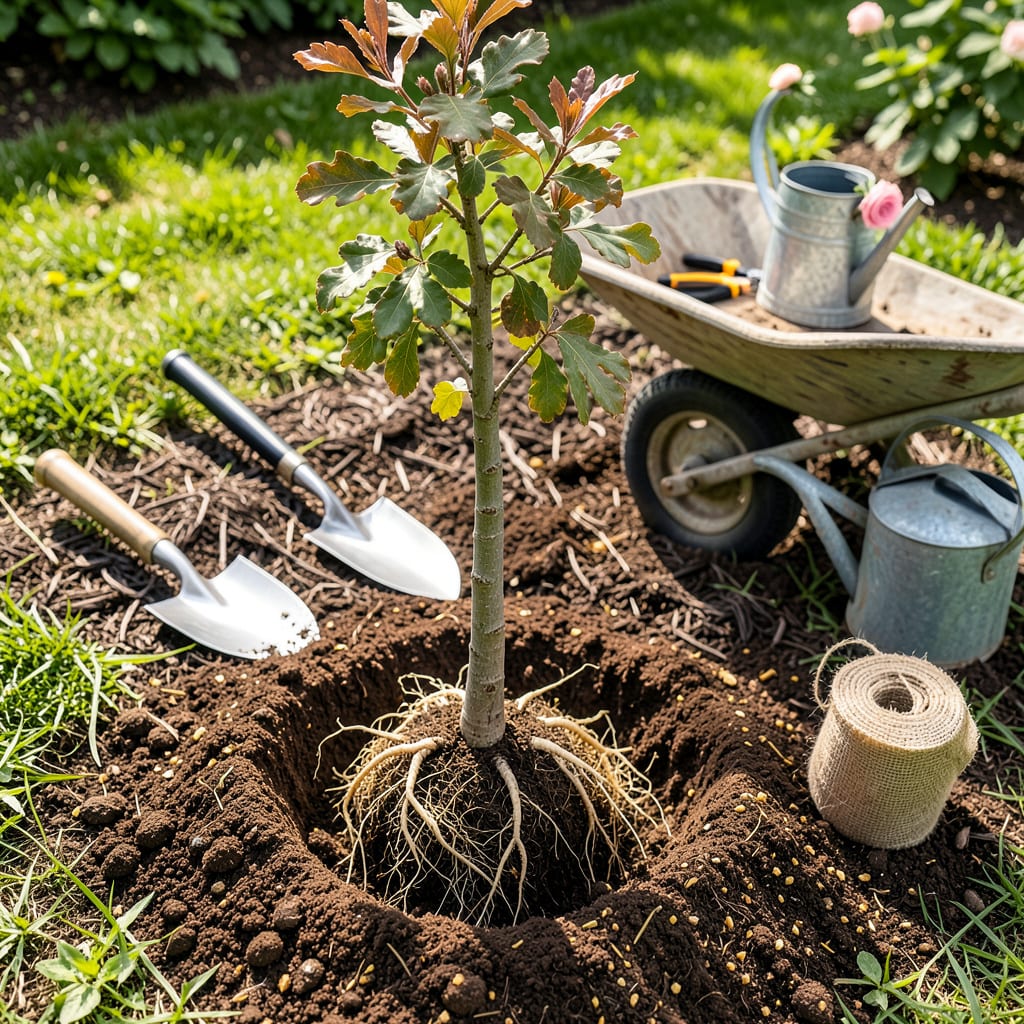
Moving an oak tree isn’t just about digging and dropping—it’s about giving a living landmark a fighting chance in its new home. I’ve learned the hard way that timing is everything: late winter or early spring, when the tree is still dormant but the ground isn’t frozen, is your 3-week window for success. Get this right, and you’re already ahead of most failed attempts.
The difference between a thriving transplanted oak and one that struggles for years comes down to three things: root ball size (bigger than you think), proper lifting technique (never by the trunk), and the first 48 hours of aftercare. I’ll walk you through exactly how to handle each stage—from the first cut of your spade to that moment six months later when you see new growth pushing through the branches.
📚 In This Guide
Moving an oak tree is all about timing and root care—follow these steps for a thriving transplant.
Transplant oaks in late winter or early spring while they’re still dormant but before buds swell. This timing gives roots a full growing season to establish before summer heat. Avoid fall transplanting—oaks need time to recover before winter dormancy.
Dig the new hole twice as wide as the root ball but no deeper than the tree’s current root flare. I always rough up the sides of the hole with my shovel to prevent glaze that could deflect roots. Test the depth by placing a board across the hole—your tree should sit 1-2 inches above surrounding soil to allow for settling.
Six months before moving, root prune by cutting a 12-inch deep trench around the tree at the drip line. This encourages new feeder roots to form within the future root ball. For a 2-inch diameter trunk, aim for a 24-inch diameter root ball—add 6 inches of diameter for each additional inch of trunk thickness.
On moving day, water the tree deeply 24 hours beforehand so the root ball holds together. Wrap the root ball in burlap immediately after digging to prevent soil from crumbling. Keep the root ball moist during transport—dry roots for even an hour can set back recovery by weeks.
Lift the tree by the root ball, never by the trunk. Position it in the new hole so the root flare (where roots meet trunk) sits 1-2 inches above soil level. Backfill with native soil—amending with compost creates a “bathtub effect” that traps water and rots roots.
Water immediately with 10 gallons per inch of trunk diameter, letting water soak in between applications. Apply 3-4 inches of mulch in a 3-foot diameter circle, keeping it 4 inches away from the trunk. Mulch too close invites pests and trunk rot.
Check soil moisture weekly by digging 6 inches deep—it should feel like a wrung-out sponge. New transplants need 1-2 inches of water weekly from rain or irrigation. Drought stress in the first year is the #1 killer of transplanted oaks.
Stake only if necessary using soft tree straps (never wire) and remove stakes after one growing season. Watch for yellowing leaves (overwatering) or wilting despite moist soil (root damage). Both issues require immediate attention but rarely mean the tree won’t recover with proper care.
Transplanting an oak tree successfully comes down to understanding what happens below ground. Here’s what I’ve learned from years of moving trees—both successes and hard lessons.
Timing Precision: The late winter or early spring window mentioned in Step 1 isn’t just a suggestion—it’s critical. I’ve seen oaks transplanted in late spring struggle through their first summer because they didn’t have enough time to establish roots before heat stress. Watch your local weather patterns: you want consistently cool soil temperatures (below 50°F) but no risk of hard freezes that could damage exposed roots during transport.
Root Ball Preparation: When you’re digging that 12-inch deep trench in Step 2 six months before moving, use a sharp spade to make clean cuts. Ragged cuts from a dull tool create more root damage and entry points for disease. After cutting, water the trench thoroughly to encourage new root growth exactly where you want it—within your future root ball. This simple step dramatically reduces transplant shock.
The Critical First 24 Hours: That 24-hour deep watering before moving in Step 2 serves two purposes: it ensures the root ball holds together during transport, and it gives the tree maximum hydration before the stress of moving. I use a soaker hose on low pressure, moving it around the root zone for at least 6-8 hours. The soil should be moist to a depth of 18 inches—test this by digging a small hole with a trowel. During transport, mist the burlap-wrapped root ball every 30 minutes if temperatures exceed 60°F.
Watering Wisdom: The 10 gallons per inch of trunk diameter in Step 3 isn’t arbitrary—it’s calculated to saturate the entire root zone without waterlogging. Here’s what most people miss: apply this water in three separate applications, letting it soak in between each. This prevents runoff and ensures deep penetration. For the first month, I check moisture at that 6-inch depth daily rather than weekly, especially in sandy soils that drain quickly. A $10 soil moisture meter from the garden center takes all the guesswork out of this critical step.
Young saplings (1–3 years old) transplant far better than mature oaks! Their smaller root systems recover faster, while mature trees (10+ years) often suffer transplant shock. If you must move a larger oak, hire an arborist with a tree spade—DIY attempts risk killing the tree.
Early spring (before buds swell) or late fall (after leaf drop) are ideal—cool temps and dormant roots reduce stress. Avoid summer’s heat or winter’s freeze! Pro tip: Transplant on a cloudy day to minimize moisture loss.
For saplings under 3 feet tall, dig a root ball 12–18 inches wide and deep. The rule of thumb: 10–12 inches of root ball per inch of trunk diameter. Use a sharp spade to cut cleanly and preserve feeder roots—ragged cuts invite disease.
Don’t panic! Wilting is normal for 2–4 weeks post-transplant (transplant shock). Keep soil consistently moist (not soggy) and mulch heavily. If leaves stay crispy after a month or the bark peels, the tree may not recover. Stop fertilizing—it stresses roots further!
Yes! Acorns have a higher survival rate and skip transplant shock. Plant acorns 1–2 inches deep in fall, or stratify them in the fridge first. Downside? It takes 10–20 years to get a shade tree. Patience pays off!
