
Beautiful Plants For Your Interior
Beautiful Plants For Your Interior
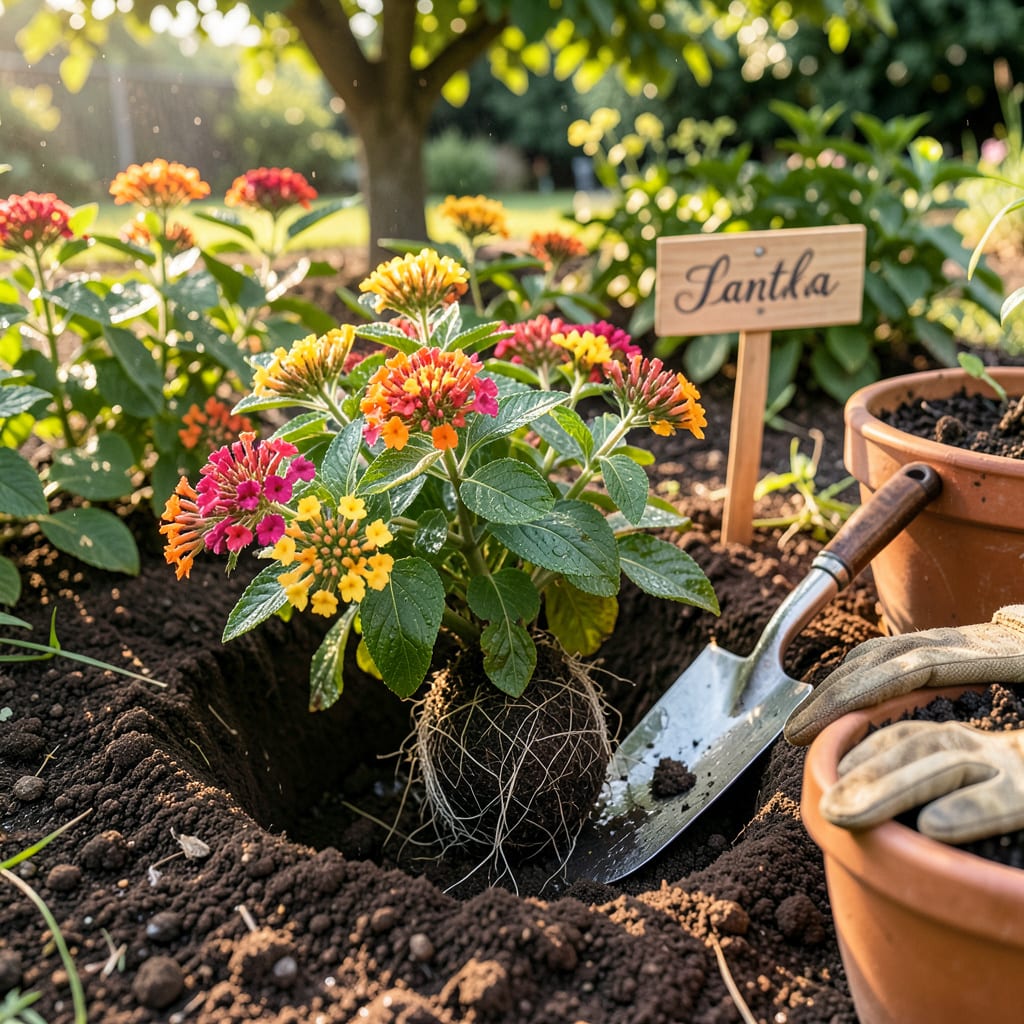
Moving lantana can feel like a gamble—until you know the secret. I’ve transplanted dozens over the years, and the plants that thrive all follow the same simple rules: timing, root care, and a stress-free transition. Do it right, and you’ll get bigger blooms and healthier growth than ever before.
The best part? This isn’t about luck. Whether you’re relocating an overgrown bush or rescuing a nursery pot, the process takes less than 30 minutes with basic tools. No green thumb required—just a sharp trowel, the right spot, and a little know-how. Let’s get that lantana settled in its new home.
📚 In This Guide
This method ensures your lantana establishes quickly with minimal shock—perfect for continuous blooms.
Transplant lantana in early morning or on a cloudy day when temperatures stay below 85°F. The cooler conditions reduce transplant shock by minimizing moisture loss through leaves. I’ve found evening transplanting works too, but morning gives plants a full day to recover under gentle light.
Avoid transplanting during active bloom cycles if possible. While lantana handles disturbance well, you’ll sacrifice current flowers for stronger root establishment. Check the forecast—you want 3-5 days of mild weather post-transplant to help roots acclimate without stress.
Dig a hole twice as wide as the root ball but only as deep. Lantana thrives in well-draining soil, so I amend native soil with 30% compost or coarse sand if your ground is heavy clay. Rough up the hole’s sides with your trowel—this prevents glazing and helps roots penetrate outward.
Water the empty hole thoroughly until it forms a muddy slurry at the bottom. This creates a moisture reservoir that encourages roots to grow downward immediately. For container transplants, ensure your new location gets 6+ hours of direct sun—lantana blooms poorly in partial shade.
Gently squeeze the nursery pot to loosen the root ball, then tip the plant onto its side. Support the base of the stems with one hand while sliding off the container. For root-bound plants, make three vertical cuts down the root ball with a clean knife—this stimulates outward growth.
Place the lantana in the hole so the soil line matches the surrounding grade. Planting too deep suffocates the crown, while too shallow exposes roots. Backfill with your amended soil, firming gently as you go. Create a 2-inch water basin around the stem to direct moisture to roots during establishment.
Water immediately with 1 gallon per plant, applying slowly at the base to eliminate air pockets. The soil should feel moist 4 inches deep—test with your finger. I add a 2-inch layer of mulch (bark or gravel) but keep it 3 inches away from the stem to prevent rot.
For the first week, water every 2-3 days unless rain occurs. You’ll know the plant needs water when the top 1 inch of soil feels dry—lantana wilts dramatically but recovers quickly when hydrated. Avoid overhead watering to prevent fungal issues on the dense foliage.
Watch for new leaf growth within 7-10 days—this signals successful establishment. If leaves yellow or drop, increase shade temporarily. I pinch back one-third of the stems after two weeks to encourage bushier growth and more bloom sites.
Withhold fertilizer until you see active new growth, then apply a balanced 10-10-10 at half strength. Lantana blooms on new wood, so this light feeding promotes continuous flowering. Remove any spent flower clusters to redirect energy into fresh blooms.
Transplanting lantana doesn’t have to be stressful—these key insights will help your plants thrive from day one.
Timing is Everything: The 85°F temperature threshold in Step 1 isn’t arbitrary. Lantana’s leaves lose moisture rapidly in higher heat, and roots can’t keep up with water demand. I’ve found that transplanting between 65-80°F gives the best results, with morning being ideal because plants have all day to recover before nightfall. That 3-5 day mild weather window post-transplant is critical—roots need consistent conditions to establish without stress.
Root Preparation Secret: When you make those three vertical cuts in Step 3 for root-bound plants, don’t just slice randomly. Make cuts 120 degrees apart (like a Mercedes logo) to evenly distribute root growth. This prevents the plant from becoming lopsided as new roots develop. Also, if roots are circling the pot, gently untangle them before planting—they’ll grow outward more readily.
Watering Wisdom: That 1 gallon per plant in Step 4 isn’t just about hydration—it’s about eliminating air pockets. After watering, I always check by gently tugging the plant. If it moves easily, there are still air gaps; firm the soil and water another ½ gallon. The 4-inch moisture depth is non-negotiable—shallow watering encourages surface roots that dry out quickly. Use a chopstick or dowel to verify depth if you’re unsure.
Establishment Monitoring: During that 7-10 day window in Step 5, watch for subtle signs beyond just new leaves. Healthy transplants will have stems that feel firm when gently squeezed between fingers. If stems feel soft or mushy, you’re overwatering despite the 2-3 day schedule. Conversely, if leaves feel papery before wilting, increase to daily watering. That one-third pinch-back after two weeks isn’t just for shape—it forces the plant to redirect energy from maintaining old growth to establishing new roots.
Spring or early fall are ideal—when temperatures are mild (60–80°F). Avoid extreme heat or frost, as lantana thrives in warm soil. In frost-free zones (USDA 9–11), transplant year-round but water extra during summer moves.
Yes! Lantana handles transplanting even when flowering, but trim back half the blooms first to reduce stress. Focus on keeping roots intact and water deeply afterward. Expect a brief pause in flowers—new growth (and blooms) return in 2–3 weeks.
Water deeply (1–2 inches weekly) and add 2–3 inches of mulch to retain moisture. If leaves crisp, provide temporary shade for 3–5 days. Avoid fertilizer for 2 weeks—roots need time to recover. Most bounce back in 1–2 weeks!
For large or overgrown plants, try propagation instead! Snip 4–6 inch stem cuttings (just below a leaf node), dip in rooting hormone, and plant in moist potting mix. Cuttings root in 3–4 weeks—no heavy lifting required.
Usually overwatering or poor drainage. Check soil—it should dry slightly between waterings. If roots look mushy, trim affected areas and replant in fresh, well-draining soil. Yellowing can also mean nutrient shock; feed with balanced fertilizer after 2 weeks.
