
Beautiful Plants For Your Interior
Beautiful Plants For Your Interior
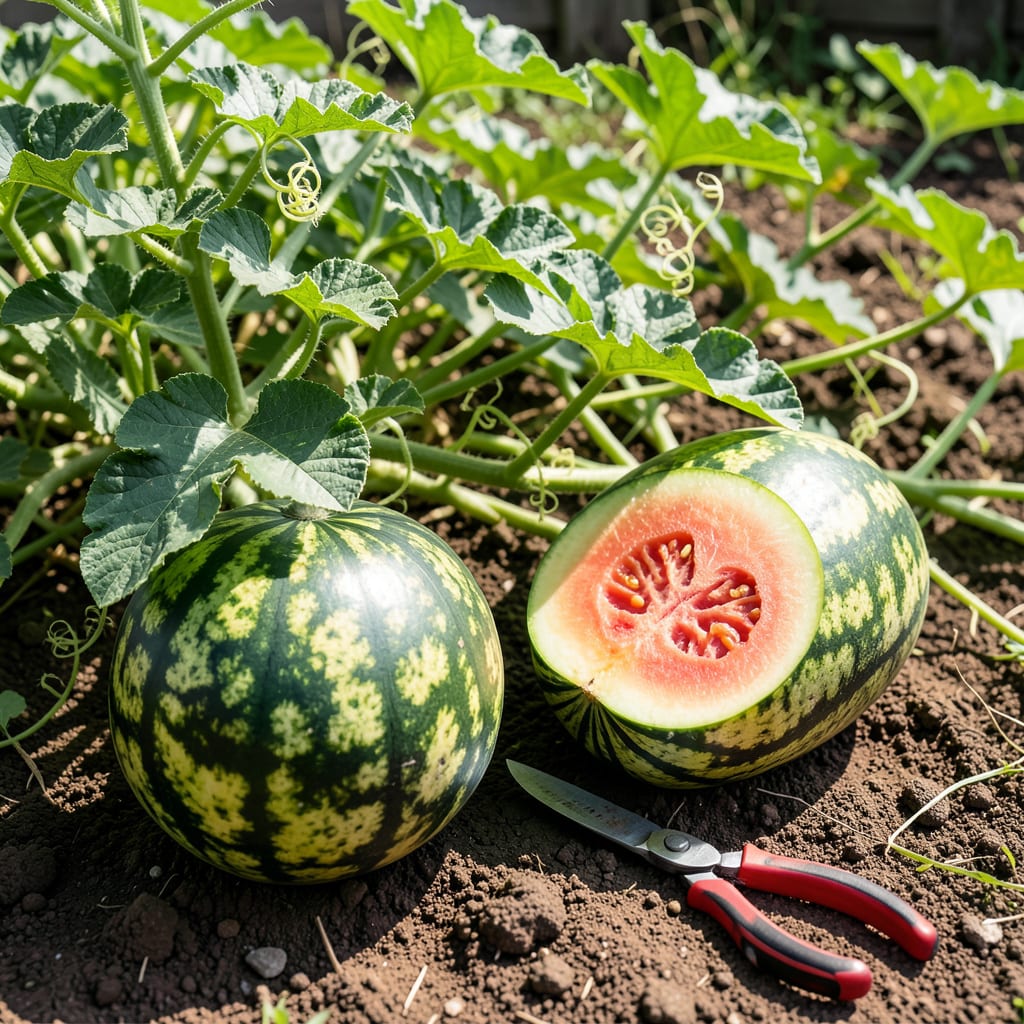
That first bite of perfectly ripe 🍉 Watermelon is pure summer joy—if you pick it at the right moment. Nothing ruins the experience like a bland or mushy fruit.
I’ll show you the field-tested tricks to spot a ready Watermelon every time. From the tendril’s color to that signature thump, you’ll learn how to harvest with confidence.


Knowing when your watermelon is ready to harvest starts with visual cues. The most reliable sign is the color change on the underside where it touches the soil. This spot turns from white to cream as the fruit ripens.
Another clear indicator is the tendril near the stem. When it turns brown and dries up, your watermelon is likely ready. This happens as the plant redirects energy from growth to ripening.
The rind color also changes as it ripens. A mature watermelon loses its glossy sheen and takes on a duller appearance. This is because the waxy coating wears off as the fruit matures.
Don’t forget to check the stem end. If it starts to pull away from the vine slightly, that’s another sign of readiness. The plant is essentially telling you it’s done nourishing the fruit.
I always recommend checking multiple signs. A cream-colored underside combined with a dried tendril gives me confidence. The more indicators you see, the more likely your watermelon is at peak ripeness.
The weight of the watermelon can also be a clue. A ripe one will feel heavy for its size due to the high water content. Compare it to similar-sized melons you’ve harvested before.
Remember that variety matters. Seedless watermelons often ripen a bit earlier than seeded ones. Always check your seed packet for specific maturity days for your variety.
Finally, trust your instincts. After checking a few melons, you’ll start to recognize the pattern. The combination of these visual signs rarely lets me down in my garden.
With these indicators, you’ll be harvesting sweet, juicy watermelons at their absolute best every time. ☀️
Beyond visual signs, the thumping test is my go-to method. Gently tap the watermelon with your knuckles—a deep, hollow sound means it’s ripe, while a metallic ring suggests it needs more time.
The scratch test works too. Use your thumbnail to scratch the rind. If the outer layer comes off easily and reveals a greenish-white underneath, it’s ready. If it resists, wait a few more days.
For the bloom end test, examine the spot opposite the stem. A ripe watermelon will have a slightly rough texture there, while an unripe one feels smooth. This is where the flower was attached.
Avoid common mistakes like pressing too hard during the thump test. A gentle tap is all you need. Also, don’t rely on size alone—some varieties stay small but are perfectly ripe.
I find the thump test most reliable when combined with the cream-colored underside we discussed earlier. These tests work best when the watermelon is still on the vine, so check frequently as harvest time approaches.
With practice, you’ll develop an ear for the perfect thump and an eye for the subtle signs. Soon, picking a ripe watermelon will feel like second nature in your garden. 🌱
Timing your watermelon harvest perfectly depends on the variety and your growing conditions. Seeded types like Crimson Sweet often need 85 days, while seedless may ripen in 80 days.
In hot climates, watermelons mature faster due to consistent warmth. Cooler areas may extend the timeline by 5-10 days. Always check your seed packet for specific days-to-maturity guidelines.
For early varieties like Sugar Baby, watch for signs around 75 days. These smaller melons often ripen faster but still need those visual cues we discussed earlier.
In cool springs, I’ve found that covering young plants with row covers can speed up maturity. Just remove them when flowers appear to allow for pollination.
Remember, these are just guidelines. Your local weather and soil conditions play a big role. When in doubt, rely on the tendril test and cream-colored underside for the most accurate assessment. 🌱
A ripe one produces a deep, dull thud. An unripe melon sounds metallic or hollow. Practice on a few to train your ear for the difference.
The ground spot turns cream or yellow when ripe. A white underside means it needs more time. This color change shows sugar development in the fruit.
Yes, harvesting too soon results in low sugar content and poor texture. Unlike some fruits, watermelons won’t ripen further after picking. Always check multiple signs first.
Once the tendril turns brown and crispy, the melon is typically ready within 1-2 days. This is one of the most reliable indicators for home gardeners.
