
Beautiful Plants For Your Interior
Beautiful Plants For Your Interior
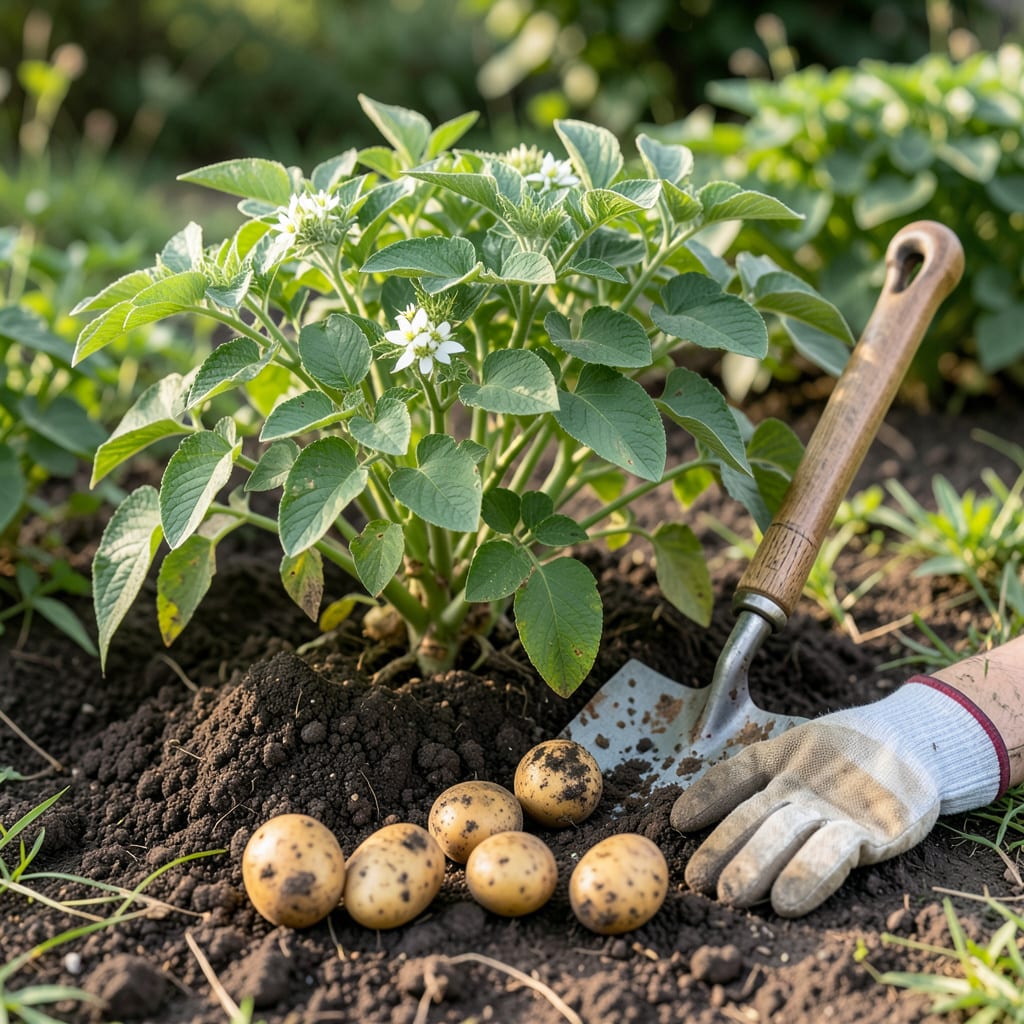
Ever dug up potatoes too early and found tiny, underdeveloped tubers? Timing is everything when it comes to harvesting your 🥔 crop for maximum flavor and yield.
I’ll show you the visual cues in your plants and soil that signal your potatoes are ready to come out of the ground. These simple signs will take the guesswork out of harvest time.


I’ve found that foliage changes are the first clue your potatoes are nearing harvest. When the plant tops begin to yellow and wilt, it’s a sign the tubers are maturing underground. This process typically starts about 2-3 weeks before full maturity.
Another clear indicator is the appearance of flowers. While not all varieties bloom, those that do often signal that tubers are forming. Once flowers fade and seed pods appear, your potatoes are likely ready for early harvest.
| Sign | What It Means | Variety Note |
|---|---|---|
| Foliage yellows | Tubers maturing | All varieties |
| Flowers appear | Early tuber formation | Flowering types |
| Foliage dies back | Ready for harvest | All varieties |
| Soil cracks | Tubers expanding | Large varieties |
The most reliable sign is when the foliage dies back completely. At this point, the plant has stopped producing tubers and the skins have toughened. I recommend waiting 2-3 weeks after foliage death to allow skins to set fully.
For early potatoes, you can start harvesting when plants begin to flower. These will have thin skins and should be eaten fresh. For storage potatoes, wait until all foliage has browned and died.
I always check for soil cracks near the base of plants. These appear when growing tubers push against the soil. This is especially common with russet varieties that produce larger spuds.
Another test I use is the skin rub test. Gently dig up one potato and rub its skin with your thumb. If the skin doesn’t come off, it’s ready. If it rubs off easily, wait another week.
Size matters too. Most mature potatoes reach 2-3 inches in diameter. Fingerling varieties may be smaller. Remember that size varies by type, so know your variety’s typical size.
Weather plays a role in timing. I avoid harvesting during wet periods as damp soil can cause rot. Instead, wait for a dry spell and harvest in the morning when tubers are firm.
Finally, trust your garden journal. Note when you planted and count the days to maturity for your variety. Most take 90-120 days from planting to harvest. 🌱
I always distinguish between new potatoes and mature potatoes when planning my harvest. New potatoes are harvested early for their tender, thin skins and smaller size. They’re perfect for immediate eating but won’t store well.
For new potatoes, I start checking when plants begin to flower. You can gently dig around the base and remove a few tubers, leaving the rest to grow. This typically happens about 60-70 days after planting.
| Type | Harvest Time | Skin Texture | Best Use |
|---|---|---|---|
| New Potatoes | 60-70 days | Thin, tender | Immediate eating |
| Mature Potatoes | 90-120 days | Thick, set | Storage |
Mature potatoes are ready when the foliage dies back completely. This signals the tubers have reached full size and their skins have thickened for storage. I wait 2-3 weeks after foliage death before digging.
Variety matters too. Early varieties like Yukon Gold may mature in 70-90 days, while late varieties like Russets can take up to 120 days. Check your seed packet for specific timelines.
For storage potatoes, I ensure the skin rub test passes. Gently rub a dug potato’s skin—if it doesn’t come off, it’s ready. If it does, wait another week for the skin to set fully.
Seasonal timing also plays a role. In cooler climates, I aim to harvest before the first frost. Frost can damage tubers, so I keep an eye on weather forecasts as harvest time approaches.
Finally, remember that size varies by type. Fingerlings may be ready at 1-2 inches, while Russets often reach 3-4 inches. Know your variety’s typical size for best results. 🌱
I’ve seen many gardeners make costly mistakes when harvesting potatoes. The most common is digging too early. If foliage is still green, tubers are still growing and won’t have developed their full size or flavor.
Another frequent error is waiting too long after foliage dies. While you should wait 2-3 weeks for skins to set, leaving potatoes in the ground for months can lead to rot or pest damage.
⚠️ Warning: Harvesting during wet weather can cause tubers to rot. Always wait for dry conditions and let potatoes dry before storing.
Ignoring weather forecasts is another pitfall. A sudden frost can damage tubers, so I always check the weather and harvest before the first frost if possible. In colder climates, this might mean digging a bit earlier.
Many gardeners also overlook the skin rub test. If the skin rubs off easily, the potatoes aren’t ready for storage. This simple test can save you from harvesting a crop that won’t keep.
Finally, don’t forget to cure your potatoes after digging. Lay them in a dark, well-ventilated area for 1-2 weeks to toughen the skin. Skipping this step can lead to early spoilage in storage. 🌱
Yellowing foliage means your tubers are maturing underground. This change typically starts 2-3 weeks before full harvest readiness, signaling the plant is redirecting energy to the potatoes.
Yes, you can dig new potatoes when plants flower. These have thin skins and are best eaten fresh. For storage, wait until all foliage has browned and died completely.
Use the skin rub test. Gently rub a dug potato’s surface—if the skin doesn’t come off, it’s ready. If it rubs off easily, wait another week for the skin to set.
Leaving potatoes in the ground for months after maturity can lead to rot or pest damage. Harvest within 2-3 weeks of foliage death for best storage results.
