
Beautiful Plants For Your Interior
Beautiful Plants For Your Interior
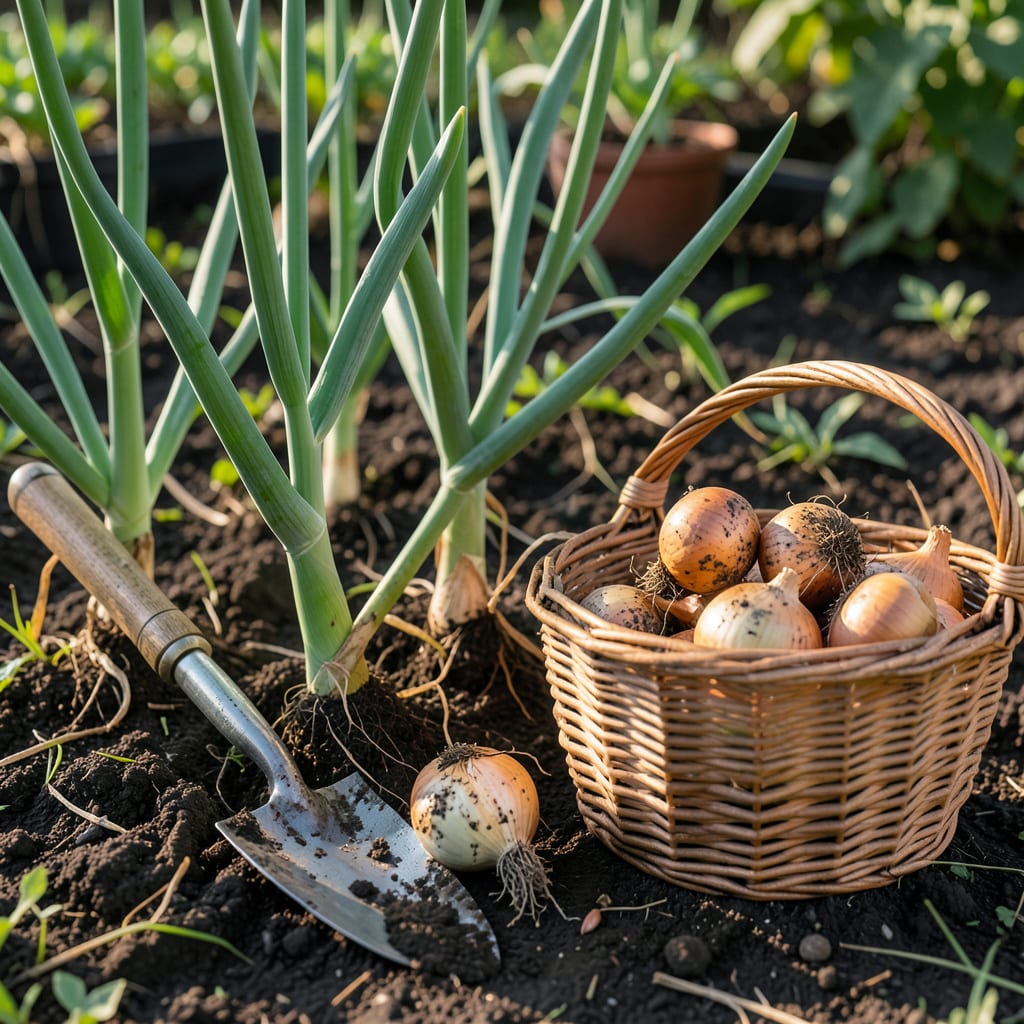
Nothing beats the satisfaction of pulling perfect onions from your garden at just the right moment. With the 🧅 onion, timing your harvest can make all the difference in flavor and storage life.
I’ll show you the key signs to watch for, from yellowing tops to bulb firmness. Let’s make sure you don’t miss that ideal window for the best results.


I always watch for the first visual clues that my onions are nearing harvest time. The most obvious sign is when the green tops begin to yellow and flop over naturally. This typically happens 90-120 days after planting, depending on the variety.
Another key indicator is the neck softening just above the bulb. When it feels spongy rather than firm, your onions are likely ready. I check this by gently squeezing the stem about 2-3 inches above the soil line.
| Harvest Sign | What to Look For |
|---|---|
| Foliage Color | Tops turn yellow or brown |
| Neck Condition | Becomes soft and dry |
| Bulb Skins | Develop papery outer layers |
| Bulb Size | Reaches mature size for variety |
Don’t overlook the bulb exposure at the soil line. When the onion starts pushing itself out of the ground, it’s a clear sign of readiness. This usually coincides with the other visual cues we’ve discussed.
For sweet onion varieties, I pay extra attention to the tops falling over completely. These types often mature 10-15 days earlier than storage onions, so timing is critical to prevent them from becoming overripe.
The papery skin development is my final confirmation. When you can see and feel the dry, papery layers forming on the bulb’s exterior, it’s time to harvest. This protective layer is essential for proper curing and storage.
I always recommend checking multiple plants in your patch. Onions don’t all mature at exactly the same time, so sampling a few will give you a better sense of when to harvest the entire crop.
Remember that weather conditions can affect these signs. In particularly hot or dry years, onions might show these indicators a bit earlier. Trust your observations more than the calendar.
If you’re growing onions from sets versus seeds, the timeline may vary. Sets often mature faster, so start monitoring them about 60 days after planting for early signs.
By combining these visual cues with your planting date, you’ll develop an instinct for the perfect harvest window. I’ve found this approach never fails to deliver high-quality onions year after year. 🌱
Timing your onion harvest depends on how you plan to use them. For green onions, you can start pulling when the tops are 6-8 inches tall and still green. These young plants are perfect for fresh eating.
If you want immature bulbs for immediate use, harvest when the bulbs are 1-2 inches in diameter. They’ll have a milder flavor and won’t store well, but they’re great for salads and cooking.
1. Green Onions: Pull when tops reach 6-8 inches tall
2. Immature Bulbs: Harvest at 1-2 inch diameter for fresh use
3. Mature Bulbs: Wait for full size and papery skins for storage
4. Sweet Onions: Harvest when tops fall over completely
For storage onions, wait until the bulbs reach their full mature size and develop thick, papery skins. This usually happens when the tops have completely fallen over and dried. These will keep for months in proper conditions.
Sweet onion varieties need special attention. They’re ready when the neck is soft and the tops have fully collapsed. Harvest these promptly, as they don’t store as long as other types.
Remember that weather affects growth. In hot climates, onions may mature 10-14 days earlier than in cooler areas. Always check your specific variety’s days to maturity as a guideline.
I always mark my planting date on the calendar. This helps me track the progress and anticipate harvest time. For most onions, you’ll be looking at 90-120 days from planting to full maturity. 🌱
I’ve seen many gardeners make the same harvesting mistakes that can ruin a good onion crop. The most common error is harvesting too early when the tops are still green and upright. This results in small, underdeveloped bulbs.
Another frequent misstep is waiting too long after the tops have fallen over. If you leave onions in the ground for weeks after maturity, they may start sprouting or rot in damp soil.
⚠️ Warning: Harvesting too early gives small bulbs, while waiting too long risks rot or regrowth. Always check neck softness and skin development before pulling.
Improper curing techniques can also cause problems. Onions need to cure in a warm, dry, well-ventilated area for 1-2 weeks after harvest to develop their protective outer layers.
Many forget that watering should stop when tops begin to yellow. Continuing to water can delay maturity and increase the risk of disease. I always reduce watering as soon as I see the first signs of yellowing.
Finally, using the wrong tools can damage bulbs. Always use a garden fork or gently pull by hand to avoid bruising. Damaged onions won’t store well and may spoil quickly. 🌱
Harvesting when tops are still green gives small, underdeveloped bulbs. These won’t store well and lack full flavor.
Once tops fall over, harvest within 1-2 weeks. Waiting longer risks rot or sprouting in damp soil.
Yes, they mature 10-15 days earlier than storage types. Pull when necks soften and tops fully collapse.
Stop watering when tops begin yellowing. Extra moisture delays maturity and can cause disease.
