
Beautiful Plants For Your Interior
Beautiful Plants For Your Interior
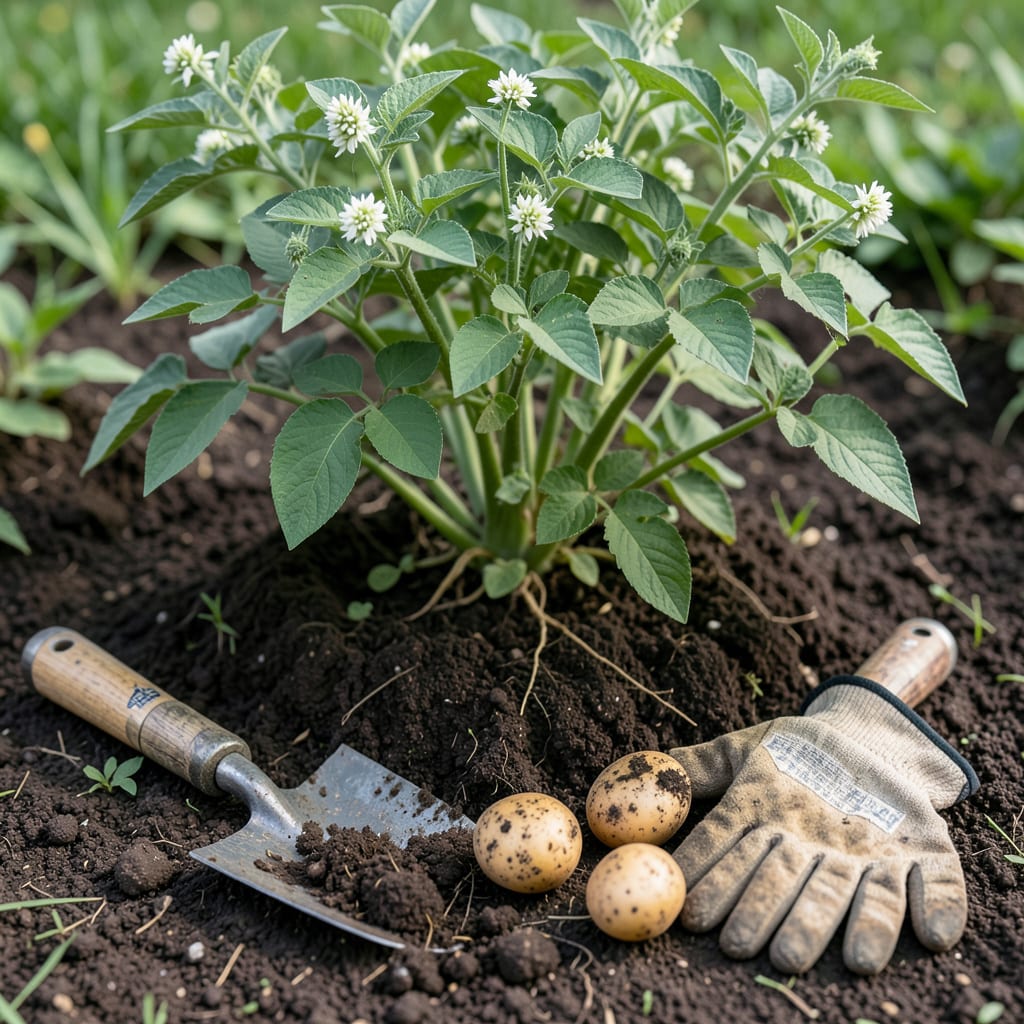
I remember the first time I dug up my 🥔 potatoes too early – what a disappointment! Those tiny tubers taught me the most important lesson about harvest timing.
Now I watch for the foliage to yellow and die back. That’s when you’ll find those perfect, mature spuds ready for your kitchen. Let me show you exactly what to look for.


I’ve learned that potato plants give clear signals when they’re ready for harvest. The most obvious sign is yellowing foliage, which indicates the plant is diverting energy to its tubers.
Another key indicator is dying back vines. When the stems turn brown and wilt, it’s nature’s way of saying your spuds are mature and ready to come out of the ground.
| Sign | What It Means |
|---|---|
| Yellow foliage | Plant stopping growth, tubers maturing |
| Brown, wilting vines | Full maturity reached, ready to dig |
| Flowers blooming | New potatoes forming, can harvest early |
| Soil cracks | Tubers growing, check size if unsure |
For new potatoes, you can start checking when you see flowers appear. These young tubers are small but delicious, and harvesting a few won’t harm the plant’s ability to produce more.
I always recommend the “dig test” for beginners. Gently move aside some soil near the base of a plant to check tuber size. If they’re 2-3 inches in diameter, they’re ready for harvest.
Remember that skin set is crucial for storage. When the skin doesn’t scratch off easily with your fingernail, the potatoes are ready to be stored long-term.
The soil type affects visibility of these signs. In sandy soil, you might see cracks forming as tubers expand, while in clay, you’ll need to rely more on foliage changes.
Weather plays a role too. In hot climates, plants may mature faster, while in cooler areas, you might need to wait a bit longer for those telltale signs.
I’ve found that morning harvesting works best. The soil is often moister, making it easier to dig without damaging the tubers, and the plants are less stressed from heat.
Finally, always use a garden fork rather than a shovel to avoid cutting through your potatoes. Start digging about 6-8 inches away from the plant base to prevent damage.
I’ve found that harvest timing varies significantly between potato varieties. Early types like Yukon Gold or Red Pontiac typically mature in 60-90 days, while late varieties need 120 days or more.
For new potatoes, you can start harvesting as early as 2-3 weeks after the plants flower. These young tubers have thin skins but offer a special treat straight from the garden.
| Potato Type | Days to Maturity | Best Varieties |
|---|---|---|
| Early | 60-90 days | Yukon Gold, Red Pontiac |
| Mid-season | 90-110 days | Kennebec, Purple Majesty |
| Late | 120+ days | Russet, Fingerling |
In warmer climates, potatoes may mature faster, so I check for foliage yellowing about 1-2 weeks earlier than the seed packet suggests. Cooler regions often need the full growing period.
I always mark my planting dates on a calendar to track maturity. For early varieties, I start checking for readiness at the 60-day mark, using the foliage as my primary guide.
Weather conditions can affect timing too. A hot, dry summer might speed up maturity, while cool, wet weather could delay it by a week or two.
For the most accurate timing, I combine the calendar method with visual cues. When the plants show those classic signs and the days match the variety’s range, it’s time to grab the garden fork and start digging.
☀️I’ve seen many gardeners make harvesting mistakes that cost them their potato crop. The most common error is digging too early, before the skin has set properly on the tubers.
Another frequent misstep is waiting too long after the foliage dies back. While you might think the potatoes need more time, leaving them in wet soil can lead to rot or disease.
⚠️ Warning: Never use a shovel to harvest potatoes! A garden fork is gentler and prevents cutting through your precious tubers.
Many beginners also make the mistake of harvesting in wet conditions. Digging when the soil is soggy can cause the potatoes to rot in storage and makes the soil heavier to work with.
I always recommend the “gentle touch” test. If the skin rubs off easily when you handle a potato, it’s not ready. The skin should be firm and resist light scratching for proper storage.
Finally, don’t forget about post-harvest care. After digging, let your potatoes dry in a shady, well-ventilated area for a few hours before storing them in a cool, dark place. This helps prevent mold and extends their shelf life. ☀️
Yes, you can harvest new potatoes when plants flower. These small tubers have thin skins but are perfect for immediate eating. Just leave some plants to mature for storage.
Leaving potatoes in wet soil too long can cause rot. Once foliage dies completely, dig within 2-3 weeks for best storage quality.
Use the gentle “dig test”. Carefully move soil aside near the base to check tuber size. Aim for 2-3 inches in diameter for mature potatoes.
In hot climates, check 1-2 weeks early. Cool, wet weather may delay maturity by a week or more.
Avoid this common mistake! Wet soil makes digging harder and increases rot risk. Wait for dry conditions for best results.
