
Beautiful Plants For Your Interior
Beautiful Plants For Your Interior
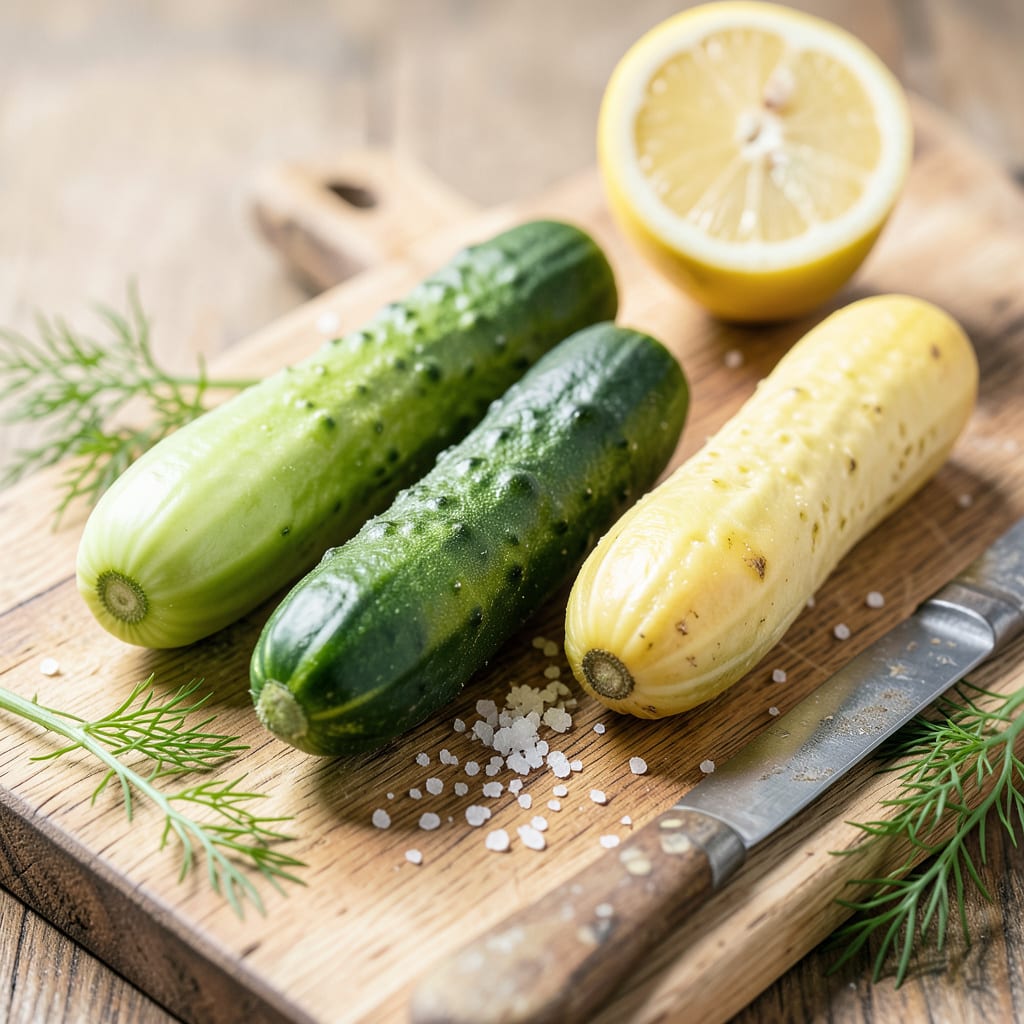
Picking cucumbers at just the right moment changes everything—flavor, texture, even how many more your plant will produce. I’ve learned the hard way that waiting too long turns crisp, sweet cucumbers into bitter, seedy disappointments. But once you know what to look for, checking for ripeness becomes second nature, like spotting the first true leaves on a seedling.
Here’s the thing: cucumbers don’t ripen like tomatoes. They go from perfect to overripe in what feels like overnight. The good news? A few simple checks—color, size, and firmness—tell you exactly when to harvest. No guesswork, no wasted effort. Get this right, and you’ll be pulling crisp, juicy cucumbers from the vine all season long.
📚 In This Guide
Here’s how I check for perfect ripeness every time—no guesswork, just garden-tested techniques.
Start by examining the cucumber’s color. A ripe cucumber will have a uniform bright to medium green hue, depending on the variety. If you notice any yellowing, especially at the blossom end, it’s overripe and may taste bitter. The skin should look vibrant, not dull or faded.
Run your fingers gently along the surface. Ripe cucumbers feel firm with a slight give—like pressing a ripe avocado. The skin should be smooth but not waxy. If it feels rough or spiky, it needs more time. I always check multiple cucumbers to compare textures, which helps spot the perfectly ripe ones.
Size matters more than you might think. Most slicing cucumbers are ready when they reach 6-8 inches long, while pickling varieties should be 3-5 inches. Check the seed packet or plant tag for your specific variety’s ideal size. A cucumber that’s grown too large will have tough skin and watery flesh.
Look at the shape too. Ripe cucumbers are uniformly plump from end to end. If one end is noticeably thicker than the other, it’s still developing. I make it a habit to measure with my hand—if it fits comfortably in my palm, it’s usually just right. Overgrown cucumbers often develop a bulging middle, which is a clear sign they’ve passed their prime.
The stem end (where it attaches to the vine) should still be slightly flexible when ripe. If it’s completely stiff and woody, the cucumber is overmature. The blossom end (opposite the stem) is equally telling—it should be rounded and firm, not shriveled or soft. I gently wiggle the cucumber; if it detaches easily, it’s ready to pick.
Look for the tiny spines that cover young cucumbers. As they ripen, these spines become less pronounced. A perfectly ripe cucumber will have spines you can barely feel when you run your hand along it. If the spines are sharp or prickly, give it another day or two. This subtle change is one of the most reliable indicators I’ve found.
Pick up the cucumber and judge its weight. A ripe one feels surprisingly heavy for its size because it’s filled with water and seeds. Compare it to others on the vine—if one feels noticeably lighter, it’s not fully developed yet. I often hold it in my palm and gently bounce it; a ripe cucumber has a solid, dense feel.
Give it a gentle squeeze. The flesh should yield slightly under pressure but spring back immediately. If your fingerprint leaves an indentation, it’s overripe. Underripe cucumbers feel hard as a baseball. This tactile test works best when you’ve handled cucumbers at different stages—you’ll quickly develop a feel for perfect ripeness.
Most cucumbers reach maturity 50-70 days after planting, but the clock starts ticking when the flower opens. I mark blossom dates with plant tags or a garden journal. Once you see the tiny cucumber form, it typically needs 8-10 days to reach full size and another 3-5 days to perfect ripeness.
Watch the growth rate. Cucumbers grow astonishingly fast—sometimes an inch overnight in warm weather. When growth slows noticeably and the color deepens, it’s time to harvest. I check my plants every morning during peak season because they can go from perfect to overripe in just 24 hours during hot spells.
After years of trial and error in my garden, I’ve learned these subtle tricks that make all the difference between a perfect cucumber and a disappointing one.
Texture Test: In Step 1, when checking skin texture, here’s what nobody tells you—the spines should feel like fine sandpaper, not sharp needles. I run my fingertip along the cucumber’s length; if it feels like touching a peach’s fuzz, you’re in the sweet spot. This tactile difference is more reliable than color alone, especially with darker varieties.
Size Secret: For Step 2, I’ve found that pickling cucumbers taste best at exactly 4 inches—they’re crisp enough to hold up in brine but not so mature that they develop large seeds. For slicing varieties, 7 inches is ideal; much longer and the seed cavity becomes too pronounced. I keep a small ruler in my garden apron for quick reference during harvest.
Stem Wisdom: The stem test in Step 3 is more nuanced than it appears. A perfectly ripe cucumber’s stem should bend about 45 degrees before snapping—like a green bean. If it bends completely without breaking, it’s underripe. If it snaps with no bend, you’ve waited too long. This simple test has saved me from harvesting bitter cucumbers countless times.
Timing Insight: Regarding the 8-10 days mentioned in Step 5, warm weather accelerates this dramatically. During heat waves, I start checking at day 6 post-flowering. The key is watching the growth rate—when a cucumber stops growing an inch overnight, it’s ready within 48 hours. I’ve lost perfect cucumbers by waiting for that “full 10 days” during summer peaks.
Yes! Small cucumbers (like “cornichons” or baby varieties) are often sweeter and crunchier. For standard slicing types, wait until they reach 6–8 inches long. Harvesting too early may reduce yield, but it’s fine if you prefer petite cucumbers for pickling or snacks.
Inspect them every 1–2 days during peak growing season (summer). Cucumbers grow fast—some varieties can double in size in 24 hours! Overripe cucumbers turn bitter, so frequent checks prevent waste. Morning is the best time to harvest for crispness.
A yellow hue means they’re overripe (seeds get large and tough, flavor turns bitter). While edible, they’re best for compost or seeded for next year’s crop. To avoid this, pick cucumbers before they fully yellow and store them in the fridge to slow ripening.
Nope! Slicing cucumbers (like ‘Marketmore’) should be firm and dark green, while pickling types (e.g., ‘Boston’) are best at 2–4 inches. Armenian cucumbers turn light green when ripe. Always check the seed packet for variety-specific cues!
Unlike tomatoes, cucumbers don’t ripen further off the vine. Once picked, their size, color, and texture are locked in. Store them in the fridge (wrapped in a towel) for up to 1 week to maintain freshness. Use overripe ones for juicing or face masks!
