
Beautiful Plants For Your Interior
Beautiful Plants For Your Interior
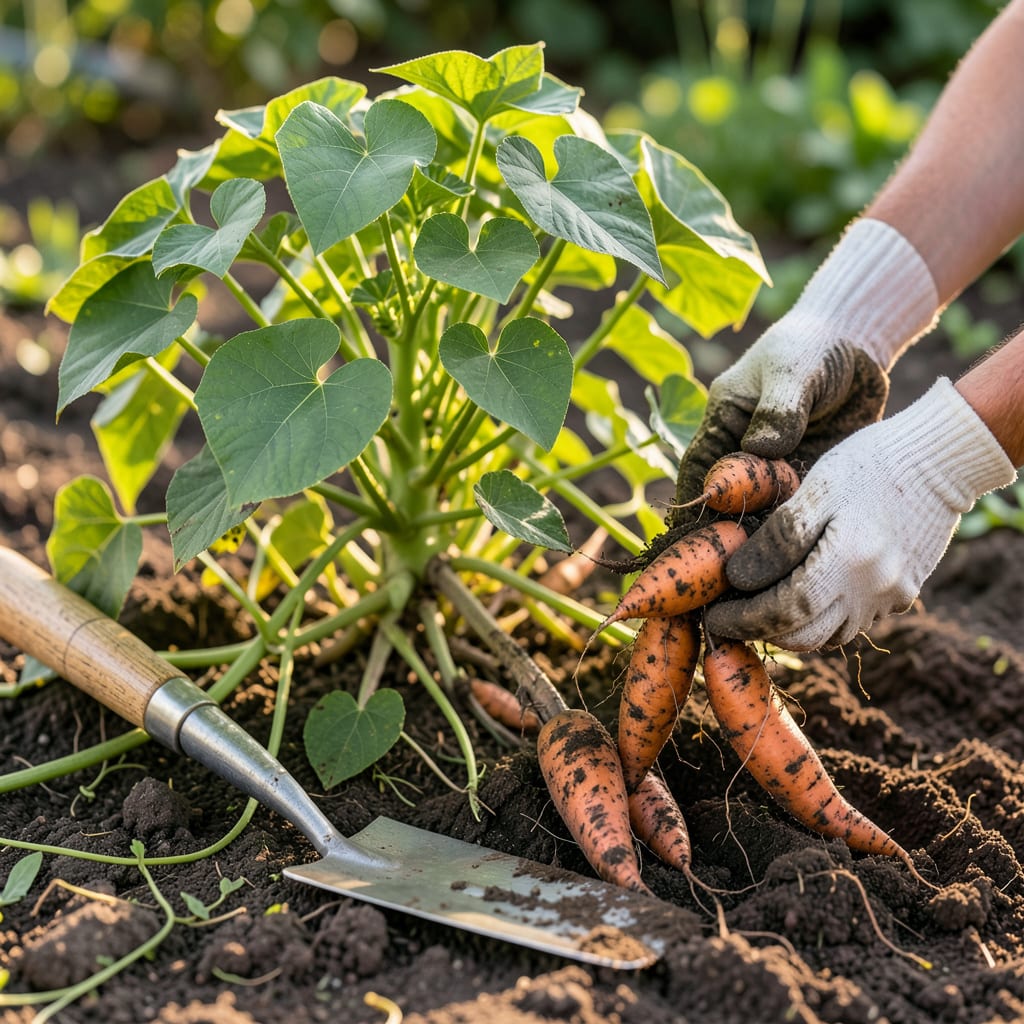
Nothing beats the satisfaction of growing your own 🍠 Sweet Potato crop, but knowing when to harvest can be tricky. These tubers don’t announce their readiness like other vegetables.
I’ll show you the subtle signs to look for – from leaf changes to soil behavior – so you can pull them up at the perfect moment for the best flavor and storage life.


Timing your sweet potato harvest perfectly ensures the best flavor and storage potential. The first clue I look for is leaf yellowing, which typically starts at the edges and works inward as the tubers mature.
Another clear indicator is when the vines begin dying back. This natural decline signals that the plant is redirecting its energy to the tubers below ground, a sure sign they’re nearly ready.
| Maturity Sign | What to Look For |
|---|---|
| Leaf Color | Yellowing from edges inward |
| Vine Condition | Dieback or wilting of foliage |
| Tuber Size | 3-5 inches in length |
| Skin Texture | Smooth and firm, not green |
Pay attention to the soil mounds where you planted. As sweet potatoes mature, you might notice the soil cracking slightly as the tubers expand underground, pushing against their confines.
The days to maturity varies by variety, but most are ready between 90-120 days after planting. I recommend checking your seed packet for the specific range for your variety.
Don’t wait for the first frost, as cold temperatures can damage the tubers. In my zone 6 garden, I aim to harvest before mid-October to be safe.
If you’re unsure, try the gentle dig test. Carefully brush away soil at the base of a plant to check tuber size. If they’re 3-5 inches long, they’re likely ready for full harvest.
Remember that lush green vines don’t necessarily mean the tubers aren’t ready. Some varieties maintain vigorous foliage until harvest time, so always check the other signs too.
For the best storage results, harvest on a dry day when the soil isn’t waterlogged. This helps prevent rot during curing and storage. I’ve found that morning harvesting works best in my garden.
Finally, trust your instincts. If most of these signs are present, your sweet potatoes are likely ready. The more you grow them, the better you’ll become at recognizing these subtle but telltale signals ☀️
Before committing to a full harvest, I always recommend testing a few tubers first. The gentle dig test is my go-to method: carefully brush away soil at the plant’s base to check tuber size and color without disturbing the roots.
Look for tubers that are 3-5 inches long with smooth, firm skin. If they meet this size and the skin has started changing from white to its mature color, they’re likely ready for harvest.
Another good test is the foliage inspection. When about 50% of the leaves have turned yellow and started to die back, this is a strong indicator that the tubers below are maturing nicely.
I’ve found that morning testing works best when the soil is dry. Wet soil can make it harder to see the true color and texture of the tubers, and may even cause damage if you’re not careful.
Remember that variety matters – some sweet potatoes mature faster than others. My ‘Beauregard’ variety typically reaches harvest readiness in about 100 days, while ‘Georgia Jet’ might be ready a bit sooner.
If you’re still unsure after testing, wait 5-7 more days and check again. Sweet potatoes won’t ripen further once harvested, so it’s better to wait a little longer than to harvest too early.
With practice, you’ll develop an eye for these subtle signs. I’ve learned that patience and regular checking are key to perfect timing 🌱
Harvesting sweet potatoes too early is a common mistake that can leave you with small, underdeveloped tubers. Many gardeners misinterpret early leaf drop as a sign of maturity when it might actually indicate stress.
One frequent error ispulling plants when vines are still lush and green. Some varieties maintain vigorous foliage until the very end, so don’t rely solely on vine appearance to judge readiness.
⚠️ Warning: Don’t confuse disease symptoms with maturity signs. Yellowing from fungal infection or pest damage isn’t the same as natural senescence.
Another mistake is ignoring the soil temperature. Harvesting when soil is cold can damage tubers and reduce storage life. I always check that soil temps are above 55°F before digging.
Some gardeners harvest based on calendar days alone without checking other signs. While 90-120 days is a good guideline, environmental factors can speed up or slow down maturity.
Finally, avoid harvesting after heavy rain when soil is waterlogged. This makes tubers more prone to rot during curing. I’ve learned to wait for dry conditions to ensure the best post-harvest results 🌱
Give them 5-7 more days. Yellowing leaves signal maturity, but tubers need time to reach 3-5 inches. Check soil moisture and temperature during this period.
Yes, but check other signs first. Some varieties maintain green vines until harvest. Confirm readiness with the gentle dig test or 50% leaf yellowing rule.
Not always. Cracking can indicate growth, but verify with tuber size and skin color. If tubers are under 3 inches, they likely need more time.
Harvest at least 1-2 weeks before first frost. In zone 6, this means mid-October. Cold soil below 55°F can damage tubers and reduce storage life.
