
Beautiful Plants For Your Interior
Beautiful Plants For Your Interior
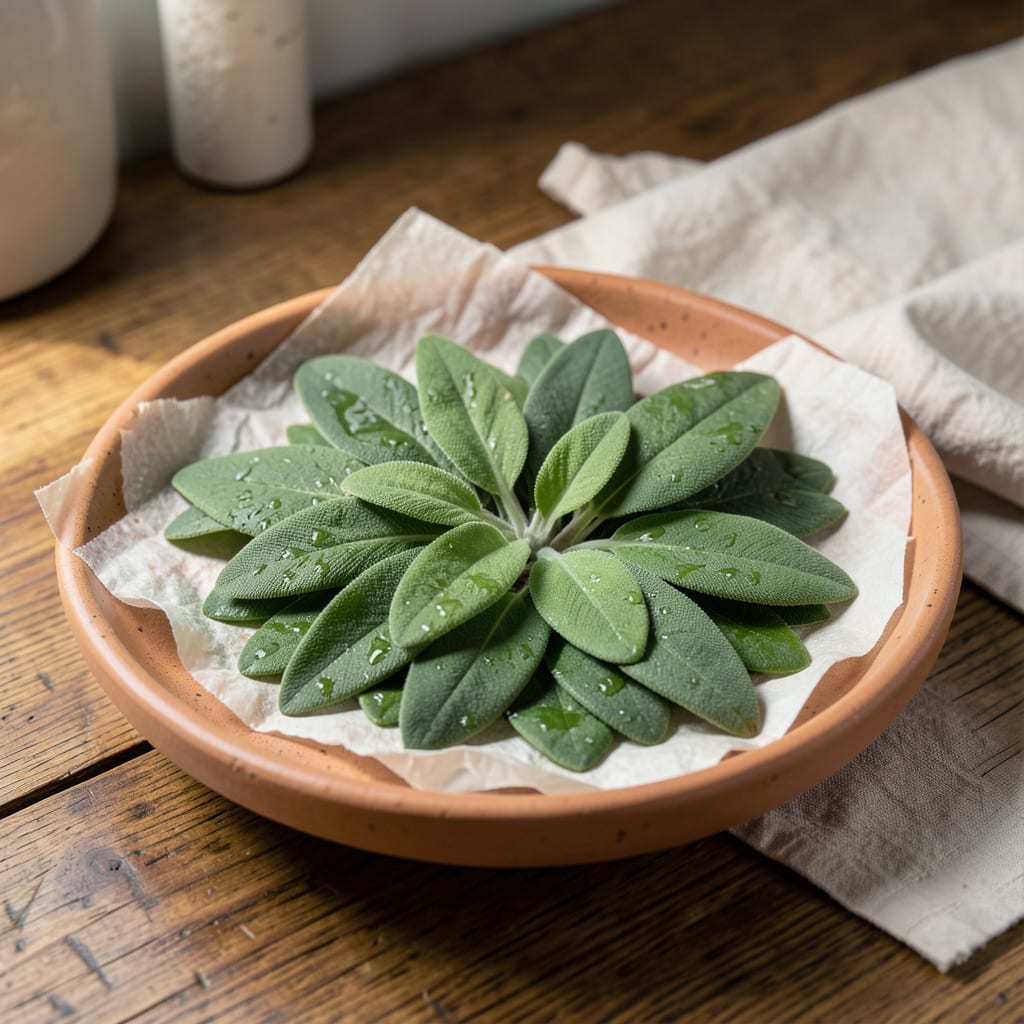
Sage leaves keep their punch far longer than you think. I’ve stretched harvests from my garden into winter with simple storage tricks that lock in flavor and color.
Drying or refrigerating works, but the real win is keeping them away from moisture and light. Properly stored, they taste garden-fresh for weeks instead of days.
📚 In This Guide
Here’s my go-to method for keeping sage fresh and flavorful for weeks or even months.
Pick sage leaves in the morning after the dew has dried but before the sun gets too hot. This is when their oils are most concentrated. I always check each leaf for blemishes or yellowing—only the best ones make the cut for storage.
Gently rinse the leaves under cool water to remove any dirt or bugs, then pat them completely dry with a clean towel. Any moisture left on the leaves will lead to mold, so don’t skip this step. You’ll feel the difference when they’re truly dry—they’ll have a slight crispness.
For short-term use, place fresh sage leaves in a damp paper towel inside a sealed plastic bag. Store them in the fridge, and they’ll stay fresh for 1-2 weeks. I check the towel every few days—if it’s dry, I dampen it slightly to keep the humidity right.
For longer storage, drying is the way to go. Bundle stems together and hang them upside down in a warm, dark, well-ventilated place. The leaves will dry out in 2-3 weeks, and you’ll know they’re ready when they crumble easily between your fingers.
Once dried, remove the leaves from the stems and store them in an airtight container. A glass jar works perfectly. Keep the container in a cool, dark place like a pantry, and your sage will retain its flavor for up to 6 months.
If you prefer, you can also freeze sage leaves. Spread them in a single layer on a baking sheet, freeze until solid (1-2 hours), then transfer to a freezer bag. They’ll keep for up to a year, though the texture changes slightly—perfect for cooking but not for garnishing.
Before using stored sage, always give it a quick check. Fresh leaves should smell strong and look vibrant. Dried leaves should still have a deep green color and a potent aroma. If they’ve lost their scent, it’s time to replace them.
When cooking, remember that dried sage is more concentrated than fresh. Use about one-third the amount in recipes. Fresh sage can be added whole or chopped, while dried sage should be crumbled or ground for the best flavor release.
Small details make a big difference when preserving sage leaves for maximum flavor.
Drying is Key: In Step 1, pat those leaves completely dry after rinsing. I learned this the hard way—any lingering moisture will cause mold during storage. The leaves should feel slightly crisp when truly dry, not just damp to the touch.
The Time Factor: For the drying method in Step 2, those 2-3 weeks hanging upside down are crucial. Don’t rush it—you’ll know they’re ready when leaves crumble easily between your fingers. A warm, dark, well-ventilated spot speeds this up beautifully.
Freezing Technique: When freezing in Step 3, spread leaves in a single layer first. This prevents them from sticking together during the 1-2 hours freezing time. Once solid, you can transfer them to a bag without worrying about clumps.
Storage Wisdom: For dried sage, that 6 months shelf life in a cool, dark place holds true only if the container is truly airtight. I use glass jars with tight-sealing lids and store them away from the stove to prevent heat damage.
Yes! Wrap fresh sage leaves in a damp paper towel, place them in a sealed container or bag, and store in the fridge for up to 10 days. This keeps them moist and fresh.
Hang bundles upside down in a warm, dry place for 1-2 weeks, or use a food dehydrator at 95°F (35°C) for 1-4 hours. Store dried leaves in an airtight container away from light.
Absolutely! Chop fresh leaves, spread them on a tray to freeze, then transfer to a freezer bag. Alternatively, blend with oil or water and freeze in ice cube trays for easy portions.
Toss them if they develop mold, a slimy texture, or an off smell. Dried sage loses potency over time—replace if the aroma fades significantly.
For immediate use (1-2 days), place unwashed leaves in a glass of water like a bouquet on your countertop. Cover loosely with a plastic bag to retain moisture.
