
Beautiful Plants For Your Interior
Beautiful Plants For Your Interior
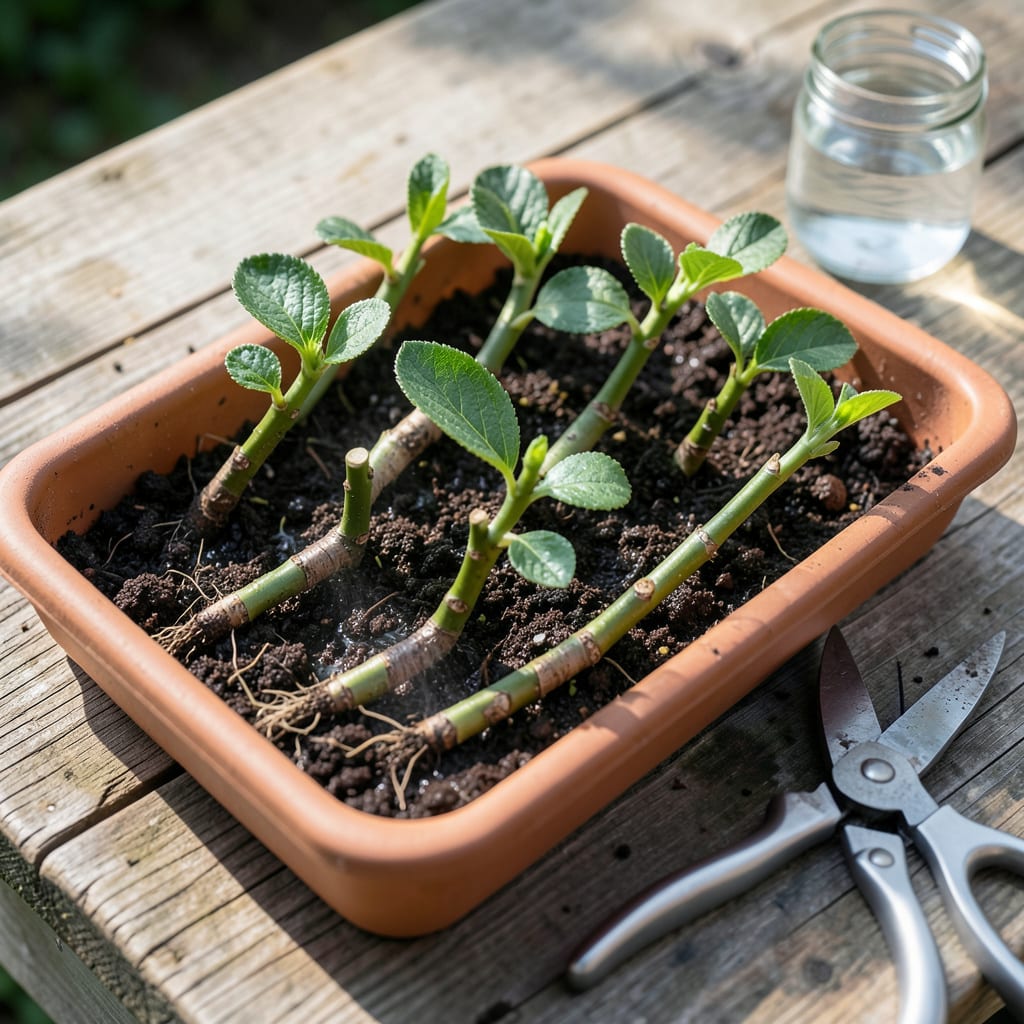
I turned one snowball bush into six last summer. The process is shockingly simple once you understand the timing and conditions these cuttings crave.
You’ll need 6-inch cuttings from new growth, a rooting medium that drains well, and patience for the 4-8 weeks it takes to see roots. No special tools required—just a sharp knife and a shady spot.
📚 In This Guide
Here’s the propagation method I’ve refined over years for reliable snowball bush rooting.
Take 6-8 inch cuttings from healthy, current season’s growth in early summer when the wood is semi-hard. Choose stems with 3-4 leaf nodes and remove all but the top two leaves to reduce moisture loss. This ensures the cutting directs energy toward root development rather than maintaining foliage.
Make the cut just below a leaf node at a 45-degree angle using clean, sharp pruners. The angled cut increases surface area for root formation while preventing water from pooling on the cut end. I always dip the cut end in rooting hormone powder (while optional, it speeds up the process significantly).
Fill a clean container with a well-draining rooting medium like perlite, vermiculite, or a 50/50 mix of peat moss and coarse sand. Water the medium thoroughly and let it drain completely before planting. The medium should be moist but not waterlogged—soggy conditions cause rot.
Insert each cutting 2-3 inches deep into the medium, ensuring at least one leaf node is buried (this is where roots will form). Space cuttings 2 inches apart to prevent leaves from touching. Gently firm the medium around each stem to eliminate air pockets that could dry out the cutting.
Cover the container with a clear plastic bag or place it in a propagation box to maintain high humidity. This prevents the cuttings from drying out while they develop roots. I secure the bag with a rubber band but leave a small opening for air circulation—complete sealing encourages mold growth.
Place the container in bright, indirect light (direct sun will overheat the cuttings) at temperatures between 65-75°F. You should see new growth within 4-6 weeks, which indicates successful rooting. Resist the urge to check for roots too early—disturbing the cutting can set back progress.
Once roots are 1-2 inches long (you can check by gently tugging—if there’s resistance, roots have formed), transplant each cutting into its own pot filled with well-draining potting mix. Water thoroughly after transplanting to help the soil settle around the new roots.
Keep the new plants in partial shade for 1-2 weeks to acclimate before moving to their permanent location. This hardening-off period prevents transplant shock. I’ve found that snowball bushes rooted this way establish quickly and often bloom the following spring.
These refined techniques will help you sidestep the most common propagation pitfalls.
The Cutting Selection: In Step 1, always choose semi-hard wood from the current season’s growth. Soft green stems rot easily, while fully hardened wood roots too slowly. The 6-8 inch length with 3-4 leaf nodes gives you enough stored energy for reliable rooting while keeping the cutting manageable.
Medium Moisture Matters: For Step 2, your rooting medium should feel like a wrung-out sponge—moist but never soggy. I learned this the hard way after losing an entire batch to rot. Perlite or vermiculite work best for drainage, but that 50/50 peat moss and coarse sand mix is my go-to for consistent results.
Temperature Control: That 65-75°F range in Step 3 isn’t just a suggestion. Below 65°F, rooting slows dramatically, while above 75°F encourages rot instead of growth. A heat mat can help maintain consistent warmth if your space tends to run cool.
Transplant Timing: Don’t rush Step 4. Those 1-2 inch roots are critical—shorter roots struggle to establish, while longer ones can bend or break during transplanting. The gentle tug test is more reliable than any calendar date for knowing when they’re ready.
Yes! Softwood cuttings taken in late spring or early summer root best. Dip the cut end in rooting hormone, plant in moist potting mix, and keep humid for 4-6 weeks. Success rates are high with proper care!
The ideal time is early summer when new growth is still soft but mature enough to root. Avoid extreme heat or cold, as moderate temperatures (60-75°F) encourage faster root development.
Typically 4-8 weeks, depending on conditions. Keep the soil consistently moist and provide indirect light. Tug gently after a month—resistance means roots are forming!
Check for rot (overwatering) or dryness (underwatering). Ensure high humidity (use a plastic bag or misting) and stable warmth. Older wood or improper hormone use can also delay success—try fresh cuttings.
It’s possible but less reliable than soil. Place cuttings in water, change it weekly, and transfer to soil once roots are 1-2 inches long. Some varieties resist water rooting, so soil is recommended.
