
Beautiful Plants For Your Interior
Beautiful Plants For Your Interior
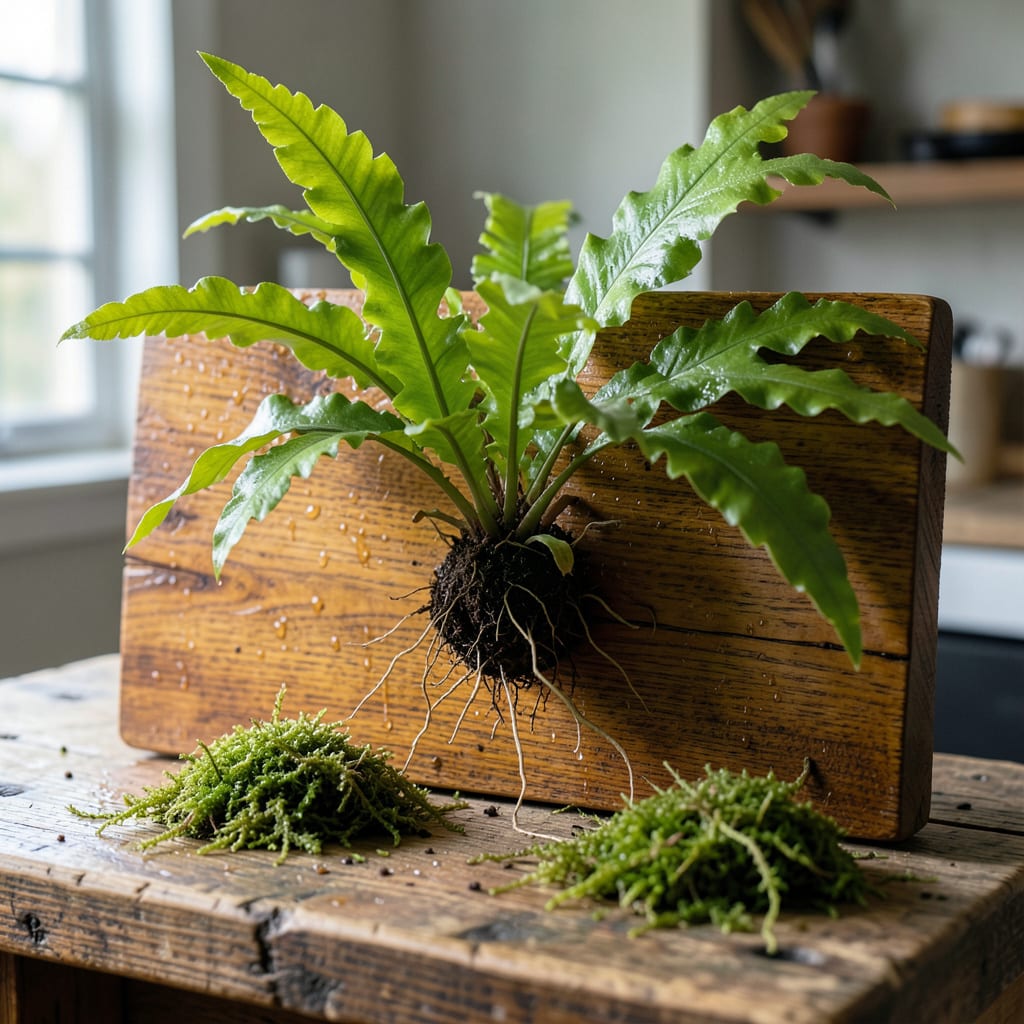
My first staghorn fern nearly died from the wrong mounting. This plant doesn’t need soil—it thrives when attached to wood or bark, just like in nature.
With the right setup, you’ll see new fronds unfurling within 4-6 weeks. The process is simple once you understand its epiphytic needs—just a sturdy base, proper moisture, and patience.
📚 In This Guide
Here’s the method I rely on to keep your staghorn fern healthy and thriving in its new home.
Select a sturdy, well-draining mounting surface like a wooden plaque, bark slab, or wire frame. I prefer cedar or redwood plaques because they resist rot and provide a natural aesthetic that complements the fern’s wild appearance. Soak the mounting surface in water for 1-2 hours to ensure it’s fully saturated before attaching the fern.
This step prevents the fern from drying out too quickly once mounted. If using a wire frame, line it with a layer of sphagnum moss to retain moisture while allowing airflow. The moss should be damp but not dripping when you begin the mounting process.
Gently remove the staghorn fern from its existing mount or pot. If it’s attached to a surface, use a sharp knife or pruners to carefully cut away any ties or roots anchoring it. Be patient—staghorn ferns often cling tightly, and forcing the removal can damage the rhizomes or fronds.
Inspect the root ball and trim away any dead or rotting roots with clean, sterilized pruners. Healthy roots should be firm and white or light tan. If the fern has been in a pot, loosen the roots slightly to encourage them to spread into the new mounting material.
Position the fern on the mounting surface so the rhizome (the thick, brown, shield-like structure at the base) sits flat against the material. This is the fern’s natural anchoring point, and it needs firm contact to establish itself. Use nylon stockings, fishing line, or soft plant ties to secure the fern in place.
Wrap the ties around the rhizome and the mount, pulling snugly but not too tight—you want to hold the fern in place without cutting into the rhizome. If using sphagnum moss, tuck it around the roots and rhizome before securing. The fern should feel stable and immovable once tied down.
After securing the fern, thoroughly soak the entire mount in a bucket or sink of room-temperature water for 10-15 minutes. This ensures the moss (if used) and the mounting material are fully saturated, and it gives the fern a deep drink to recover from the replanting stress.
Allow the mount to drain completely before hanging it in its new location. The fern should feel heavy with moisture but not waterlogged. Place it in a spot with bright, indirect light and good airflow to mimic its natural epiphytic habitat.
For the first 2-3 weeks, mist the fern daily with room-temperature water to keep the humidity high and the mounting material damp. Avoid overwatering—staghorn ferns rot if they stay soggy. You’ll know it’s time to water again when the moss or mounting material feels slightly dry to the touch.
Watch for new growth emerging from the rhizome—this is your sign that the fern has successfully established itself. Once you see fresh, green fronds, you can reduce misting to 2-3 times per week, depending on your home’s humidity levels.
The key details that make the difference between a struggling fern and a thriving one.
Soaking Time: The 1-2 hour soak in Step 1 isn’t optional—this saturates the mounting surface so it won’t steal moisture from your fern during that critical first week. I learned this the hard way after losing a beautiful specimen to premature drying. Cedar and redwood plaques especially need this full hydration period to prevent cracking as they dry.
Rhizome Positioning: In Step 3, make sure the rhizome lies completely flat against your mount. This brown, shield-like structure is how staghorns anchor in nature, and any air gaps will delay establishment. I use fishing line because it’s nearly invisible once the fern grows in, but nylon stockings work just as well for a gentler hold.
Hydration Check: During that 10-15 minute soak in Step 4, the entire mount should feel heavy with water. If your sphagnum moss floats to the surface, it needs more time to fully absorb. Drain completely afterward—waterlogged moss leads to root rot, which is the number one killer of newly mounted staghorns.
Light Requirements: The bright, indirect light mentioned in Step 4 is non-negotiable. Direct sun will scorch the fronds, while low light causes weak growth. An east-facing window is ideal, or a spot a few feet back from a south-facing window with sheer curtains. Good airflow is equally important to prevent fungal issues.
Replant every 2-3 years or when roots outgrow the mount. Young ferns may need annual checks for fresh medium.
No, staghorn ferns are epiphytic—they thrive on mounts (like wood or moss). Soil can suffocate roots and cause rot.
Spring or early summer is ideal, when active growth begins. Avoid winter dormancy for best recovery.
Brown fronds often mean stress or underwatering. Mist daily for 2 weeks post-replant and keep humidity high.
Wait 4-6 weeks to let roots settle. Then use a diluted, balanced fertilizer (10-10-10) monthly in growing season.
