
Beautiful Plants For Your Interior
Beautiful Plants For Your Interior
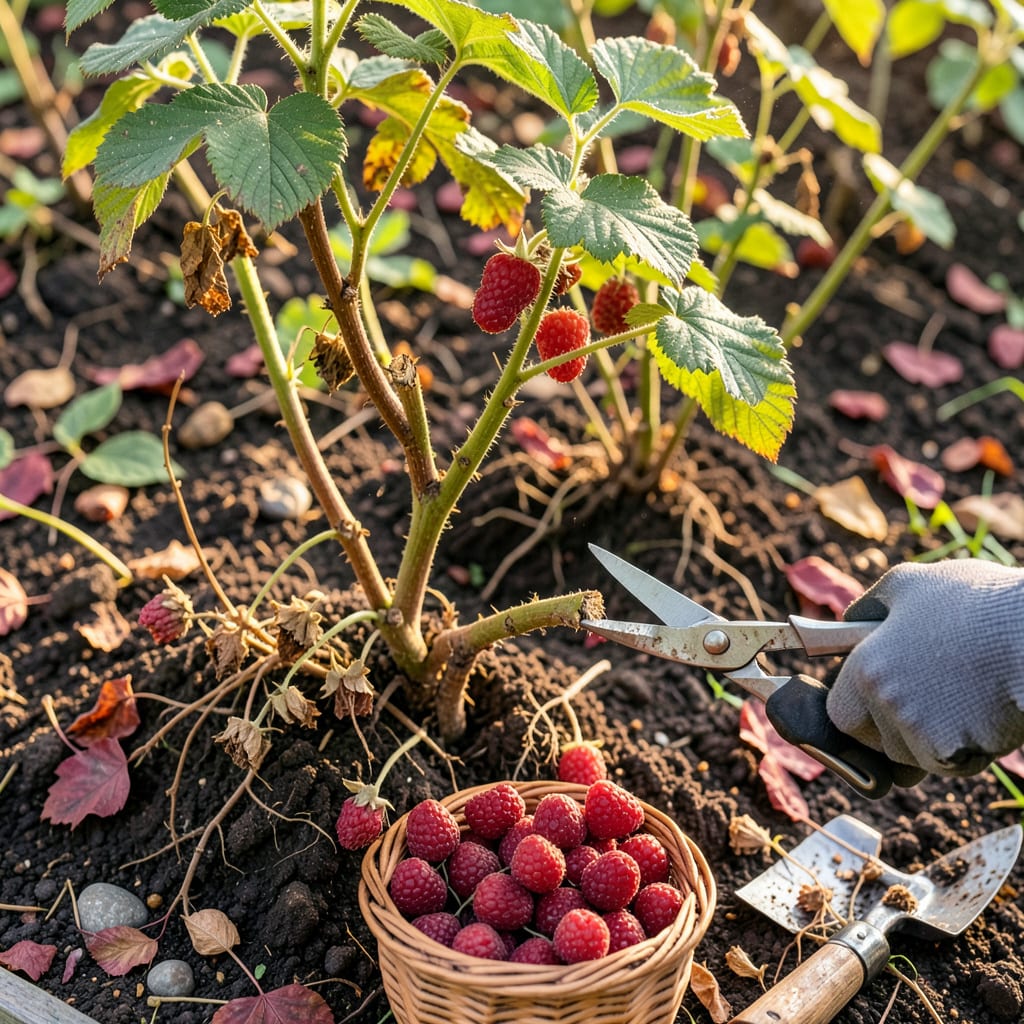
That first fall I ignored my raspberry patch, I paid for it all next summer—sparse berries, tangled canes, and a jungle of weak growth. Pruning in autumn isn’t just cleanup; it’s how you double next year’s harvest while preventing disease and pest buildup. The plants tell you exactly what to cut if you know what to look for.
I’ve tested every shortcut and learned the hard way: summer-bearing and fall-bearing varieties need completely different approaches. With just 30 minutes and the right technique, you’ll remove the right canes at the right height, leaving only the strongest growth. Come spring, those pruned plants will explode with fruit—thicker canes, bigger berries, and no wasted energy on dead wood.
📚 In This Guide
This simple fall routine takes less than an hour but doubles next year’s berry production—here’s exactly how I do it.
Start by locating the brown, woody canes that produced fruit this summer. These second-year canes (called floricanes) will never bear again, and they’re stealing energy from new growth. I run my hand along the base of the plant—any cane that snaps easily when bent is ready to come out.
Don’t worry about mistaking first-year canes (primocanes)—they’ll be green with flexible stems and may still have leaves. Leave these completely untouched. For black or purple raspberries, you’ll also remove any weak, thin canes (pencil-width or smaller) regardless of age.
Using clean, sharp pruners, cut the old floricanes at ground level. Don’t leave stubs—they can harbor disease over winter. I make each cut at a slight angle to prevent water pooling on the cut surface, which can lead to rot.
As you work, pull the cut canes from the patch immediately and set them aside. This prevents confusion about which canes you’ve already pruned. For thick patches, I use loppers for canes over ½-inch diameter to avoid jagged tears that invite pests.
Now focus on the green primocanes you’re keeping. Thin them to about 4-6 canes per linear foot of row. This spacing ensures good air circulation (critical for preventing fungal diseases) and gives each remaining cane room to produce maximum fruit.
Choose the thickest, healthiest-looking canes to keep—they should be at least ¼-inch diameter at the base. Remove any that are damaged, rubbing against others, or growing outside your desired row width. I aim for canes spaced about 6 inches apart in the row.
Cut back the tops of the remaining primocanes by about one-quarter of their height. This removes the weakest tip growth and encourages branching lower on the cane, where fruit will be easier to harvest next season.
Make these cuts just above a healthy bud (you’ll see it as a small bump on the cane). For most varieties, this means cutting when canes reach about 4-5 feet tall. The exact height isn’t critical—consistency across your patch matters more than precise measurement.
Rake up and remove all cut canes and leaf debris from around the plants. This material can harbor overwintering pests and diseases. I either burn it (if local regulations allow) or bag it for trash—never compost raspberry debris.
Apply a 2-3 inch layer of mulch (straw or wood chips work well) around the base of the plants to protect roots from winter temperature swings. Water the plants deeply one final time before the ground freezes to prevent winter desiccation of the canes.
Stand back and admire your work—what looks drastic now will reward you with larger, healthier berries next summer. The patch will look sparse, but that’s exactly what you want for optimal productivity.
Pruning raspberries properly in fall sets the stage for next year’s harvest—here’s how to avoid common pitfalls and get it right.
Tool Selection Matters: Using dull pruners in Step 2 creates jagged cuts that invite disease. I sharpen my pruners before starting and keep a small bottle of rubbing alcohol nearby to disinfect between cuts, especially when moving between plants. For canes thicker than ½-inch, switch to loppers as mentioned in the instructions—they give cleaner cuts without tearing the plant tissue.
Here’s what nobody tells you: run your fingernail along the cane. Old floricanes (the brown ones you’re removing in Step 1) will have rough, peeling bark, while new primocanes feel smooth. If you’re still unsure, bend the cane gently—old canes snap cleanly, while new ones bend without breaking. This simple test saves me from accidentally removing productive canes every time.
Spacing for Success: In Step 3, when thinning to 4-6 canes per foot, I use this trick: lay a ruler or yardstick along the row as I work. It’s easy to underestimate spacing when you’re in the middle of the patch. Those 6 inches between canes might look excessive at first, but come summer, you’ll be grateful for the airflow that prevents mildew and the room that allows each cane to produce maximum fruit.
Height Consistency: For Step 4, where you’re cutting back primocanes by one-quarter, here’s my approach: first identify the tallest cane in your patch (likely around that 4-5 foot mark mentioned), then use it as your guide for cutting all others. This creates uniform height across your patch, which makes trellising easier next spring and ensures even sunlight distribution to all canes.
No—wait until fruiting stops! Fall pruning is for after harvest (late fall, post-first frost). Cutting active canes removes next season’s berries. For everbearing varieties, prune only the top 1/3 of second-year canes if they’re still fruiting. Patience pays off!
Summer-bearing: Remove all 2-year-old canes (they won’t fruit again) and thin new growth to 4–6 strongest canes per foot. Everbearing: Option 1—cut all canes to ground for one late summer crop; Option 2—prune only dead tips for two smaller harvests.
Done correctly, no! Raspberries need fall pruning to redirect energy to roots and new canes. Avoid “over-pruning” (never remove more than 1/3 of the plant) and use sharp, clean tools to prevent disease. Think of it like a haircut—trimming encourages healthy growth!
Early winter (before dormancy breaks) is fine, but avoid spring pruning—it delays fruiting. If you must prune in spring, do it before buds swell and focus on removing dead/diseased wood. Late pruning = fewer berries, so mark your calendar for next fall!
How do I know which canes to cut? They all look alike!
Easy trick: 2-year-old canes are brown, woody, and may have peeling bark; 1-year-olds are green/purplish and flexible. Tag fruiting canes with ribbon after harvest to simplify fall cleanup. When in doubt, cut the thickest, oldest-looking stems—they’re done producing!
