
Beautiful Plants For Your Interior
Beautiful Plants For Your Interior
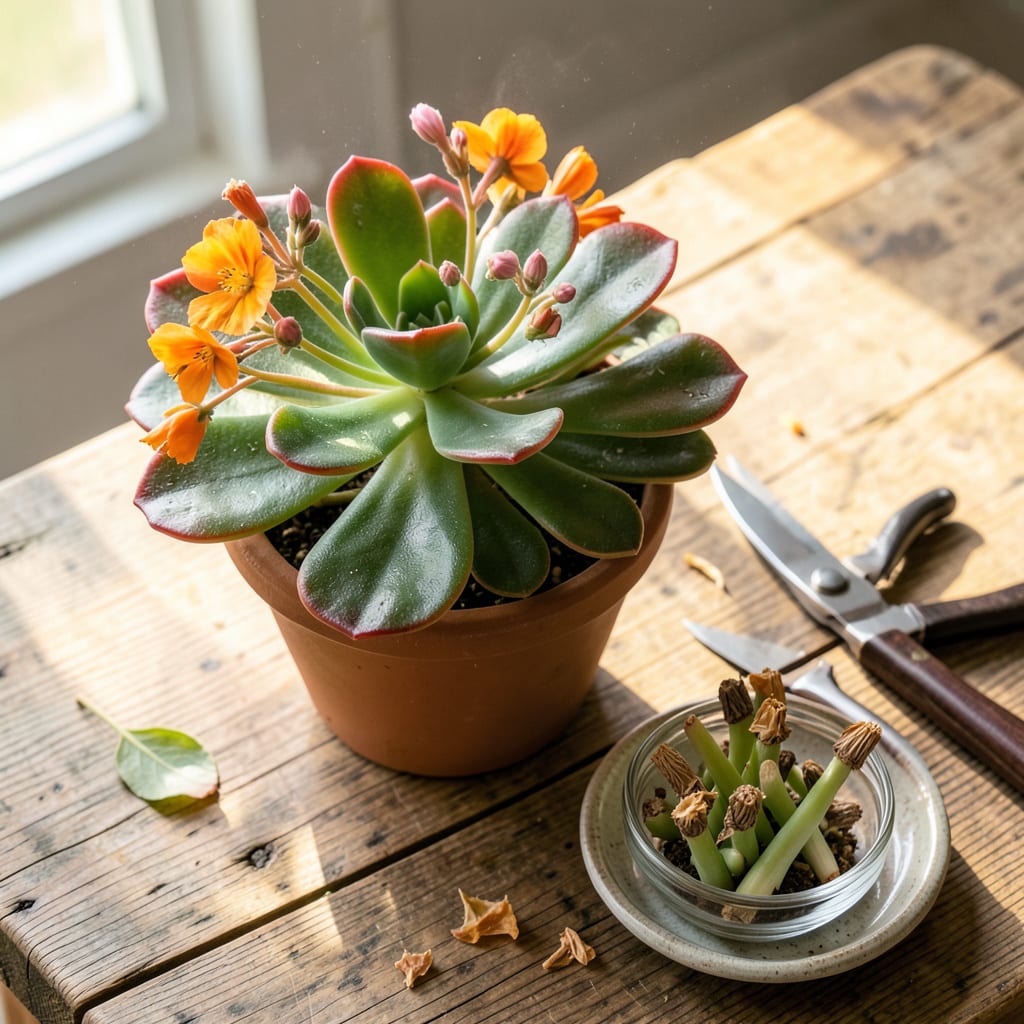
That leggy kalanchoe on your windowsill? A few strategic snips will transform it. I used to let mine grow wild until I realized pruning turns sparse, stretched stems into compact, flower-loaded plants. The difference is shocking—what looks like a sad survivor becomes the centerpiece of your collection.
Timing and technique matter more than fancy tools. Do this right after blooming ends, and you’ll trigger fresh growth exactly where you want it. No green thumb required—just clean cuts and a little patience. Within weeks, you’ll see new buds forming, and by next season, your plant will bloom twice as full.
📚 In This Guide
This foolproof method transforms leggy plants into compact, flower-covered beauties—no fancy tools required.
Start by examining your kalanchoe for tall, spindly stems with sparse leaves. These are your primary targets. Look for stems that have finished blooming—you’ll recognize them by their dried flower heads and woody appearance. I always prioritize stems that are 4-6 inches long or longer, as these benefit most from pruning.
Check the base of each stem for small leaf nodes or dormant buds—these are where new growth will emerge. Avoid cutting stems that are still green and supple with active blooms, as these can continue flowering. The goal is to remove only what’s spent while preserving the plant’s energy for fresh growth.
Using sharp, sterile pruning shears or scissors, cut each selected stem at a 45-degree angle just above a leaf node or pair of leaves. This angled cut prevents water from pooling on the wound, which could lead to rot. I make my cuts about 1/4 inch above the node—close enough to encourage new growth but not so close that I damage the bud.
For thicker, woodier stems, you might need to make two cuts: the first to remove most of the length, and a second, cleaner cut to refine the angle. Always sanitize your tools with rubbing alcohol between plants to prevent disease transmission. The cuts should feel crisp and clean, never ragged or crushed.
Step back after each cut to assess the plant’s overall shape. I aim for a rounded, symmetrical form by pruning longer stems first, then gradually working toward the center. Remove any crossing stems that might rub against each other, as these create wounds that invite pests and diseases.
If your kalanchoe has become extremely leggy, you can prune up to one-third of its total height in one session. However, I prefer more gradual pruning—removing 20% of the foliage at a time allows the plant to recover without shock. You’ll know you’ve pruned enough when the plant looks fuller at the base and light can reach the center.
After pruning, place your kalanchoe in bright, indirect light for about 6-8 hours daily. This encourages the plant to focus its energy on producing new shoots rather than stretching for light. I’ve found that a east-facing window provides ideal conditions—strong enough to promote growth but not so intense it stresses the freshly cut plant.
Water lightly but consistently, allowing the top inch of soil to dry between waterings. You should see new growth emerging from the cut nodes within 2-3 weeks. These new shoots will be more compact and will produce more abundant blooms in the next flowering cycle. The pruned stems you removed can often be propagated to create new plants.
Once new growth appears, maintain your kalanchoe’s shape by pinching back the tips of the newest stems. Use your fingernails to remove just the top 1/2 inch of each stem—this encourages branching without the need for major pruning. I do this every 4-6 weeks during the growing season to keep the plant bushy.
Watch for signs of stress like yellowing leaves or soft stems, which indicate overwatering after pruning. The plant should maintain its vibrant green color and firm texture. With regular maintenance, your kalanchoe will develop a dense, mounded shape and reward you with more frequent, vibrant blooms throughout its growing season.
Pruning kalanchoe doesn’t have to be intimidating—these insights will help you avoid common pitfalls while achieving that perfect bushy shape.
The Right Stem Selection: In Step 1, focus on those 4-6 inch stems with dried flower heads, but here’s what nobody tells you—always check for hidden buds at the base before cutting. I’ve found that stems with visible nodes (those tiny bumps where leaves once grew) respond best to pruning, producing two or three new shoots instead of just one. This small observation makes the difference between a moderately improved plant and one that explodes with new growth.
Precision Cutting Technique: Step 2’s 45-degree angle cut is non-negotiable, but the 1/4 inch spacing above the node is where most people go wrong. Too close and you risk damaging the bud; too far and the stub dies back, leaving an unsightly nub. I use the width of my fingernail as a guide—it’s naturally about 1/4 inch. For thicker stems, make that first rough cut to remove bulk, then refine with your precision cut. This two-step method prevents the stem from splitting under pressure.
Gradual Pruning Strategy: While Step 3 mentions you can remove up to one-third of the plant’s height, I’ve learned through trial and error that the 20% guideline produces consistently better results. When I’ve pushed to that full one-third (especially with neglected plants), I’ve noticed a recovery period nearly twice as long. The plant directs all its energy to regrowing lost foliage rather than producing those vibrant blooms we’re after. Stick with the conservative approach unless you’re dealing with a severely overgrown specimen.
Post-Pruning Care: The 6-8 hours of bright, indirect light mentioned in Step 4 is ideal, but here’s the critical detail missing: rotate your plant daily. I place a small mark on the pot with a permanent marker to track which side faced the window yesterday. This ensures even light distribution and prevents the new growth from leaning toward the light source. Also, when watering, use room temperature water—cold water can shock the freshly pruned plant’s roots, delaying that 2-3 week regrowth timeline.
Prune right after flowering (late winter/early spring) for most varieties. This timing encourages new growth and prevents legginess. Avoid pruning in fall when plants prepare for dormancy—wait until buds fade but before summer heat stress.
Yes, but use clean, sharp scissors or pruning shears to avoid crushing stems. Disinfect blades with rubbing alcohol first to prevent disease. For thick stems, bypass pruners work best—never use dull tools that create jagged cuts.
No—when done correctly! Kalanchoes are resilient, but over-pruning (removing >30% of foliage at once) can shock the plant. Focus on deadheading spent blooms and trimming leggy stems. Always leave 2-3 healthy leaves per stem for regrowth.
Pinch back the top 1-2 inches of elongated stems just above a leaf node. This forces side shoots for a bushier shape. Move the plant to brighter light (south/west window or grow light) and rotate weekly to prevent uneven growth.
Let cuttings dry (callus) for 1-2 days, then plant in well-draining soil (50% perlite/50% cactus mix). Keep lightly moist in bright, indirect light. Roots form in 2-3 weeks—free new plants from your pruning “waste”!
