
Beautiful Plants For Your Interior
Beautiful Plants For Your Interior
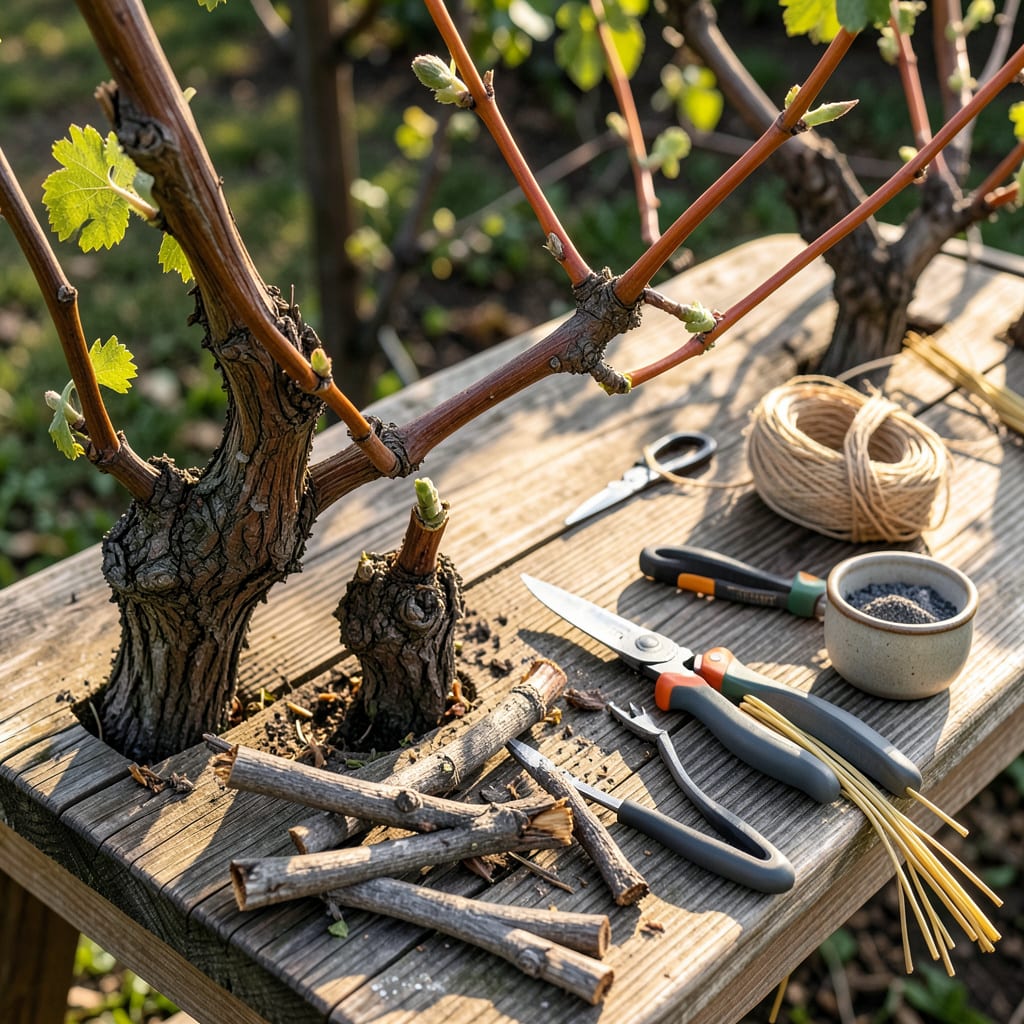
Pruning grape vines changed everything about my harvest. The first year I skipped it, I got a jungle of leaves and maybe 10 grapes. After learning the right technique, those same vines produced 30 pounds of fruit the next season. It’s not just about cutting back—it’s about directing the vine’s energy exactly where you want it.
Timing matters just as much as technique. Do it too early and frost can damage fresh cuts; wait too long and you risk bleeding sap. I’ve found late winter—when buds start swelling but haven’t opened—gives the best results. You’ll need sharp pruners, gloves, and about 20 minutes per vine to set yourself up for the biggest, sweetest clusters come fall.
📚 In This Guide
Pruning grape vines is simpler than it looks—follow my method and you’ll train productive vines that yield sweeter, fuller clusters.
Late winter, when vines are fully dormant but frost danger has passed, is ideal. I prune my grapes between February and early March in most climates. You’ll know it’s time when buds begin to swell slightly but haven’t opened yet.
Use sharp bypass pruners (not anvil-style) and sterilize them with rubbing alcohol between cuts to prevent disease spread. I keep a small bucket of 10% bleach solution nearby for quick dips. Wear thick gloves—grape canes are surprisingly tough on hands.
Start by cutting out all third-year or older canes (they’re thicker, with peeling bark). These won’t produce quality fruit. Look for last year’s growth—smoother, reddish-brown canes about pencil thickness—that’s your fruit wood.
I follow the “four-arm Kniffin” system: leave 4 main canes (two on each side of the trunk) with 8-12 buds each. Everything else gets removed at the base. Don’t leave stubs—cut flush with the main trunk to prevent rot.
On each remaining cane, count 8-12 healthy buds from the base and make a clean cut just above the last one. The ideal bud is plump but not opened. I angle cuts slightly away from the bud so water runs off.
Remove any lateral shoots growing from these canes—they’ll steal energy from your main crop. What remains should look like four evenly spaced “arms” extending from the trunk, each with 8-12 buds of potential fruit clusters.
Rake up and destroy all pruned material—don’t compost it, as it may harbor diseases. I tie the remaining canes to my trellis with soft plant tape, spacing them about 6 inches apart to allow airflow.
As new shoots emerge in spring, I’ll select the strongest 4-6 per vine to become next year’s fruiting canes and remove the rest. This might seem harsh, but it’s how you get those beautiful, loose clusters instead of crowded, mold-prone grapes.
Check vines weekly once growth starts. I pinch off any flowers on first-year canes—they won’t produce good fruit and will weaken the vine. Thin clusters when grapes are pea-sized, leaving one cluster per shoot for best quality.
By mid-summer, you’ll see the payoff: well-spaced clusters with good air circulation. The vine’s energy concentrates on fewer grapes, making them sweeter and larger. That’s the magic of proper pruning—less vine, more wine.
Pruning grape vines doesn’t have to be intimidating—these practical insights will help you avoid common pitfalls and get the best results from your vines.
Timing is Everything: The February to early March window mentioned in Step 1 is crucial because pruning too early risks frost damage, while pruning too late means you’ll lose valuable sap that could feed new growth. I’ve found that when buds just begin to swell but haven’t opened, that’s your perfect moment—it’s like catching the vine at just the right stage of waking up from winter dormancy.
Tool Maintenance Matters: The 10% bleach solution in Step 1 isn’t just for show—it’s your best defense against spreading diseases between cuts. I learned this the hard way after losing several vines to fungal infections. Between each cut, give your pruners a quick dip and wipe. It adds seconds to your work but saves you from heartbreak later. Also, those thick gloves aren’t optional; grape canes can be surprisingly sharp and will shred bare hands.
Bud Count Precision: When selecting your 8-12 buds per cane in Steps 2 and 3, remember that each bud will become a potential fruit cluster. I aim for the higher end (10-12 buds) on vigorous vines and the lower end (8-9 buds) on weaker ones. The key is consistency—all canes should have roughly the same number of buds to balance the vine’s energy distribution. And when making that final cut above the last bud, angle it slightly away so water runs off rather than pooling at the bud.
Future Growth Planning: The 6-inch spacing mentioned in Step 4 isn’t arbitrary—it’s about airflow and disease prevention. I use soft plant tape rather than wire or twine because it won’t cut into the canes as they grow. And when selecting those 4-6 strongest shoots in spring, choose ones that are evenly spaced around the vine. This creates that perfect “open vase” shape that allows sunlight to reach all parts of the vine, which is crucial for even ripening.
The ideal time is late winter to early spring (January–March) while vines are dormant but before buds swell. Avoid pruning in fall—it can stimulate new growth vulnerable to frost. In warmer climates (Zones 7+), prune earlier; in colder areas (Zones 4–6), wait until frost risk passes.
Unpruned vines grow wildly, producing smaller, lower-quality grapes and fewer clusters. Overcrowded canes block sunlight and airflow, increasing disease risk (like powdery mildew). Pruning ensures energy focuses on fruit production, not excess foliage—expect 30–50% more yield with proper cuts!
Yes, but only for light maintenance! Summer pruning (June–July) helps control vigor by trimming excessive shoots or leaves shading clusters. Avoid heavy cuts—it can stress vines. Focus on removing water sprouts (fast-growing vertical shoots) and thinning leaves around fruit for better airflow.
If you’ve cut too much, don’t panic! Vines are resilient. Leave 1–2 strong canes per vine to regrow, and apply a balanced fertilizer (10-10-10) to encourage recovery. Avoid heavy pruning the next season—let the vine rebuild foliage. New growth should appear in 4–6 weeks.
For low-maintenance options, try:
