
Beautiful Plants For Your Interior
Beautiful Plants For Your Interior
Three weeks from now, you could have brand-new vine plants thriving—without spending a dime. I’ve turned single cuttings into sprawling jasmine, vigorous clematis, and even productive grapevines using methods so simple they feel like cheating. The secret isn’t special tools or green-thumb luck, but understanding how vines naturally want to grow. Most people overcomplicate propagation […]
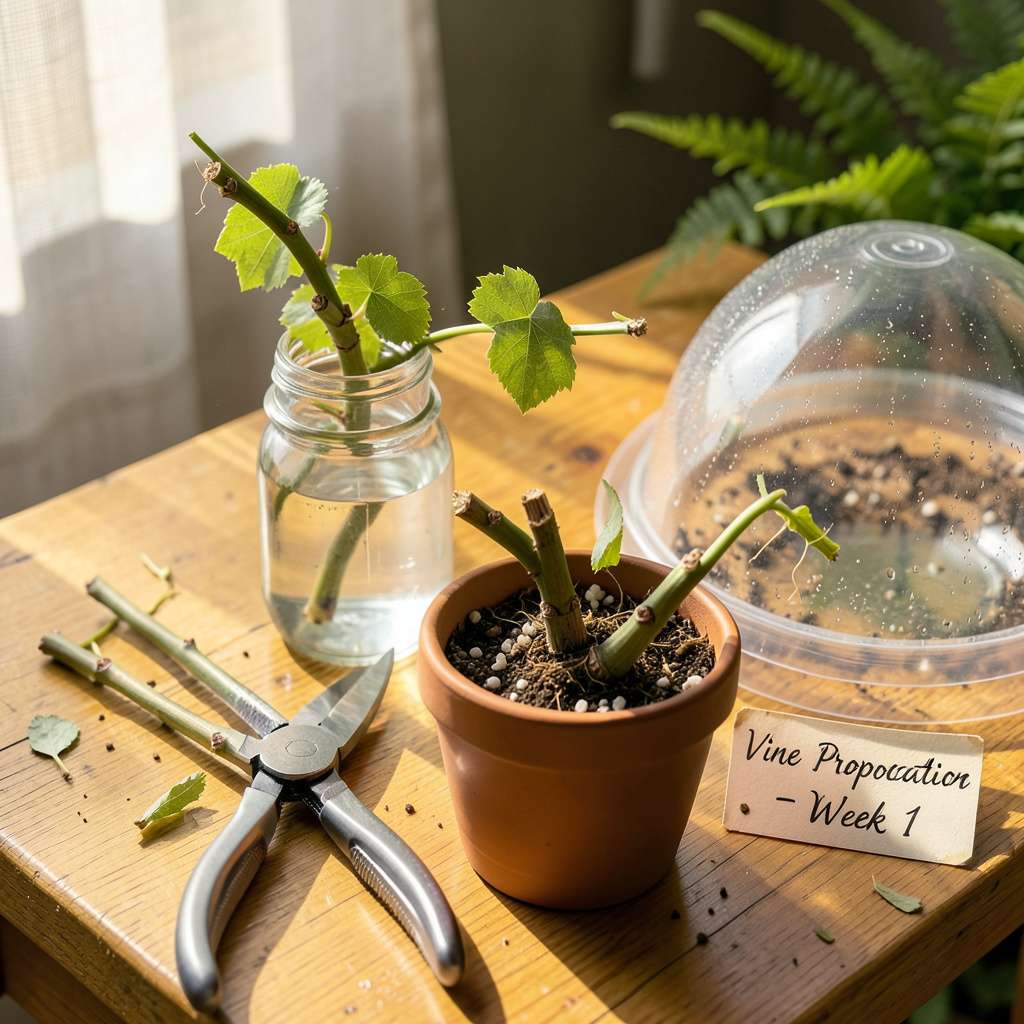
Three weeks from now, you could have brand-new vine plants thriving—without spending a dime. I’ve turned single cuttings into sprawling jasmine, vigorous clematis, and even productive grapevines using methods so simple they feel like cheating. The secret isn’t special tools or green-thumb luck, but understanding how vines naturally want to grow.
Most people overcomplicate propagation with fancy setups. My best results came from a jar of water, a sunny windowsill, and knowing exactly when to make the cut. Timing matters more than equipment: take cuttings in early morning when plants are hydrated, choose stems with visible nodes, and you’ll see roots form in 7-14 days instead of weeks.
What you end up with are genetically identical plants that establish faster than seedlings. They’ll climb, spread, and bloom in their first season because they’re already adapted to your conditions. I’ve filled entire trellises this way—starting with just a few strategic snips from a neighbor’s garden.
Works for everything from ornamental vines to edible varieties. Whether you’re expanding your collection or rescuing a favorite plant, this method delivers results you can actually see growing day by day. No guesswork, no wasted effort—just reliable new plants.
📚 In This Guide
Water (filtered or distilled, changed weekly)
This foolproof cutting method delivers rapid rooting and vigorous growth—no green thumb required.
Choose a vigorous, disease-free vine section with 4-6 nodes (the bumps where leaves emerge). I prefer semi-hardwood stems—neither too soft nor fully woody—for optimal rooting. Use clean, sharp pruners to make a 45-degree cut just below a node; this angled surface increases water absorption while preventing rot.
Remove the lower 2-3 leaves completely, leaving only the top pair. This reduces moisture loss while exposing nodes where roots will form. If your vine has large leaves (like pothos or philodendron), trim remaining leaves by half to minimize transpiration stress. Dip the cut end in water immediately to prevent air bubbles from blocking water uptake.
For water propagation, place cuttings in a clear glass with 2-3 inches of room-temperature water, ensuring at least 2 nodes are submerged. Change the water every 3-4 days to prevent bacterial growth. You’ll see white root nubs emerge from nodes within 7-10 days—that’s your signal to watch for rapid growth.
Alternatively, plant directly in a 50/50 mix of perlite and peat moss (or coco coir). Insert the cutting 1-2 inches deep, firming gently around the base. Mist thoroughly and cover with a clear plastic bag to maintain 80% humidity. Keep the medium consistently moist but never soggy—press your finger in daily to check.
Place cuttings in bright, indirect light (east-facing windowsills work perfectly). Direct sun will scorch tender new growth, while low light causes leggy, weak stems. Maintain ambient temperatures between 65-75°F—rooting slows dramatically below 60°F and stops entirely below 50°F.
A 10-hour photoperiod (supplemental grow lights help in winter) accelerates root development. You’ll know conditions are ideal when you see new leaf growth within 2-3 weeks. If leaves yellow or drop, increase humidity immediately—this is the plant’s distress signal for dry air.
Once roots are 2-3 inches long (visible through glass) or resist gently when tugged (in medium), transplant to individual 4-inch pots with well-draining potting mix. Water deeply after transplanting to eliminate air pockets around roots. I always use a chopstick to create a planting hole first—this prevents damaging tender new roots.
Acclimate gradually to normal conditions: remove humidity domes for increasing periods over 3-5 days. Begin fertilizing with half-strength balanced liquid fertilizer after 2 weeks in soil. You’ll see explosive new growth within 4 weeks—that’s when you’ll know you’ve succeeded.
After years of propagating everything from pothos to passionflower, I’ve learned these subtle adjustments make all the difference between struggling cuttings and explosive new growth.
Node Selection Strategy: In Step 1, focus on nodes that already show tiny brown bumps—these are latent root primordia waiting to activate. I’ve found cuttings with 5-6 nodes root fastest because you have backup nodes if the lowest ones fail. Always make that 45-degree cut precisely 1/4 inch below a node; any closer risks damaging the growth tissue, while farther away slows water uptake.
Water Propagation Precision: When following Step 2’s water method, use filtered or rainwater instead of tap water if possible. Chlorine in municipal water can inhibit root growth during those critical first 7-10 days. Change the water every 3 days without fail—bacterial blooms appear invisible until they’ve already damaged your cuttings. I mark my calendar to avoid missing this crucial maintenance.
Humidity Control Technique: For the soil propagation method in Step 2, don’t just mist and cover—create a proper humidity chamber. After misting, seal the plastic bag but leave a 1-inch gap at one corner for minimal airflow. This prevents the 80% humidity from dropping while avoiding the fungal risks of completely sealed environments. Check daily by feeling the medium’s surface; it should feel like a wrung-out sponge.
Transplant Timing Insight: Step 4 mentions waiting for 2-3 inch roots, but here’s what the instructions don’t tell you: watch for root color. Healthy roots ready for transplant are crisp white with tiny hair-like feeder roots emerging. If roots appear translucent or brownish, wait another week regardless of length. During the 3-5 day acclimation period, I’ve found that misting the leaves (not just the soil) twice daily prevents transplant shock.
Most vine cuttings root in 2–6 weeks, depending on the species and conditions. Fast growers like pothos or ivy may sprout roots in 10–14 days, while woody vines (e.g., grapevines) can take 4–8 weeks. Keep soil moist and provide indirect light to speed up the process!
Many vines (e.g., philodendron, sweet potato vine) root easily in water. Use a clean jar, change the water weekly, and transplant to soil once roots reach 2–3 inches. Avoid water propagation for woody vines—they prefer soil or perlite for better stability.
Yellowing or mushiness usually signals overwatering or rot. Trim affected areas, let cuttings dry for an hour, then replant in fresh, well-draining soil. Reduce watering until new growth appears. If using water propagation, ensure only the nodes (not leaves) are submerged.
Spring and early summer (when plants are actively growing) are ideal. Avoid winter propagation—cold temps slow root growth. For tropical vines, indoor propagation works year-round if you maintain warmth (65–75°F) and humidity (use a plastic bag or dome).
Not always! Many vines root without it, but hormone gel/powder can boost success rates for tricky species (e.g., wisteria, clematis). Dip cut ends in hormone before planting, especially for woody stems. For easy-rooting vines like pothos, it’s optional but may speed up growth.
Propagating vine plants doesn’t have to be complicated—with the right cuttings, tools, and a little patience, you can grow thriving new plants in no time! 🌱 Whether you’re expanding your garden or sharing clippings with friends, these foolproof methods make it easy to multiply your favorite vines.
Now that you’re equipped with the know-how, grab your pruners and get started! Try propagating one vine today, and soon you’ll have a lush, sprawling collection. Happy growing! 🌿
