
Beautiful Plants For Your Interior
Beautiful Plants For Your Interior
There’s something magical about turning one succulent into ten. I still remember the first time I watched a single leaf sprout tiny pink roots—now my windowsills overflow with plants that cost me nothing but patience. Succulent propagation is the closest thing to gardening alchemy, and it’s easier than most people think. You don’t need special […]
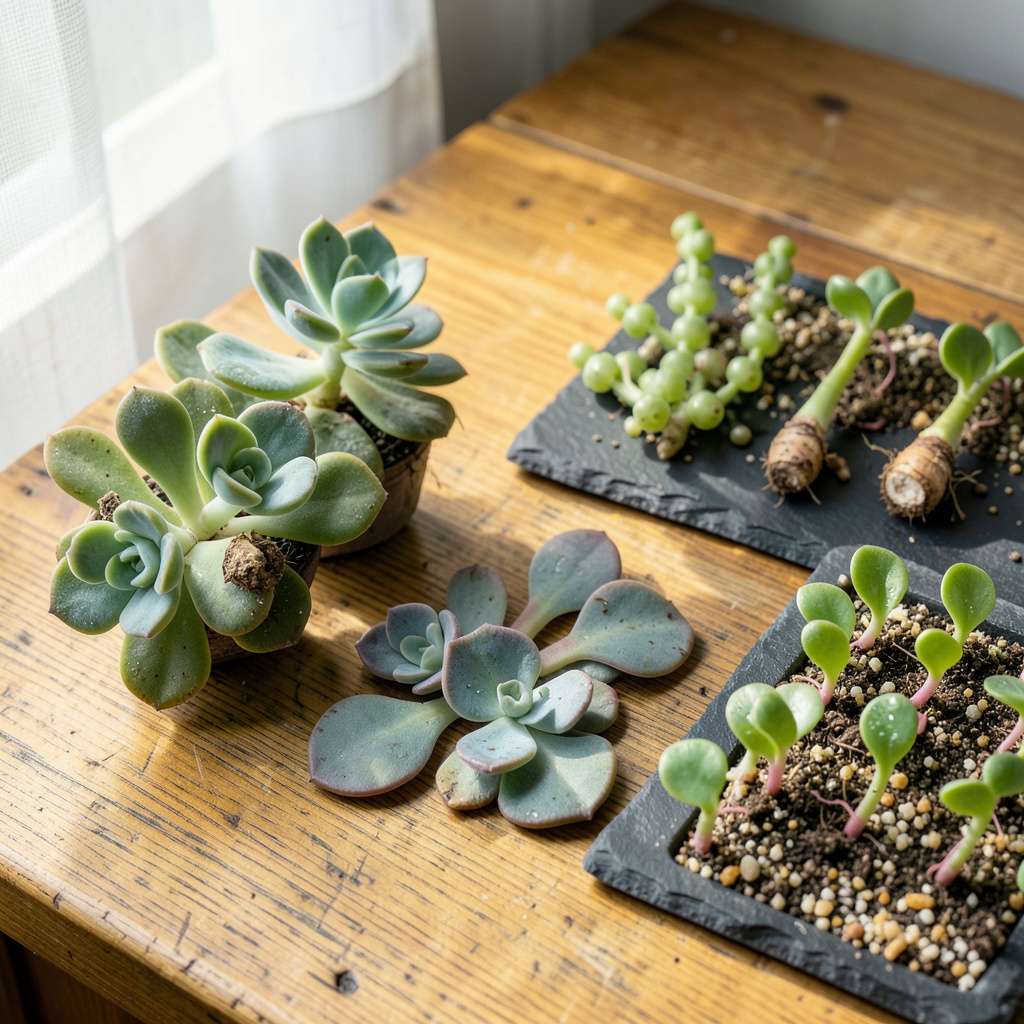
There’s something magical about turning one succulent into ten. I still remember the first time I watched a single leaf sprout tiny pink roots—now my windowsills overflow with plants that cost me nothing but patience. Succulent propagation is the closest thing to gardening alchemy, and it’s easier than most people think.
You don’t need special tools or green thumbs—just healthy parent plants, a little know-how, and the right technique for each type. Some succulents root from single leaves, others from stem cuttings, and many produce baby offsets ready to separate. The key is matching your method to the plant’s natural growth habits.
Within 4-6 weeks, you’ll see new roots forming and baby plants emerging. The process teaches you to read what your plants need—when to mist, when to wait, and when to transplant. My first successful batch gave me the confidence to propagate everything from echeverias to jade plants.
Best part? This works year-round indoors and expands your collection without spending a dime. Whether you’re rescuing stretched-out plants or sharing with friends, propagation turns every succulent into a gift that keeps giving. Here’s exactly how to do it right.
📚 In This Guide
This method delivers perfect results every time—no guesswork, just healthy new plants from your existing collection.
Choose mature, plump leaves or stem cuttings from established succulents. For leaf propagation, gently twist a healthy leaf from the base until it snaps cleanly—don’t use damaged or shriveled leaves. The separation should reveal a small nub where the leaf attached; this is your future root zone.
For stem cuttings, use clean pruners to take 3-4 inch sections from the top growth. Always cut just above a leaf node and remove the bottom leaves to expose 1-2 inches of bare stem. Let all cuttings callus over in a dry, shaded spot for 2-3 days—this prevents rot when planted.
Fill a shallow tray with fast-draining propagation mix (equal parts perlite and coarse sand works perfectly). Moisten the mix lightly until it’s just damp—not wet—to encourage root growth without saturation. The surface should feel like a wrung-out sponge.
Lay leaf cuttings flat on the soil surface, ensuring the callused end makes contact but the leaf itself isn’t buried. For stem cuttings, insert the bare stem 1 inch deep into the mix, using a pencil to create a planting hole first. This prevents damaging the callus.
Place your tray in bright, indirect light (an east-facing windowsill is ideal). Avoid direct sun, which can scorch unrooted cuttings. You’ll notice tiny pink roots emerging from leaf cuttings in 2-4 weeks, while stem cuttings establish roots faster, typically within 10-14 days.
Mist the soil surface with water every 3-5 days or when it feels completely dry. Overwatering at this stage causes immediate rot. You’ll know roots are developing when the leaf cuttings resist gentle tugging or stem cuttings show new top growth.
Once roots reach 1-2 inches long (visible through the tray’s drainage holes or when gently lifted), transplant leaf cuttings into individual pots. Bury only the rooted portion, leaving the new rosette above soil. Stem cuttings can move to their final containers when they’ve doubled in size.
Begin treating them like mature plants: water when the soil is completely dry to the touch (about every 7-10 days), and gradually introduce more sunlight. You’ll see noticeable growth within 4-6 weeks as the plants establish their new root systems.
After years of propagating succulents (and learning from plenty of mistakes), here’s what makes the difference between success and disappointment.
Cutting Selection: In Step 1, choose leaves that are plump and firm—not just the largest ones. I’ve found that slightly smaller, healthier leaves often root faster than oversized, older leaves that may be stressed. For stem cuttings, look for sections with at least three sets of leaves; these have more stored energy for root development. The 3-4 inch length specified isn’t arbitrary—shorter cuttings dry out too quickly, while longer ones waste energy maintaining unnecessary growth.
Callusing Technique: During the 2-3 day callusing period mentioned in Step 1, place cuttings in a location with good air circulation but no direct light. I use a mesh tray over a baking rack—this allows air to reach all sides of the cuttings while keeping them off damp surfaces. Don’t rush this step; under-callused cuttings absorb too much moisture when planted, leading to rot before roots can form.
Moisture Management: The instruction in Step 2 to keep soil “like a wrung-out sponge” is critical. I measure this by pressing my finger 1/2 inch into the mix—it should feel barely damp, not cool or wet. When misting every 3-5 days as directed in Step 3, use a spray bottle set to a fine mist rather than a stream. Direct water pressure can dislodge delicate new roots or bury leaf cuttings too deeply.
Light Conditions: That “bright, indirect light” recommendation in Step 3 deserves clarification. I’ve had best results with 4-6 hours of morning sun from an east window, then ambient room light for the remainder. If you only have south or west exposures, use a sheer curtain to diffuse the intensity. Leaf cuttings will stretch toward light sources, so rotate your tray every few days to prevent lopsided growth.
Yes! Water propagation works for many succulents like Echeveria or Sedum. Place cuttings in a shallow container with water, ensuring only the stem (not leaves) touches the liquid. Change water weekly to prevent rot. Once roots grow (2-6 weeks), transplant to soil for long-term health.
Timing varies by species and method! Soil propagation typically takes 2-4 weeks, while water propagation may show roots in 1-3 weeks. Leaf cuttings (like from Jade Plants) can take 4-8 weeks. Keep them in bright, indirect light and avoid overwatering for faster results.
Overwatering or high humidity is usually the culprit. Ensure cuttings dry out (callous) for 1-3 days before planting. Use well-draining soil (like cactus mix) and water only when soil is bone-dry. If rot appears, trim the affected area and restart the process.
Many succulents (like Sedum or Graptopetalum) grow from single leaves. Gently twist a healthy leaf from the stem, let it callous for 1-2 days, then place it on top of soil (don’t bury!). Mist lightly every few days until tiny roots or rosettes form.
Spring and early summer are ideal —succulents grow actively in warm weather. Avoid winter propagation (dormant season) unless you’re in a mild climate with grow lights. If propagating indoors year-round, maintain consistent warmth (65–75°F) and bright light.
Propagating succulents is easier than you think! With just a few simple steps—like choosing healthy cuttings, letting them callous, and providing the right soil and light—you’ll be growing brand-new plants in no time. 🌱 Whether you’re expanding your collection or sharing with friends, patience and consistency are your best tools.
Now that you’ve got the basics, pick your favorite succulent and give it a try! Start with a low-maintenance variety like jade or echeveria to build confidence. Happy propagating—your green thumb is waiting! 🌿
