
Beautiful Plants For Your Interior
Beautiful Plants For Your Interior
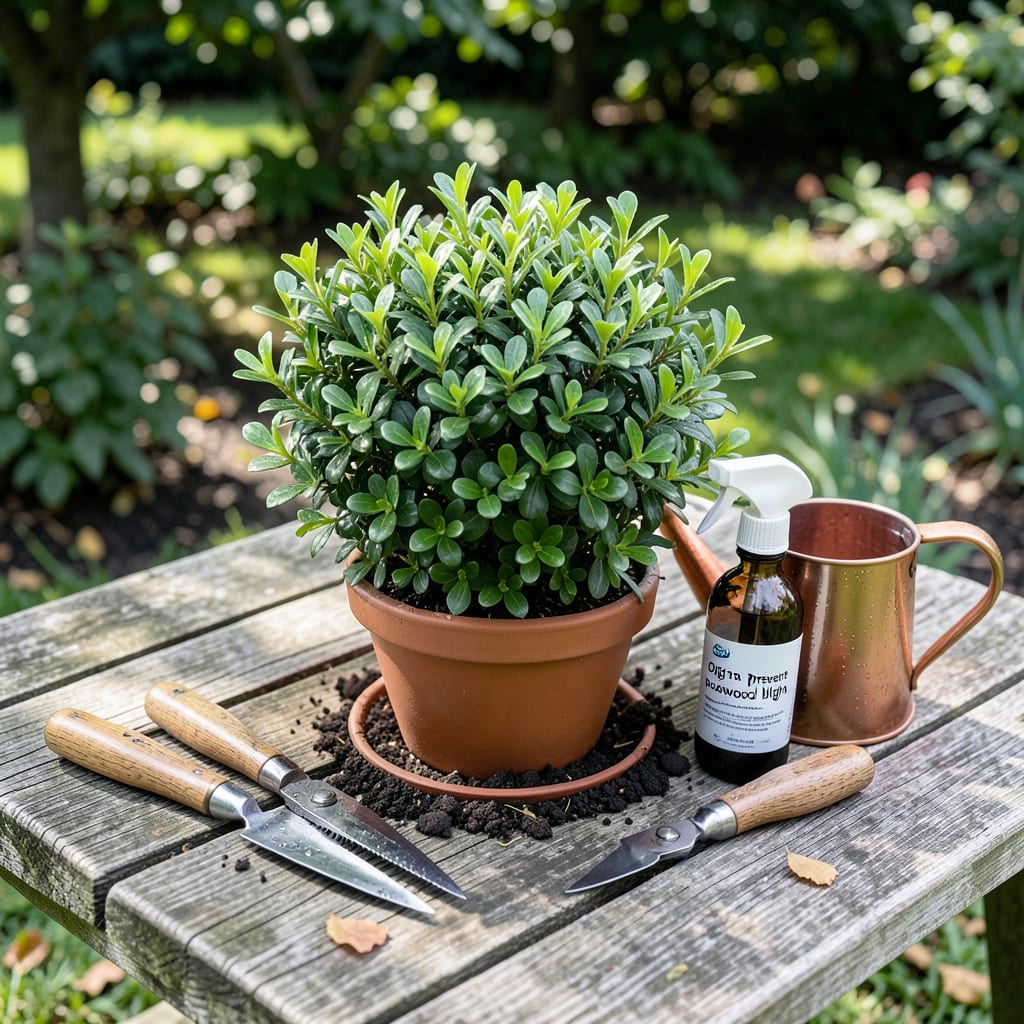
Boxwood blight hit my garden hard two summers ago. 🌿 The leaves turned brown, stems blackened, and within 3 weeks, my once-lush shrubs looked like they’d been scorched by fire.
Now I spot the early signs—dark spots on leaves, black streaks on stems—before they spread. Prevention comes down to smart spacing, clean tools, and choosing resistant varieties like ‘Green Velvet‘ or ‘Winter Gem’.
📚 In This Guide
This prevention strategy keeps your shrubs healthy and blight-free through every growing season.
I check my boxwoods weekly for the first signs of trouble: circular brown leaf spots or black streaks on stems. These appear before the disease spreads. Use a hand lens if needed—early detection is critical because symptoms can escalate within 48 hours in wet conditions.
Look closely at the inner foliage where humidity lingers. Blight often starts there before moving outward. I mark suspicious branches with garden twine so I can monitor progression without forgetting which plants need attention.
Thin out one-third of the oldest stems annually to open the center of each shrub. This improves airflow and reduces the moisture that blight thrives in. I use clean, sharp pruners and make cuts at 45-degree angles just above a leaf node.
Never prune when foliage is wet, as this spreads the pathogen. Disinfect tools between plants with 70% isopropyl alcohol. I keep a spray bottle in my pocket for quick sanitizing—it takes 10 seconds but prevents cross-contamination.
Boxwoods need 1-2 inches of water weekly, but blight spreads through water splashing on leaves. I position soaker hoses at the drip line or use a watering wand to direct moisture at soil level. Early morning watering allows foliage to dry quickly.
Avoid sprinklers entirely—they create perfect conditions for spore dispersal. I water deeply 2-3 times per week rather than daily light sprinkling. Mulch with 2-3 inches of organic matter to prevent soil splash onto lower leaves during rain.
I alternate between copper-based and chlorothalonil fungicides every 14-21 days during the growing season. Start applications in early spring before new growth emerges. Always follow label rates—more isn’t better and can harm plants.
Apply in the morning when temperatures stay below 85°F to prevent leaf burn. I wear gloves and long sleeves, as some fungicides can irritate skin. Rotate products to prevent resistance—blight pathogens adapt quickly to single-mode treatments.
Reapply after heavy rain, which can wash off protection. I keep a garden journal to track application dates and weather conditions—this helps me adjust timing for maximum effectiveness.
Remove and destroy (don’t compost) all fallen leaves and plant debris weekly. I rake carefully to avoid spreading spores. Between plants, I spray tools and shoes with 10% bleach solution to kill lingering pathogens.
At the end of each season, I treat the soil around boxwoods with biological fungicides containing Bacillus subtilis. This builds natural resistance in the root zone. Always clean up leaf litter before winter—blight can overwinter in plant debris.
These strategies will help you stay ahead of blight before it takes hold.
Timing Secret: That 48-hour window mentioned in Step 1 is critical—blight can spread rapidly in wet conditions. I check my boxwoods after rainstorms, using a hand lens to catch those early circular brown spots before they multiply.
Pruning Precision: When thinning stems in Step 2, remember the 45-degree angle cut just above a leaf node promotes faster healing and better airflow. I also avoid pruning during damp mornings, as wet foliage is a blight playground.
Watering Wisdom: The 1-2 inches weekly in Step 3 works best with soaker hoses at the drip line. I water before 9 AM so foliage dries quickly in morning sun, and that 2-3 inch mulch layer prevents soil splash that spreads spores.
Fungicide Timing: For Step 4, morning applications below 85°F prevent leaf burn. I track my 14-21 day schedule in a journal, noting rain events that require reapplication—consistency beats intensity with fungicides.
Look for dark leaf spots, rapid defoliation, or black streaks on stems. Early detection is key—remove infected plants immediately to prevent spread.
Unfortunately, no. Once infected, the plant should be removed and destroyed. Focus on preventing spread to healthy boxwoods with proper sanitation and fungicides.
Apply fungicides in early spring before new growth appears, then reapply every 4-6 weeks during the growing season. Wet conditions increase blight risk, so stay proactive!
Yes! Consider Buxus sempervirens ‘Green Velvet’ or non-boxwood options like inkberry holly (Ilex glabra) or Japanese holly (Ilex crenata).
Clean tools with a 10% bleach solution or 70% rubbing alcohol between cuts. This prevents spreading the fungus to healthy plants.
