
Beautiful Plants For Your Interior
Beautiful Plants For Your Interior
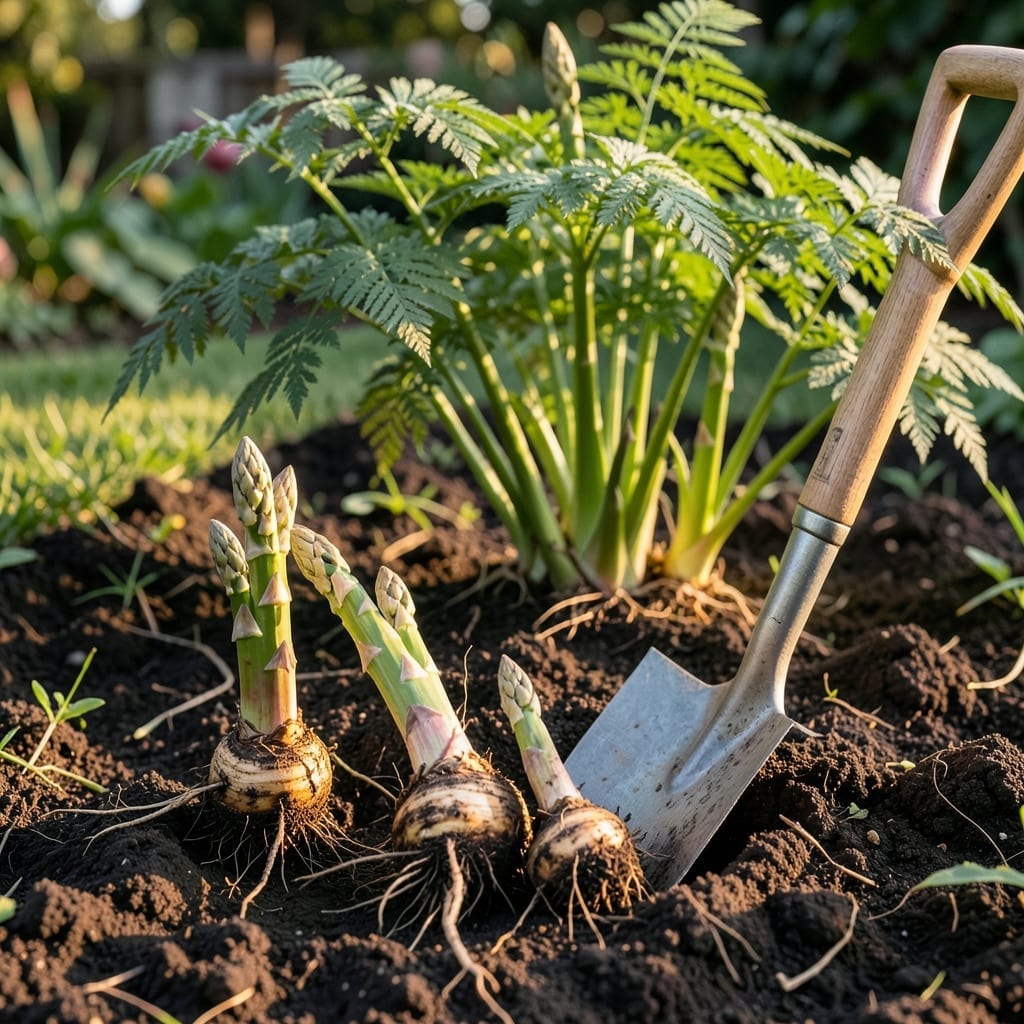
Imagine harvesting fresh 🥬 Asparagus from your garden for 15 years or more. That’s the incredible reward of planting crowns correctly this spring.
Unlike quick-grow vegetables, asparagus demands patience but pays off with decades of bountiful harvests. The key lies in proper planting techniques and understanding its unique needs.
I’ll walk you through the most important steps to establish a thriving asparagus bed that will keep producing. Let’s get started on this long-term garden investment.
Planting asparagus crowns is a rewarding long-term project that can produce spears for 15+ years. The key to success is proper timing and technique, especially in early spring before the last frost.
I always recommend the trench method for beginners because it ensures proper depth and spacing. This method gives the roots room to spread while keeping the crowns at the ideal 6-8 inch depth.☀️
For the mound method, create raised beds about 6 inches high and plant crowns on top. This works well in areas with poor drainage or heavy clay soil.
I’ve found that soaking crowns before planting helps them establish faster. It rehydrates the roots and gives them a head start in their new home. Don’t skip this step!
After planting, resist the urge to harvest in the first year. Let the plants establish a strong root system. In the second year, you can take a light harvest, and by year three, you’ll enjoy full production.
The ideal soil pH for asparagus is between 6.5-7.5. If your soil is too acidic, add lime in the fall before planting. This gives it time to adjust before spring planting.
Remember that asparagus is a perennial, so choose your planting location carefully. You’ll want a spot that gets full sun and won’t be disturbed by other gardening activities.
For best results, plant in early spring as soon as the soil is workable. In cooler climates, this is typically 4-6 weeks before the last frost date.
After planting, mark your asparagus bed clearly. It can take a few weeks for spears to appear, and you don’t want to accidentally dig in the wrong spot while waiting for growth.🌱
Asparagus thrives in well-draining soil with a pH of 6.5-7.5. I always test my soil first—this plant hates wet feet, so amending heavy clay with compost or sand is essential.
Choose a permanent location with full sun (6-8 hours daily). Asparagus beds can produce for 15-20 years, so pick a spot you won’t need to disturb later.☀️
| Requirement | Specification |
|---|---|
| Sunlight | Full sun (6-8 hours) |
| Soil pH | 6.5-7.5 |
| Drainage | Well-draining, not waterlogged |
| Soil Type | Loamy, enriched with compost |
| Spacing | 12-18 inches between crowns |
If your soil is too acidic, add garden lime in fall to adjust it before spring planting. For sandy soil, mix in organic matter to improve moisture retention.
I avoid low-lying areas where water pools. Asparagus roots can rot in soggy soil, so raised beds are a great solution for poorly drained sites.
Wind protection helps young spears, so consider planting near a fence or in a sheltered spot. This also prevents the ferns from flopping over in storms.
Remember, asparagus is a heavy feeder. Work in plenty of aged compost or well-rotted manure before planting. This gives your crowns the nutrients they need for strong initial growth.
Once established, your asparagus bed will reward you with decades of harvests. The initial soil prep is the most important investment you’ll make in its long-term success.🌱