
Beautiful Plants For Your Interior
Beautiful Plants For Your Interior
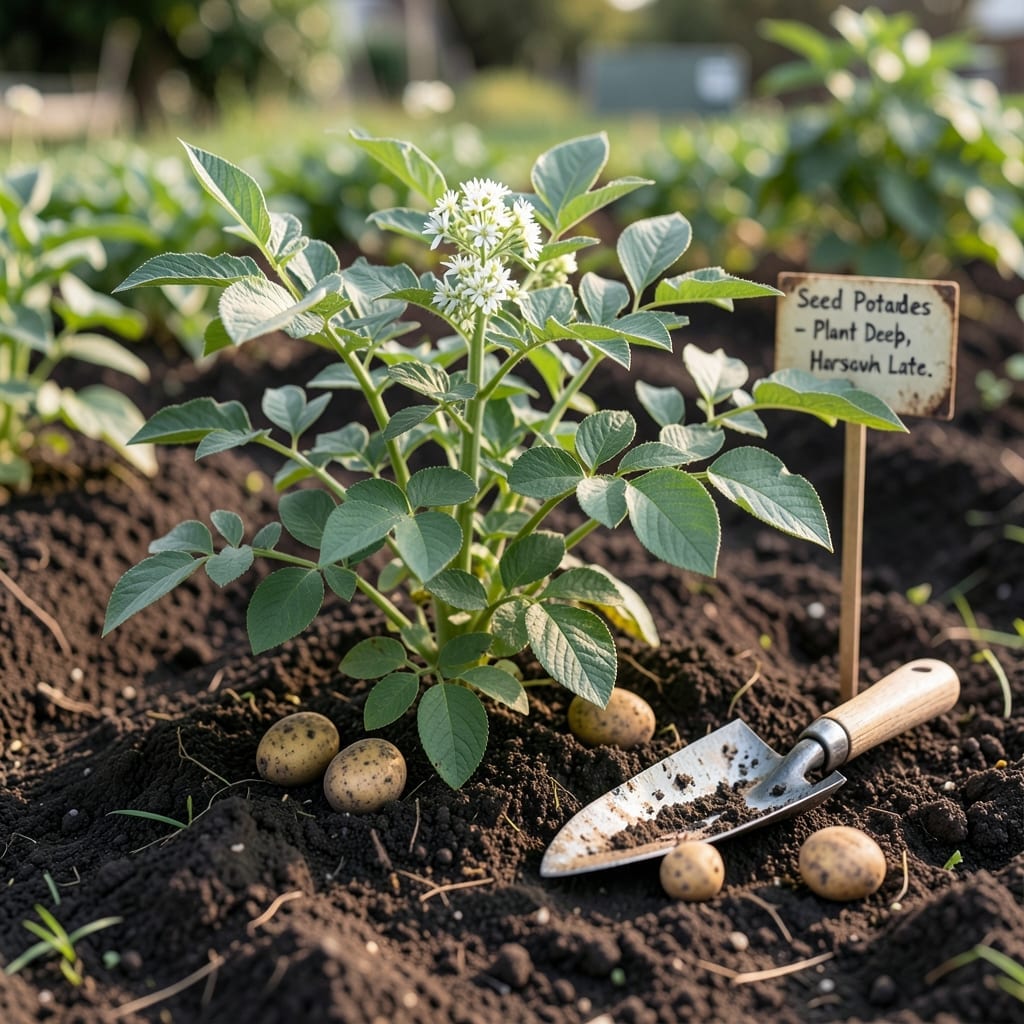
Planting potatoes is one of the most rewarding garden projects you can tackle. I still remember my first harvest – pulling up that 🥔 treasure trove from the soil felt like striking gold.
What makes it so satisfying is how simple the process can be, even for beginners. With just a few key steps, you’ll be well on your way to a bountiful crop.
Let me walk you through everything you need to know to get started. We’ll cover the essentials that turn good intentions into a thriving potato patch.


Planting potatoes correctly starts with choosing the right seed potatoes. I always look for certified disease-free tubers from a trusted nursery. Avoid grocery store potatoes, as they’re often treated to prevent sprouting.
About 2-3 weeks before planting, I place my seed potatoes in a bright, cool spot to encourage sprouting. This process, called chitting, gives them a head start. Aim for sprouts about 1 inch long before planting.
For the best results, I always choose a sunny location with at least 6 hours of direct sunlight daily. Potatoes thrive in loamy, well-draining soil with a pH between 5.0 and 6.5. A soil test kit can help you check this.
When planting, I dig 4-inch deep trenches and space my seed pieces 12 inches apart in rows that are 30 inches apart. This gives the plants enough room to grow without competing for nutrients.
After planting, I water thoroughly but gently to avoid washing away the soil. Then I wait until the sprouts appear before adding mulch. I use straw or compost to keep the soil moist and suppress weeds.
As the plants grow, I hill the soil around the stems every 2-3 weeks. This means mounding soil up around the base of the plant to encourage more tuber formation. It also prevents sunlight from turning potatoes green.
I find that consistent moisture is key, especially during the flowering stage. I aim for about 1-2 inches of water per week, either from rainfall or irrigation. Drip irrigation works best to keep foliage dry.
For container gardening, I use large pots or grow bags with at least 10 gallons of soil per plant. The process is the same, but I’m extra careful with watering since containers can dry out faster.
With proper care, you’ll see healthy green plants in about 3-4 weeks. The real magic happens underground, where your potatoes are forming. Be patient – the wait is worth it! 🌱
Choosing the right potato variety can make all the difference in your harvest. I’ve found that matching the growing conditions to the type ensures the best results. Whether you have a short growing season or plenty of space, there’s a perfect spud for you.
Early varieties like Yukon Gold are great for cool climates and produce in about 60-70 days. For longer seasons, late varieties such as Russet can take up to 120 days but yield larger tubers.
| Variety | Days to Maturity | Best For |
|---|---|---|
| Yukon Gold | 60-70 | Cool climates, containers |
| Red Pontiac | 80-90 | Moist soil, all-purpose |
| Russet | 100-120 | Long seasons, baking |
| Fingerling | 90-110 | Gourmet dishes, small spaces |
If you’re dealing with heavy clay soil, I recommend Red Pontiac potatoes. They tolerate wet conditions better than most. For container gardening, Yukon Gold and Fingerling varieties are compact and productive.
Disease resistance is another key factor. Kennebec potatoes are known for their resistance to common diseases like late blight. If you’ve had issues with pests or diseases in the past, this might be your best bet.
For those in warmer climates, Sweet Potatoes (though botanically different) or heat-tolerant varieties like La Ratte can thrive. Just ensure they get consistent moisture and some afternoon shade in the hottest months.
No matter which variety you choose, remember that healthy seed potatoes are the foundation. Always source from reputable suppliers to avoid introducing diseases into your garden. 🌱