
Beautiful Plants For Your Interior
Beautiful Plants For Your Interior
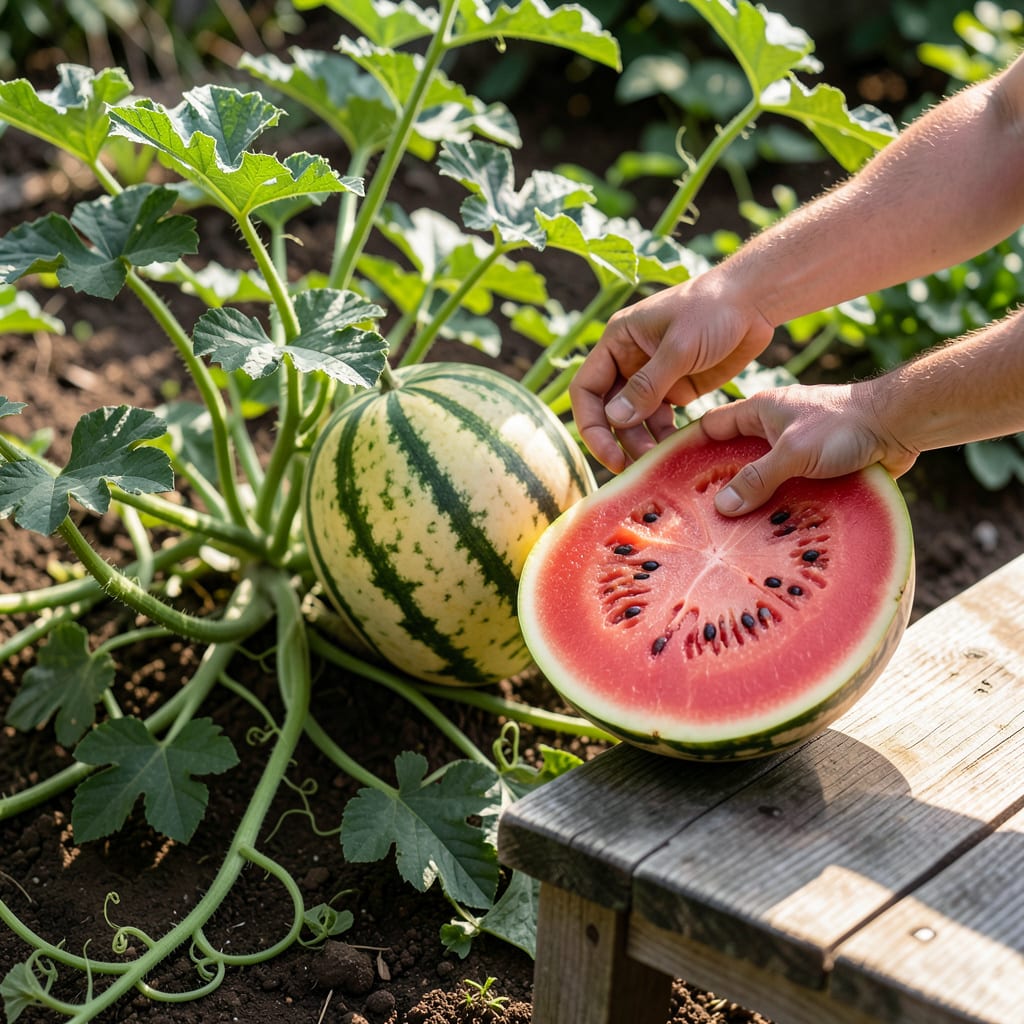
Picking the perfect yellow watermelon can be tricky—its golden rind hides the sweetness inside. But with a few expert tricks, you’ll know exactly when it’s ready.
I’ll show you the subtle signs that reveal ripeness, so you can harvest your 🍉 Watermelon at its peak. Let’s make your next pick the juiciest yet.


Identifying a ripe yellow watermelon starts with its field spot, the area touching the ground. Look for a creamy yellow or pale hue here, not white.
A dull rind signals readiness, while a shiny one means it needs more time. The tendril near the stem should be brown and dry, not green.
| Sign | Ripe Indicator |
|---|---|
| Field Spot | Creamy yellow |
| Rind | Dull, not shiny |
| Tendril | Brown and dry |
| Sound | Hollow when tapped |
| Stem | Slightly cracked |
The sound test is crucial: tap the melon and listen for a deep, hollow echo. A flat or metallic sound means it’s not ready.
Check the stem condition. A ripe watermelon often has a dry, cracked stem, while an unripe one stays green and supple.
I always recommend testing multiple signs together. A yellow field spot plus a hollow sound confirms ripeness more reliably than one cue alone.
Remember, yellow watermelons ripen from the inside out. The ground spot changing color is often the first visible clue.
If you’re unsure, compare two melons. The heavier one for its size is usually riper, as water content increases with maturity.
Finally, harvest in the morning when the fruit is cool. This preserves freshness and flavor during storage. ☀️
With these 5 key signs, you’ll never pick an unripe yellow watermelon again. Practice makes perfect! 🌱
Harvesting yellow watermelons too early is a common mistake. A white field spot means the fruit isn’t ready, no matter how big it looks.
Many gardeners ignore the tendril test. If the curl near the stem is still green and flexible, your melon needs more time on the vine.
⚠️ Avoid These Harvesting Pitfalls
Picking too early: Leads to bland, underdeveloped fruit with poor sweetness.
Ignoring the sound: A flat or metallic tap means it’s not ripe yet.
Using dull tools: Can crush the vine or damage the melon’s rind.
Another error is misjudging the sound test. A ripe melon produces a deep, hollow thud, not a high-pitched ping or dull thump.
Improper cutting can also ruin your harvest. Always use sharp pruners or a knife and leave a 2-inch stem to prevent rot.
Don’t harvest in the heat of the day. Midday sun can cause the fruit to overheat and spoil faster after picking.
Finally, avoid stacking harvested melons. The weight can bruise the fruit, leading to soft spots and shorter shelf life. 🌱
Harvesting yellow watermelon requires the right tools. I always use sharp pruners or a clean knife to avoid crushing the vine or rind.
Support the melon with one hand while cutting. This prevents it from dropping and bruising, which can lead to rot during storage.
Essential Harvesting Steps:
Timing matters too. I recommend harvesting in the early morning when temperatures are cooler. This keeps the fruit fresh longer.
Leave about 2 inches of stem attached to the melon. Cutting too close can expose the fruit to bacteria and rot.
Avoid pulling the melon from the vine. This can damage the plant and bruise the fruit. Always cut cleanly.
Finally, store your harvested melons in a cool, shaded area until you’re ready to enjoy them. Proper handling ensures maximum sweetness. 🌱
A ripe one has a creamy yellow or pale field spot. If it’s still white, it needs more time on the vine.
Yes! A ripe watermelon makes a deep, hollow sound when tapped. A flat or metallic noise means it’s not ready.
No. Wait until the tendril near the stem turns brown and dry. This is a key ripeness indicator.
Harvest in the early morning when temperatures are cooler. This preserves freshness and flavor.
