
Beautiful Plants For Your Interior
Beautiful Plants For Your Interior
I wasted months watching my snake plant slowly decline before realizing the problem wasn’t water—it was light. That painful lesson taught me that measuring light properly is the difference between thriving plants and sad, leggy survivors. Too much light scorches leaves, too little turns them pale and weak, and most of us are just guessing […]
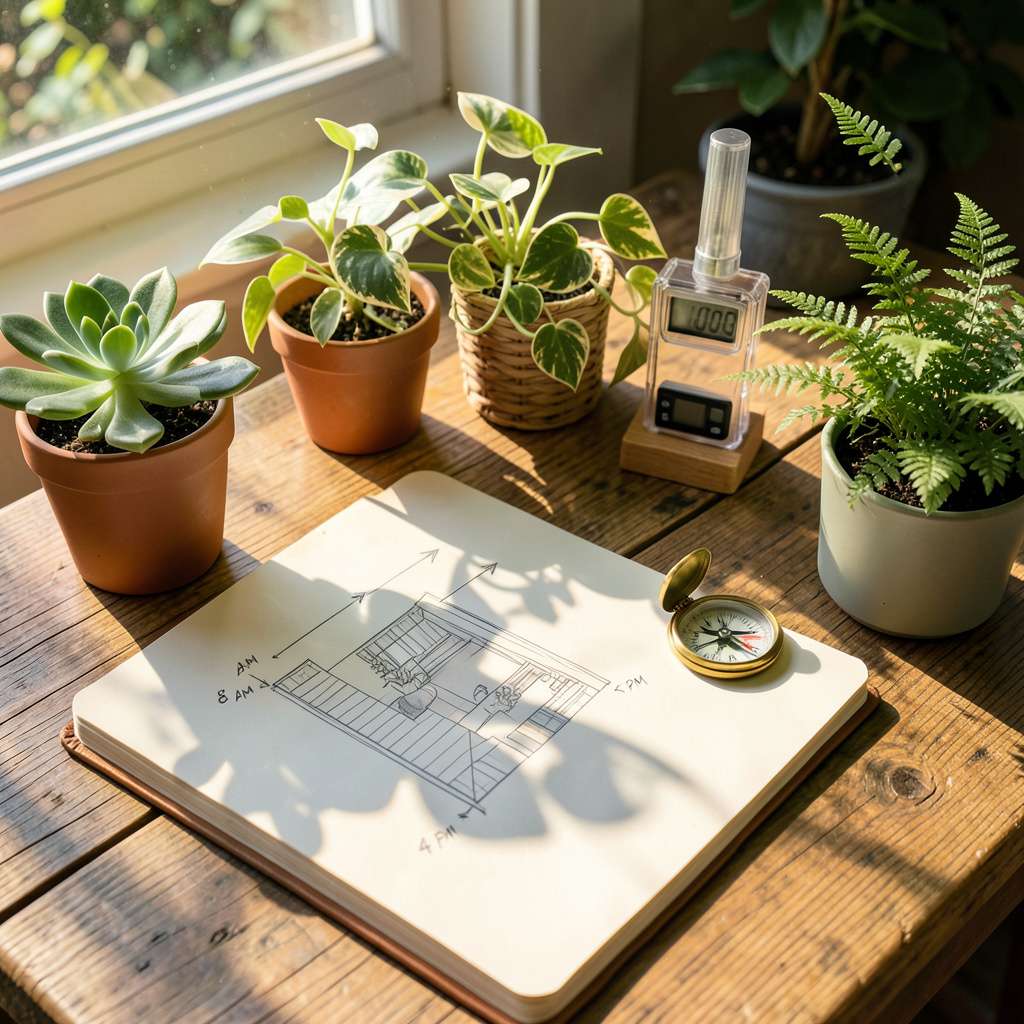
I wasted months watching my snake plant slowly decline before realizing the problem wasn’t water—it was light. That painful lesson taught me that measuring light properly is the difference between thriving plants and sad, leggy survivors. Too much light scorches leaves, too little turns them pale and weak, and most of us are just guessing at what our plants actually need.
Here’s the thing—you don’t need expensive equipment to get this right. A simple smartphone app, your hand, or even careful observation can reveal exactly what your plants are experiencing. I’ve measured light in dozens of homes and gardens, and the patterns are always surprising: that “bright” windowsill might only get 2 hours of direct sun, while a shady corner could be perfect for your ferns.
What you’re really measuring is how your space matches what plants evolved to receive. A sun-loving succulent needs 6+ hours of intense light daily, while a peace lily thrives in what we’d call dim. The trick is learning to see light the way plants do—duration, intensity, and quality all matter differently than they do for our human eyes.
Whether you’re troubleshooting a struggling plant or planning a new garden setup, these measurements take the guesswork out of placement. No more moving plants weekly hoping they’ll improve. Just clear data and plants that finally look as good as the ones in the catalog photos.
📚 In This Guide
Let me show you exactly how to evaluate your space—no guesswork, just healthy plants that thrive in their light conditions.
Start by choosing a spot where you want to place your plants. Stand there at 8 AM, then again at noon, and finally at 4 PM. Note where shadows fall and how sunlight moves across the area. I like to sketch a quick map of my space with arrows showing sun direction at each time.
Pay attention to the quality of light too. Morning sun is gentler, while afternoon sun can be intense. You’ll notice bright, direct light casts sharp shadows, while indirect light creates soft, diffuse edges. This simple observation tells you more than any tool about what your plants will experience daily.
Here’s a foolproof trick: hold your hand about 1 foot above the spot where you’ll place your plant. On a sunny day, observe the shadow your hand casts. A sharp, well-defined shadow means direct light. A fuzzy shadow with soft edges indicates bright indirect light.
If you can barely see a shadow, that’s low light. I do this test at different times of day because light changes dramatically. You might be surprised to find your “sunny” windowsill only gets direct light for two hours. This simple test prevents the most common lighting mistakes gardeners make.
Set a kitchen timer or use your phone to track how many hours of direct sunlight the spot receives. Start the timer when sunlight first hits the area and stop it when the sun moves away. Most plants need 4-6 hours of direct light daily, while some (like snake plants) thrive with much less.
I’ve found that what feels like “all day sun” to us often translates to only 3-4 hours of actual direct light. Don’t estimate—time it. You’ll likely discover your space has more (or less) light than you thought. This knowledge lets you match plants perfectly to your environment.
Measure light during different seasons, especially if you’re growing plants year-round. In winter, the sun sits lower, creating different light patterns. I check my plant locations at the winter solstice (December 21) when light is weakest, and again at the summer solstice (June 21) when it’s strongest.
You might find that a perfect summer spot becomes too dark in winter. Many houseplants struggle during short winter days when they receive 50% less light than in summer. Knowing these patterns helps you adjust plant placement seasonally or supplement with grow lights when needed.
Now that you’ve measured, use this simple guide: 6+ hours of direct sun suits sun-lovers like succulents and herbs; 4-6 hours works for most flowering plants; 2-4 hours is ideal for foliage plants like pothos; and less than 2 hours calls for low-light champions like ZZ plants.
I keep a notebook with my light measurements and plant requirements. When I bring home a new plant, I check its needs against my notes before choosing its permanent spot. This system eliminates the trial-and-error approach that leads to struggling plants. Remember, it’s always better to give a plant slightly less light than it wants rather than too much—burnt leaves are harder to fix than leggy growth.
Getting light measurements right makes all the difference between thriving plants and struggling ones. Here’s what I’ve learned from years of trial and error.
Timing Precision: When you’re observing light patterns at 8 AM, noon, and 4 PM as mentioned in Step 1, don’t just glance at the spot—spend at least 5 minutes each time. I’ve found that light quality can change dramatically even within that short window. Morning sun might start bright but become filtered by clouds within minutes. The more detailed your observations, the better you’ll understand what your plants will actually experience throughout the day.
Shadow Test Nuances: For the hand shadow test in Step 2, here’s what nobody tells you—the time of year affects your results. In summer, when the sun is higher, you’ll get sharper shadows at noon. But in winter, even at noon you might see softer shadows because the sun sits lower. I always do this test during the season when I’ll be keeping plants in that spot to get the most accurate reading for their growing conditions.
Duration Tracking: When using a timer to track direct sunlight in Step 3, don’t just set it and forget it. Check periodically to see if clouds are blocking the sun. I’ve had days where what I thought would be 4-6 hours of direct light turned into only 2 hours because of unexpected cloud cover. If you notice this happening frequently, you might need to adjust your plant choices or consider supplemental lighting for those cloudy periods.
Seasonal Documentation: The seasonal variations mentioned in Step 4 are crucial, but here’s my game-changer: take photos of your light patterns at each solstice. I keep these in my garden journal alongside my notes. When winter rolls around and I’m wondering why my plants look sad, I can compare current light conditions to my summer photos. This visual reference helps me decide whether to move plants, add grow lights, or just be patient until spring.
Measure light levels seasonally (every 3–4 months) or whenever you move plants. Indoor growers should check monthly, as artificial light intensity can degrade over time. Outdoor plants may need adjustments with changing sunlight angles—spring and fall are key times to reassess!
Aim for midday (10 AM–2 PM) when sunlight is strongest. For artificial lights, measure when they’re fully on (e.g., 12+ hours into their cycle for LEDs). Avoid early morning/late evening—low light skews readings and misses peak intensity your plants rely on.
Phone apps (like Lux meters) give rough estimates but lack precision for plant needs. They measure visible light (lux), not the photosynthetic spectrum (PAR/PPFD). For serious growers, invest in a quantum PAR meter (~$100+). For casual use, apps are a starting point—just cross-check with plant responses!
Yes! Leggy growth (long stems, sparse leaves) screams insufficient light. Measure PPFD at the plant’s canopy—if it’s below the ideal range for your species (e.g., <200 PPFD for herbs), boost intensity or reduce distance to the light source. Prune stretched growth to redirect energy.
No—windows filter and reduce light intensity by 30–70%! South-facing windows (Northern Hemisphere) offer the most light, but PPFD drops rapidly with distance. Measure at the plant’s position: even a “bright” windowsill may only deliver 100–300 PPFD, while outdoor sun can hit 1,000+ on clear days.
Measuring light for your plants doesn’t have to be complicated—just remember that the right tools and consistency make all the difference! 🌱 Whether you’re using a light meter, the shadow test, or a handy app, tracking light levels ensures your greenery gets the energy it needs to thrive.
Now that you’re equipped with the know-how, grab your tools and test a few spots in your home or garden. Your plants will thank you with lush growth and vibrant blooms! 💚 Happy growing!
