
Beautiful Plants For Your Interior
Beautiful Plants For Your Interior
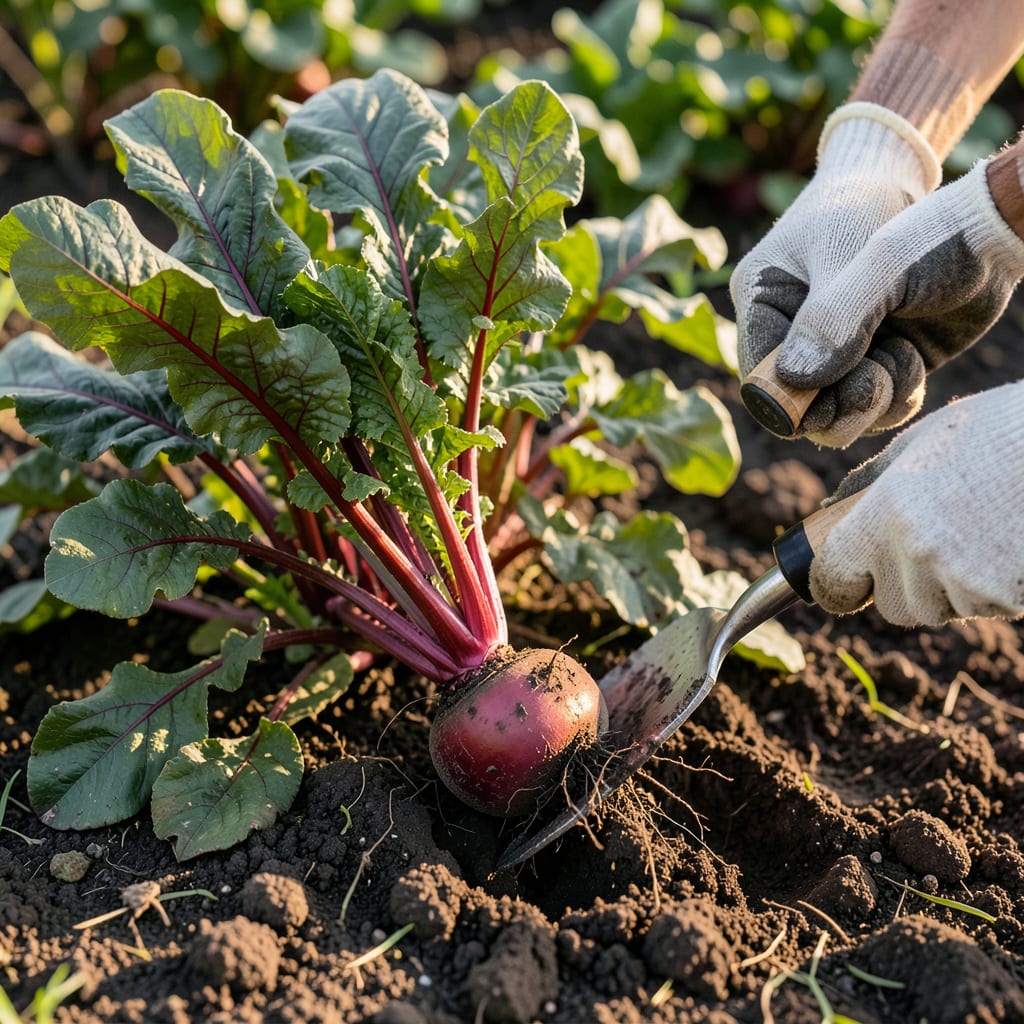
Nothing beats pulling a perfect 🥬 Beet from your garden at just the right moment. Too early and you’ll get tiny roots, wait too long and they turn tough and woody.
I’ll show you the key signs to watch for above and below the soil. With these simple checks, you’ll harvest at peak tenderness every time.


I always check the shoulders first—that’s where the beet root meets the soil. When they’re 1-3 inches wide, it’s a sure sign they’re ready for picking. This visible bulge above ground is your easiest indicator.
The foliage tells a story too. Healthy, lush green leaves about 4-6 inches tall mean the roots below are likely at peak size. Avoid harvesting if greens look stunted or yellowed.
| Indicator | Ready Sign | Not Ready Sign |
|---|---|---|
| Shoulder Width | 1-3 inches | Less than 1 inch |
| Leaf Height | 4-6 inches | Stunted or yellow |
| Root Skin | Smooth, firm | Soft or wrinkled |
| Color | Deep, vibrant | Pale or dull |
The soil line diameter is another giveaway. Gently brush away soil at the base to reveal the top of the root. If it’s 1-3 inches across, your beets are ready.
I also look for color changes in the exposed portion. A deep, rich hue indicates maturity, while pale or light colors suggest they need more time in the ground.
Don’t overlook the texture test. Press the soil near the base—if the root feels firm beneath, it’s ready. Softness means it’s either underripe or overripe.
For baby beets, harvest when they’re 1 inch wide for tender, sweet flavors. These are perfect for quick pickling or fresh eating straight from the garden.
Overgrown beets become woody and bitter. If the shoulders exceed 3 inches, I harvest immediately to prevent toughness. This is especially true in hot weather.
I’ve found that consistent moisture leads to the best harvest indicators. Beets grown in evenly moist soil develop uniform size and color, making it easier to judge readiness.
Finally, remember that beet greens are edible too. If the leaves are healthy and vibrant, don’t toss them—they’re delicious sautéed or added raw to salads. Harvest a few outer leaves while waiting for the roots to mature.
🌱I use the gentle soil brushing method to check beet size. Carefully move soil away from the base of the plant to expose the top of the root. This lets me measure the diameter without disturbing the plant.
For a quick size check, I use my fingers to gently probe the soil around the beet. A 1-3 inch width means it’s ready, while smaller sizes need more time. Be careful not to damage the root in the process.
The selective harvesting trick works well in crowded beds. I pull one test beet to check its size and condition. If it’s ready, I harvest the rest. If not, I leave the others to grow for a few more days.
A measuring tape or ruler can be handy for precise checks. I keep one in my gardening toolkit for quick diameter measurements. This is especially useful for baby beets, which need to be exactly 1 inch wide for the best flavor.
I avoid pulling beets too early in the morning when the soil is wet. The moist ground can make roots slippery and harder to grip. Instead, I check sizes in the late afternoon when the soil is drier and more workable.
Remember that beet varieties can vary in size. Some reach maturity at 1 inch, while others grow to 3 inches or more. Always refer to the seed packet for specific size guidelines for your variety.
🌱I’ve learned the hard way that harvesting too late is the biggest mistake with beets. Once they exceed 3 inches, they become woody and bitter. This happens fast in hot weather, so I check them weekly.
Another common error is ignoring the greens. If the leaves look yellow or wilted, it often means the roots are past their prime. Healthy 4-6 inch greens should accompany ready-to-harvest beets.
⚠️ Avoid These Beet Harvesting Blunders
Using dull tools can damage roots. Always use a sharp knife or garden fork to lift beets gently from the soil.
I never pull beets by the greens. This can break the stems and leave the roots stuck in the ground. Instead, I loosen the soil around the base first, then gently lift the entire plant.
Inconsistent watering leads to uneven growth and cracked roots. I maintain even moisture throughout the growing season for the best harvest results. This prevents tough, fibrous beets.
Finally, don’t harvest all beets at once. I stagger my harvests, picking the largest first and leaving smaller ones to mature. This extends my harvest window and ensures a steady supply. 🌱
Harvest when roots reach 1-3 inches in diameter for peak tenderness. Smaller beets work for baby varieties, while larger ones may turn woody. Always check the seed packet for variety-specific sizes.
Gently brush soil from the base to expose the shoulder. Use your fingers to probe the root’s width or harvest one test beet to gauge the rest. Avoid disturbing neighboring plants.
Overgrown beets become woody and bitter, especially in hot weather. They may also crack or develop tough textures. Harvest promptly once they reach mature size.
Yes! Snip outer leaves while roots mature, leaving 4-6 inches of growth. Greens are edible and delicious sautéed or raw. Just avoid removing more than 1/3 at a time.
