
Beautiful Plants For Your Interior
Beautiful Plants For Your Interior
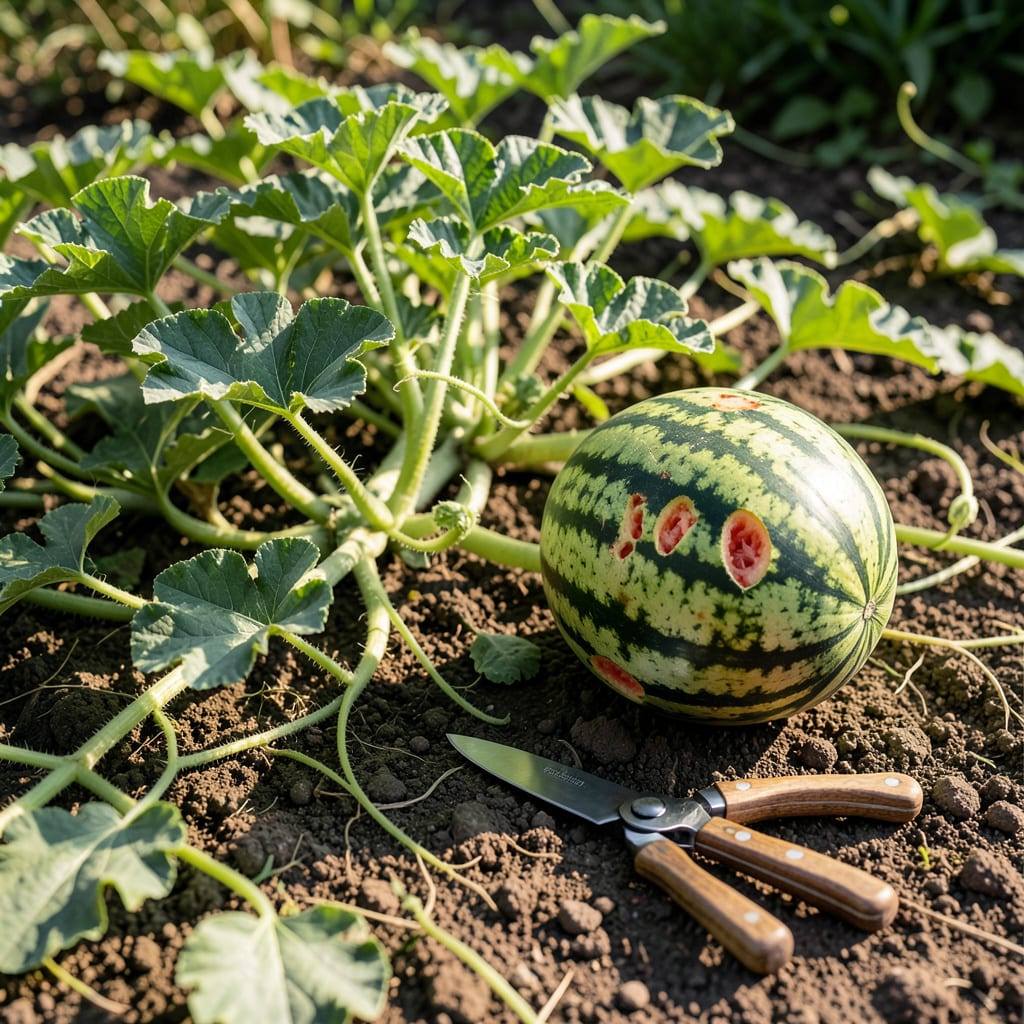
Nothing beats the satisfaction of growing your own 🍉 Watermelon, but knowing when to pick it can be tricky. One wrong move and you might end up with a fruit that’s either underripe or overripe.
Discover the easiest ways to check for ripeness with simple tricks. I’ll share the signs to look for so you can harvest your Watermelon at its peak every time.


Timing your watermelon harvest perfectly ensures the sweetest flavor and best texture. I’ve found that relying on just one sign isn’t enough—combining multiple indicators gives the most reliable results in my garden.
From the tendril test to the ground spot, each clue tells part of the story. Let me walk you through the top five ripeness signals that I swear by every season.
I always start with the tendril check. This curly vine near the stem is your first clue. When it turns from green to brown and feels dry, your watermelon is likely ready for picking.
The ground spot is another telltale sign. A ripe watermelon develops a yellow or cream-colored patch where it rests on the soil. If it’s still white or pale green, give it more time.
For the sound test, I use my knuckles to tap the melon. A deep, hollow thud means it’s ripe, while a metallic or high-pitched sound indicates it needs more time on the vine.
The rind texture changes as the fruit matures. A ripe watermelon has a rough surface that resists light pressure from your thumbnail. If it’s still smooth or punctures easily, it’s not ready.
Finally, check the stem condition. As the watermelon ripens, the vine stem near the fruit begins to shrivel and dry out. This is nature’s way of telling you the fruit is separating from the plant.
Remember, these signs work best together. I once picked a watermelon too early because I only checked the size. Now, I always look for at least three ripeness indicators before harvesting.
Consistency is key. Watermelons ripen from the inside out, so external signs are your best guide. With practice, you’ll develop an eye for the perfect harvest moment every time.
☀️Even experienced gardeners can misjudge watermelon ripeness. I’ve learned the hard way that some common assumptions can lead to harvesting too early or too late. Avoiding these pitfalls will save you from disappointment.
One of the biggest mistakes is relying on size alone. A large watermelon doesn’t always mean it’s ripe, and a smaller one might be perfectly sweet. Size varies by variety, so it’s not a reliable indicator on its own.
Another common error is ignoring the vine connection. The tendril and stem near the fruit provide critical clues. If you bypass these, you might miss the most reliable signs of ripeness.
Weather can also trick you. During hot, dry periods, watermelons may ripen faster than expected. Conversely, cool or rainy weather can slow the process, so adjust your checks accordingly.
The sound test is often misunderstood. Many gardeners tap the melon and expect an immediate answer, but a metallic or high-pitched sound means it needs more time. Only a dull, hollow thud signals readiness.
Finally, don’t assume all melons on the same vine ripen simultaneously. Each fruit can mature at a different rate, so check each one individually for the best results.
🌱Not all watermelons ripen the same way. I’ve noticed that seedless varieties often develop sugar spots—small yellow patches—when ready. This is a unique sign you won’t see in traditional types.
Heirloom watermelons typically show deeper color changes as they mature. The rind may darken or develop more pronounced stripes. These classic varieties reward patience with rich, complex flavors.
| Variety | Ripeness Signs |
|---|---|
| Seedless | Sugar spots appear on rind |
| Heirloom | Deeper color and stripes darken |
| Mini | Tendril dries faster than others |
Mini watermelons are my go-to for quick harvests. Their tendrils dry out faster than larger varieties, often within 70-80 days. This makes them ideal for gardeners with shorter growing seasons.
For all types, I recommend checking the ground spot and performing the sound test as secondary confirmations. Even within the same variety, individual fruits may mature at slightly different rates.
Remember, variety matters. What works for a Crimson Sweet might not apply to a Moon and Stars. Always research your specific type for the most accurate ripeness indicators.
🌱The curly tendril near the stem turns from green to brown and becomes dry and brittle. This is your most reliable visual cue that the fruit is mature.
No, a white ground spot means the melon isn’t ripe yet. Wait until it turns cream or yellow before picking. This change usually happens just before full ripeness.
A ripe melon produces a deep, hollow thud. If you hear a metallic or high-pitched ring, the water content is still too high. Practice on a few to train your ear.
Not reliably. While most reach full size before ripening, some varieties stay small. Always combine size with other tests like tendril color and sound for accuracy.
