
Beautiful Plants For Your Interior
Beautiful Plants For Your Interior
That moment when you spot a tree with dark, clustered berries and wonder—is this the one? Chokecherry trees hide in plain sight across backyards and wild spaces, often confused with their lookalikes. I’ve walked past dozens before learning the telltale signs: the glossy, oval leaves with finely serrated edges, the peeling bark that reveals reddish-brown […]
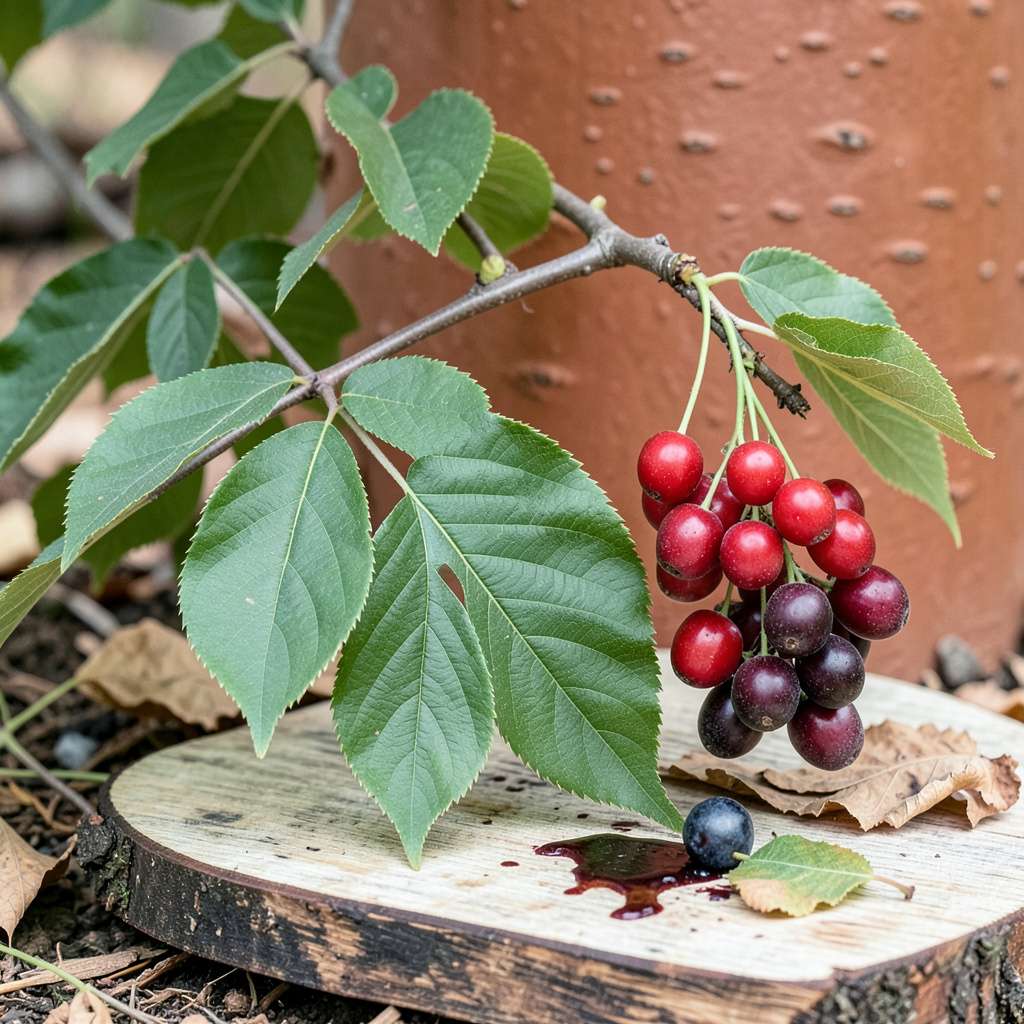
That moment when you spot a tree with dark, clustered berries and wonder—is this the one? Chokecherry trees hide in plain sight across backyards and wild spaces, often confused with their lookalikes. I’ve walked past dozens before learning the telltale signs: the glossy, oval leaves with finely serrated edges, the peeling bark that reveals reddish-brown layers underneath, and those signature pea-sized drupes that shift from red to near-black as they ripen.
Here’s the thing—most people focus on the fruit first, but the real giveaways are in the details. The leaves alternate along the branches (never opposite), and crushed ones release a faint almond-like scent from the cyanide compounds inside. In spring, elongated clusters of white flowers appear before the leaves fully unfurl, a trait that sets them apart from similar species like black cherry or pin cherry trees.
I’ll be real with you: the first time I tried identifying one, I mixed it up with a black cherry sapling. The difference? Chokecherry bark stays smooth longer, and its fruit grows in tighter, more cylindrical clusters. Once you notice these patterns, you’ll start spotting them everywhere—roadside thickets, fence lines, even that neglected corner of your neighbor’s yard.
By the time you finish reading, you’ll recognize these trees at a glance, even in winter when only the bark and bud shape remain. No more second-guessing or mislabeling in your garden journal. The best part? You’ll finally know which berries are safe for jams (with proper prep) and which to leave for the birds.
📚 In This Guide
Spring (April–May): Look for white flower clusters.
With these simple visual checks, you’ll confidently spot chokecherry trees in any season—no botanical expertise required.
Start by looking at the leaves, which are the most reliable identifier. Chokecherry leaves are simple (not compound), 2-4 inches long, and have finely serrated edges that feel slightly rough when you run your fingers along them. The shape is oval with a pointed tip, similar to a cherry leaf but smaller and more elongated.
Check the leaf arrangement: they grow alternately along the branch, not in pairs or clusters. In spring and summer, the leaves are a deep, glossy green. Come fall, they turn a vibrant yellow or orange-red. If you crush a leaf between your fingers, you’ll notice a faint almond-like scent—this is characteristic of all Prunus species, including chokecherry.
Mature chokecherry trees have distinctive bark that changes with age. On younger trees, the bark is smooth and reddish-brown, often with horizontal lines called lenticels that look like tiny slits. As the tree matures, the bark becomes darker and develops shallow furrows, but it never gets deeply ridged like an oak.
Look at the branches: they tend to grow in a somewhat zigzag pattern, and the younger twigs are often reddish or grayish-brown. Another key feature is the small, raised pores on the bark—these are unique to chokecherry and help distinguish it from similar trees like black cherry. Run your hand along the bark; it should feel relatively smooth compared to the rough texture of many other fruit trees.
The most recognizable feature in late summer and fall is the fruit. Chokecherries grow in dense clusters of ¼-inch round drupes that start green, turn red, and finally ripen to a deep purple-black. Unlike domestic cherries, these grow on long, slender stems that hang down like tiny grape clusters.
Taste is another clue—though I don’t recommend eating them raw. Bite into one (carefully, as the pit is large) and you’ll experience an intensely tart, astringent flavor that makes your mouth pucker. This is why they’re called “choke” cherries! The pits are smooth and round, not flattened like some other wild cherries. Birds love these fruits, so you’ll often see flocks feeding on the trees in late summer.
If you’re identifying the tree in spring, examine the flowers. Chokecherry blooms appear in May or June as elongated clusters (called racemes) of small white flowers, each about ½ inch across with five petals. These clusters are 4-6 inches long and grow from the sides of branches, not at the tips.
The flowers have a delicate, sweet fragrance that’s most noticeable in the morning. You’ll often see bees and other pollinators swarming the tree during bloom time. One distinctive feature is that the flowers appear after the leaves have fully emerged, unlike some fruit trees that bloom before leafing out. The petals are pure white with no hint of pink, which helps distinguish them from related species like pin cherry.
Chokecherry trees typically grow 20-30 feet tall with a rounded crown that’s often wider than it is tall. They frequently grow in clumps or thickets because they send up suckers from their roots, creating what looks like multiple small trees growing close together. This clumping habit is a dead giveaway in the wild.
Look at where the tree is growing: chokecherries thrive in full sun to partial shade and often populate fence rows, forest edges, and stream banks. They’re hardy trees that can handle poor soil and drought conditions. In winter, the tree’s silhouette is distinctive—look for the zigzag branch pattern and the way the branches tend to droop slightly at the tips, especially when laden with fruit.
These practical observations will help you distinguish chokecherry trees from lookalikes with confidence.
Leaf Examination Technique: When checking leaves in Step 1, pay special attention to the serrated edges—they should feel like fine sandpaper when you run your fingers along them. This texture is more distinctive than the shape alone. I’ve found that holding a leaf up to the light reveals the tiny, evenly spaced teeth along the edges, which is a dead giveaway. The almond scent when crushed is subtle but unmistakable once you’ve smelled it a few times.
Seasonal Timing Matters: For fruit identification in Step 3, remember that chokecherries ripen progressively from green to red to deep purple-black between late summer and early fall. If you’re looking in spring, focus on the flowers as described in Step 4—their appearance after the leaves emerge is a key distinguishing feature from similar trees. I’ve made the mistake of looking too early in spring before leaves appeared, which makes identification much harder.
Bark and Branch Details: The zigzag branch pattern mentioned in Step 2 is most noticeable in winter when leaves are gone. Look for the small, raised pores on the bark—they’re unique to chokecherry and feel like tiny bumps under your fingertips. Younger trees have the most distinctive reddish-brown bark with visible lenticels, while mature trees develop those shallow furrows that never become deeply ridged.
Growth Habit Clues: The clumping habit described in Step 5 is your best identifier in winter. Chokecherries often form thickets through root suckers, creating what looks like multiple small trees growing together. This is different from most fruit trees that grow as single trunks. I’ve found that fence rows and stream banks are the most reliable places to spot them due to their hardy nature and preference for edge habitats.
Chokecherries have smaller, oval leaves (1–3 inches) with fine teeth, while black cherries have longer, glossy leaves (2–5 inches) with a more tapered tip. Chokecherry bark is gray and smooth when young (developing shallow grooves with age), whereas black cherry bark has distinctive horizontal lenticels (breathing pores) and peels in curly strips.
Late spring to early summer is ideal! Look for white flower clusters (May–June) or red/purple berry clusters (July–September). In fall, the leaves turn yellow or red, making them easier to spot. Winter ID is harder but possible—check for dense, rounded growth habit and last year’s dried berries.
The berries are edible but very tart—best cooked into jams, syrups, or wines. Warning: The pits, leaves, and bark contain amygdalin, which converts to cyanide. Never eat them raw in large quantities. Always pit the berries and cook them to neutralize toxins.
Crush a few leaves—chokecherries smell like bitter almonds (a cyanide compound scent). Alternatively, check for:
Use a tree ID app like iNaturalist for backup!
Common lookalikes:
Pro tip: Chokecherries rarely have thorns and grow in moist, open areas (not deep forests).
Now that you know how to spot a chokecherry tree—from its distinctive bark and clustered white flowers to its dark, astringent berries—you’re ready to explore with confidence! 🌿 Whether you’re foraging, gardening, or just admiring nature, these visual clues make identification a breeze. Grab a field guide or snap photos of local trees to sharpen your skills even more. Happy tree-hunting!
