
Beautiful Plants For Your Interior
Beautiful Plants For Your Interior
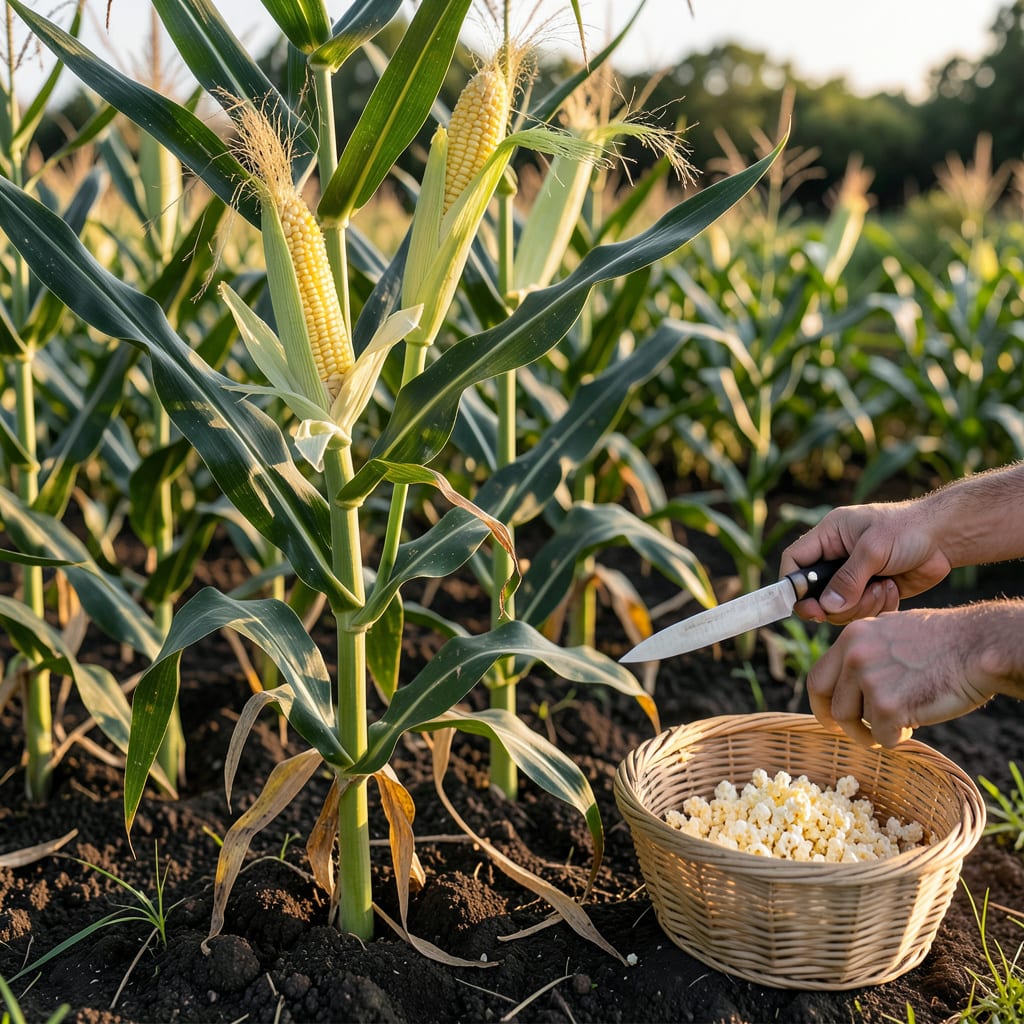
Harvesting 🌽 Popcorn at the right moment makes all the difference between tough kernels and perfect pops. Timing is everything with this crop.
I’ll show you exactly when and how to pick your Popcorn for the best results, plus the drying steps that ensure every kernel pops just right. Let’s get started.


Timing your popcorn harvest perfectly ensures maximum flavor and poppability. Unlike sweet corn, popcorn kernels need to reach a specific moisture level of about 13-14% for ideal results. Harvest too early, and the kernels won’t pop well. Harvest too late, and they may become tough or stale.
I always check for visual cues first. The husks turn brown and feel dry to the touch, while the kernels inside become hard. If you press a kernel with your fingernail and it doesn’t dent, it’s ready. This usually happens 90-120 days after planting, depending on the variety. ☀️
| Sign | Description |
|---|---|
| Husk Color | Fully brown and dry |
| Kernel Hardness | Cannot be dented with fingernail |
| Stalk Condition | Yellow or brown and drying |
| Ear Position | Drooping toward the ground |
Another reliable method is the test pop. Pick an ear, remove a few kernels, and try popping them. If most pop, your crop is ready. If they don’t, wait a few more days and test again. I find this method especially useful for first-time growers who are unsure about visual signs.
Popcorn maturity stages are different from other corn types. Sweet corn is harvested when kernels are plump and milky, but popcorn must be left on the stalk until the kernels are fully hard. This ensures the starch content is high enough for that perfect pop.
Weather plays a big role too. If rain is forecasted, I sometimes harvest a bit early to prevent excess moisture from ruining the kernels. Just
For varieties like ‘Robust’ or ‘Strawberry’, the harvest window is typically around 100 days. Shorter varieties may mature faster, so always check the seed packet for specific guidelines. I keep a garden journal to track planting dates and expected harvest times. 🌱
If you notice birds or squirrels eyeing your crop, it’s a sign the kernels are nearing maturity. These pests are attracted to ripe popcorn, so consider using protective netting if they become a problem. I’ve lost a few ears to hungry critters, so I always take precautions.
Finally, harvest on a dry, sunny day when the plants aren’t wet. This helps prevent mold and makes the drying process easier. Use sharp pruners or a knife to cut the ears from the stalk, leaving a bit of the husk attached for easier handling. 🪴
By paying close attention to these signs and techniques, you’ll ensure a bountiful harvest of popcorn that pops beautifully every time. It’s all about patience and observation—two skills every gardener develops over time.
Once your popcorn ears show those perfect harvest signs, it’s time to pick and dry them properly. I always start by cutting the ears from the stalk with sharp pruners or a knife, leaving some husk attached for protection. ☀️
Next, I remove the outer husks but leave the inner layers to help with drying. This step prevents mold while allowing airflow. For best results, I spread the ears in a single layer in a warm, dry, well-ventilated area like a garage or barn. 🌾
For the air-drying method, I hang the ears in mesh bags or on a screen to ensure good airflow. This takes about 2-3 weeks depending on humidity. The kernels should be completely hard and make a sharp clicking sound when shaken in the husk.
The oven method works faster but requires care. I set my oven to its lowest temperature (usually 135-150°F) and spread the kernels on a baking sheet. Stir them occasionally and check frequently to prevent over-drying. 🌡️
After drying, I test a few kernels by heating them in a pan. If they pop well, the batch is ready. If not, I dry them a bit longer. Once perfect, I store the kernels in airtight glass jars with a silica gel packet to absorb any remaining moisture.
Remember that proper storage is key to maintaining poppability. Keep your popcorn in a cool, dark place and it will stay fresh for up to a year. I’ve found that mason jars work wonderfully for this purpose. 🪴
Even experienced gardeners can make critical errors when harvesting popcorn. The most common is picking too early when kernels are still soft. This results in poor popping and wasted effort. I’ve learned to always check for hard, dry kernels before harvesting. ☀️
Another frequent mistake is harvesting during wet conditions. Damp ears can develop mold during drying, ruining your entire crop. I always wait for a dry, sunny day to cut my popcorn ears from the stalk. This simple step prevents many problems down the line. 🌾
⚠️ Warning: Never store popcorn with any moisture remaining. This leads to mold growth and spoiled kernels. Always ensure complete dryness before storage.
Improper drying is another pitfall. Some gardeners try to speed up the process with high heat, which can make kernels too brittle. I prefer the slow air-drying method for the best results. It takes patience but preserves the perfect texture for popping. 🌡️
Storage mistakes are equally damaging. Using non-airtight containers allows moisture and pests to reach your popcorn. I always use glass jars with tight lids and add a silica packet to absorb any lingering humidity.
Finally, ignoring pest protection can cost you your harvest. Birds and squirrels love ripe popcorn as much as we do. I use protective netting over my crop when it nears maturity to keep these hungry visitors away. 🪴
Test by pressing a kernel with your fingernail. If it doesn’t dent and feels hard, it’s ready. A test pop also works—most kernels should pop when heated.
Yes, but only if the kernels are nearly mature. Harvesting too early results in poor popping. Use sharp pruners and dry the ears thoroughly afterward to prevent mold.
Use airtight containers like glass jars with silica gel packets. Store in a cool, dark place to maintain freshness for up to 1 year.
This usually happens if they weren’t fully dry before storage or were exposed to moisture. Ensure complete dryness and proper sealing to avoid this issue.
