
Beautiful Plants For Your Interior
Beautiful Plants For Your Interior
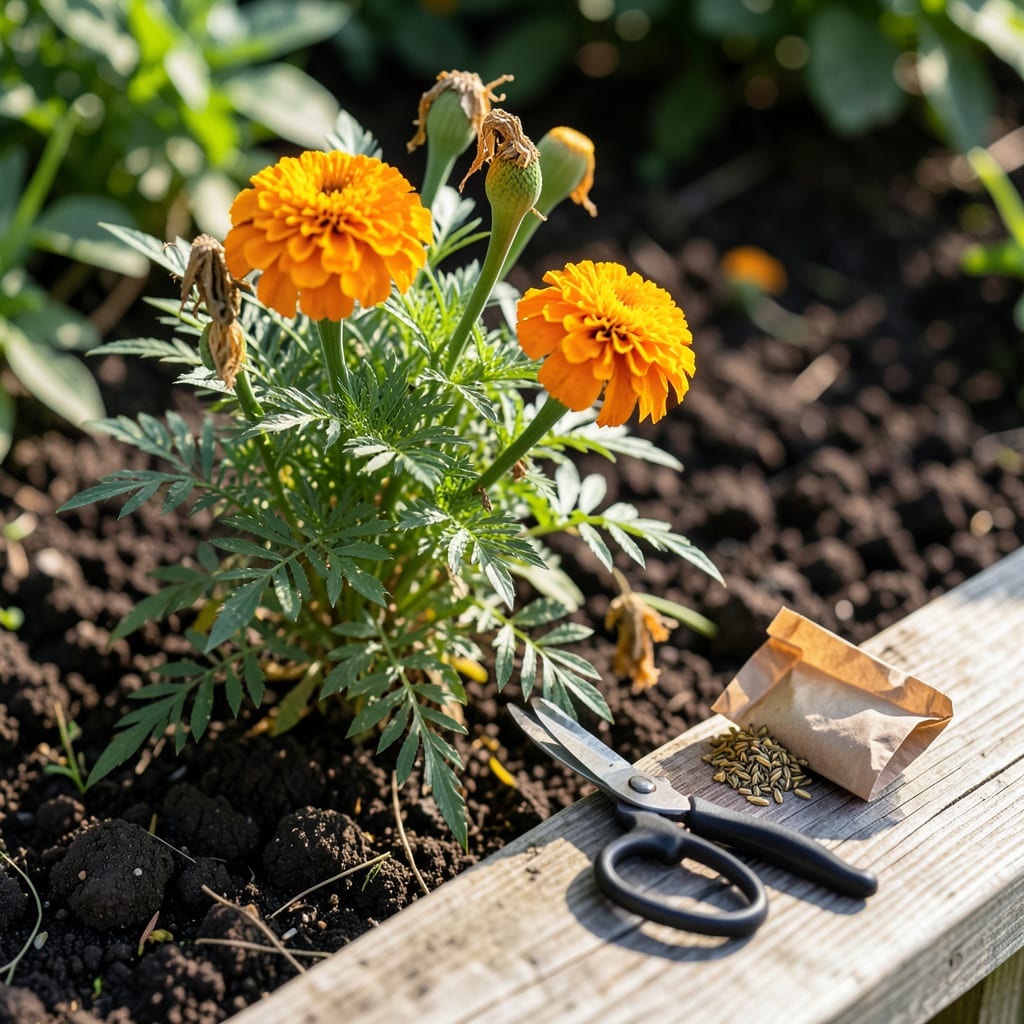
I love how collecting Marigold seeds lets you grow next year’s 🌼 blooms for free. The process is surprisingly simple, and the satisfaction of planting seeds you saved yourself is unmatched.
With just a little know-how, you’ll easily gather and store seeds that stay viable for years. Let me walk you through the most effective approach.


Harvesting marigold seeds at the perfect moment ensures the best germination rates for next season. I’ve found that timing is everything—wait until the flower heads are fully dry and brown.
The petals will naturally wither and fall off, revealing the seed head beneath. This is your signal that the seeds are maturing and ready for collection.
I always check for brittle seed heads—if they crumble easily between your fingers, they’re ready. This means the seeds inside are fully developed and dry.
Use sharp scissors or pruners to snip the seed head from the plant. Leave a short stem attached to make handling easier during the drying process.
A paper bag works best for drying because it allows airflow while keeping the seeds contained. Avoid plastic, as it can trap moisture and cause mold growth.
After 1-2 weeks in a warm, dry spot, the seed heads will be completely dry. I like to place them near a sunny window but out of direct sunlight.
To release the seeds, gently rub the dried head between your fingers over a clean surface. The seeds will easily separate from the husk when fully dry.
Finally, store your seeds in a paper envelope or small container. Label it with the variety and date to keep track. I store mine in a cool, dark place like a pantry.
Properly stored marigold seeds can remain viable for up to 2-3 years. This means you can enjoy your favorite varieties season after season without repurchasing. 🌼
Proper drying is key to preserving marigold seed viability. I always spread the seed heads on a clean surface in a well-ventilated area for thorough drying.
Ensure the space is warm and dry, like a sunny windowsill, but avoid direct sunlight which can overheat the seeds. This prevents mold and ensures even drying.
💡 Pro Tip: Use a paper bag to catch falling seeds during drying. Label with the Variety and Date to track your collection.
Once the seed heads are brittle, gently rub them to release the seeds. I use my fingers or a fine-mesh sieve to separate seeds from chaff.
For storage, choose airtight containers like glass jars or envelopes. Keep them in a cool, dark place like a pantry or drawer to maintain seed quality.
Add a silica gel packet to absorb any moisture and prevent spoilage. This small step can extend the shelf life of your seeds significantly.
Properly stored marigold seeds can last 2-3 years. I always test a few seeds each spring by planting them in damp paper towels to check viability.
With these methods, you’ll have healthy, ready-to-plant seeds for seasons to come, ensuring your garden stays vibrant without extra cost. 🌼
Even experienced gardeners make errors when harvesting marigold seeds. The most common mistake is picking seed heads too early, before they’ve fully matured and dried.
Another pitfall is using airtight containers for storage before seeds are completely dry. This can trap moisture and lead to mold, ruining your entire collection.
I’ve learned that labeling seeds is crucial—without it, you might forget the variety or date. Always use a permanent marker on envelopes or containers.
Never store seeds in humid environments like bathrooms or kitchens. Moisture is the enemy of long-term seed viability, so choose a dry spot.
Finally, avoid mixing different seed varieties in one container. Cross-contamination can lead to unexpected results in next year’s garden. 🌼
Pick them in the morning after dew evaporates but before afternoon heat. This ensures the heads are dry and seeds won’t clump from moisture.
You can, but the seeds may not grow true to the parent plant. For reliable results, use open-pollinated varieties instead.
They should be hard and brittle, not bending when pressed. If they dent, they need more drying time.
Rub dried heads over a fine-mesh sieve. The seeds fall through while chaff stays on top.
