
Beautiful Plants For Your Interior
Beautiful Plants For Your Interior
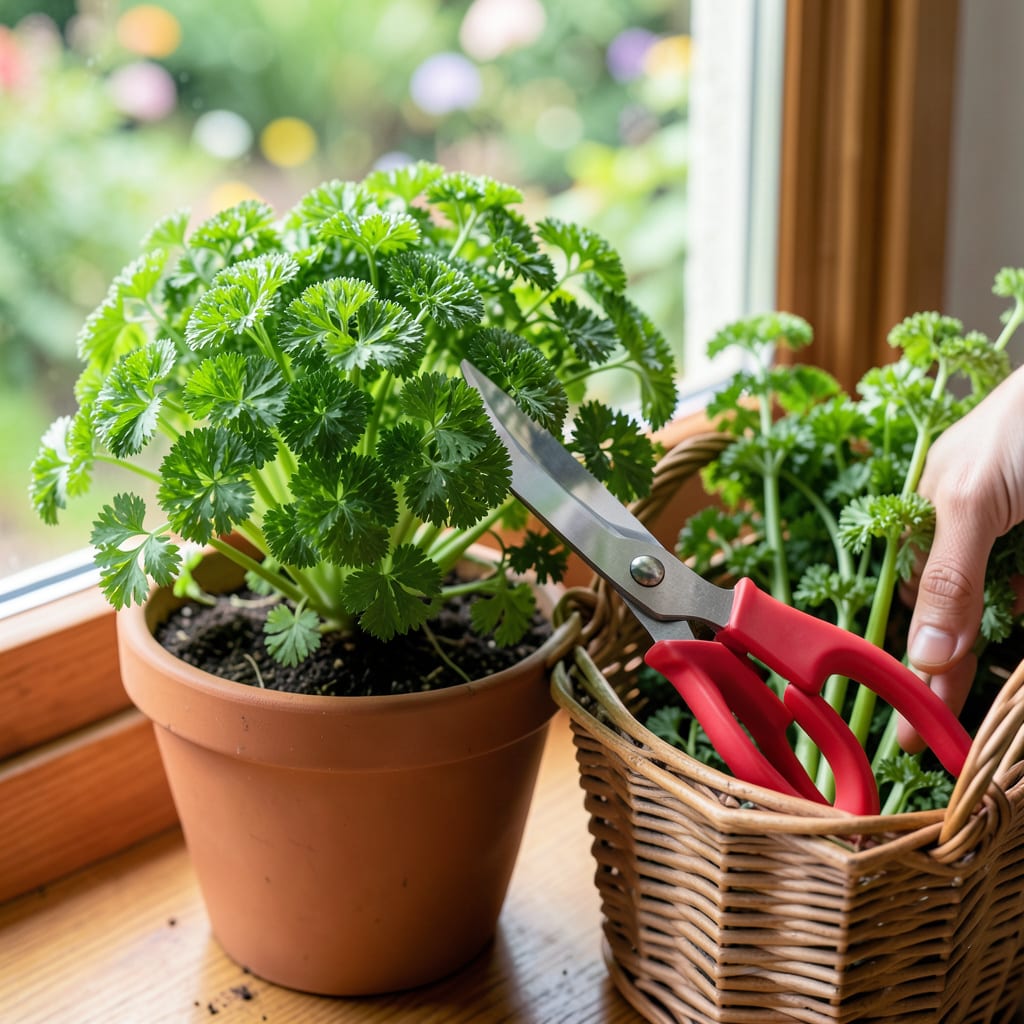
I used to struggle with harvesting Curly Parsley 🌿 without damaging the plant, but there’s a simple method that works every time. Picking the right leaves at the right time keeps your plant thriving.
With a few easy steps, you can enjoy fresh parsley all season long. I’ll show you how to harvest without harming your plant, so it keeps producing for months.


Harvesting curly parsley at the right time ensures healthy regrowth and a continuous supply of fresh leaves. I always start by checking for vibrant green, fully curled leaves as the first sign. 🌿
The best time to harvest is in the cool morning hours, when the essential oils are most concentrated. This keeps the flavor strong and the plant stress-free. ✂️
I always use clean, sharp scissors to make precise cuts without crushing the delicate stems. This prevents disease entry and keeps the plant looking tidy. 🌱
It’s crucial to harvest the outer leaves first, as this allows the inner leaves to continue growing. This method ensures your parsley plant stays productive for weeks. 🪴
Never harvest more than one-third of the plant at a time. This rule prevents shock to the system and allows for steady regrowth. Your plant will thank you with bushier growth.
After harvesting, I
If you notice yellowing leaves or weak stems, hold off on harvesting. These are signs your parsley isn’t ready or may need better care. Patience pays off with healthier plants.
For the best flavor, harvest before the plant bolts to seed. Once parsley starts flowering, the leaves can turn bitter. Regular harvesting actually delays bolting.
By following these steps, you’ll enjoy fresh curly parsley all season. The key is consistent care and mindful harvesting. Your garden will reward you with abundant leaves for all your needs.
Even experienced gardeners make harvesting mistakes with curly parsley that can stunt growth or kill the plant. I’ve learned the hard way that proper technique matters just as much as timing. 🌿
One common error is cutting the wrong stems. Always harvest from the outer growth first, never the central crown. This protects the new growth at the heart of the plant. ✂️
Another frequent mistake is harvesting too much at once. Taking more than one-third of the foliage can shock the plant and slow regrowth. I limit myself to a few stems per harvest. 🌱
Timing is also crucial. Harvesting during the hottest part of the day can cause wilting. I always pick in the early morning when plants are most hydrated and least stressed. 💧
Using dull or dirty tools can introduce disease and damage stems. I keep a dedicated pair of sharp pruning shears just for my herbs. This small investment prevents many problems.
Finally, never harvest from the center of the plant. This is where new growth emerges. By focusing on the outer leaves, you’ll ensure your parsley stays productive all season long. 🪴
After harvesting your curly parsley, proper storage is key to maintaining its freshness and flavor. I’ve found that cool, humid conditions work best for short-term use. 🌿
For immediate use, I recommend storing unwashed stems in a glass of water at room temperature. This keeps them crisp for 3-5 days, just like fresh-cut flowers. ✂️
For long-term storage, drying is my go-to method. I tie stems in small bundles and hang them in a well-ventilated area. Once dry, I store the crumbled leaves in airtight containers. 🌱
Freezing works wonderfully for preserving flavor. I chop the leaves finely, pack them into ice cube trays with water, and freeze. These cubes are perfect for adding to dishes later without losing that fresh parsley taste. 🪴
Early morning is ideal, when essential oils are most concentrated and plants are least stressed. Avoid harvesting during hot afternoon sun to prevent wilting.
No, always pick outer leaves first to allow the inner growth to mature. Cutting the center can damage new growth and reduce future harvests.
You can harvest every 2-3 weeks if you never take more than 1/3 of the foliage at once. This encourages bushier regrowth.
Once it bolts, leaves turn bitter. Regular harvesting helps delay flowering. Remove any flower stalks immediately to extend leaf production.
