
Beautiful Plants For Your Interior
Beautiful Plants For Your Interior
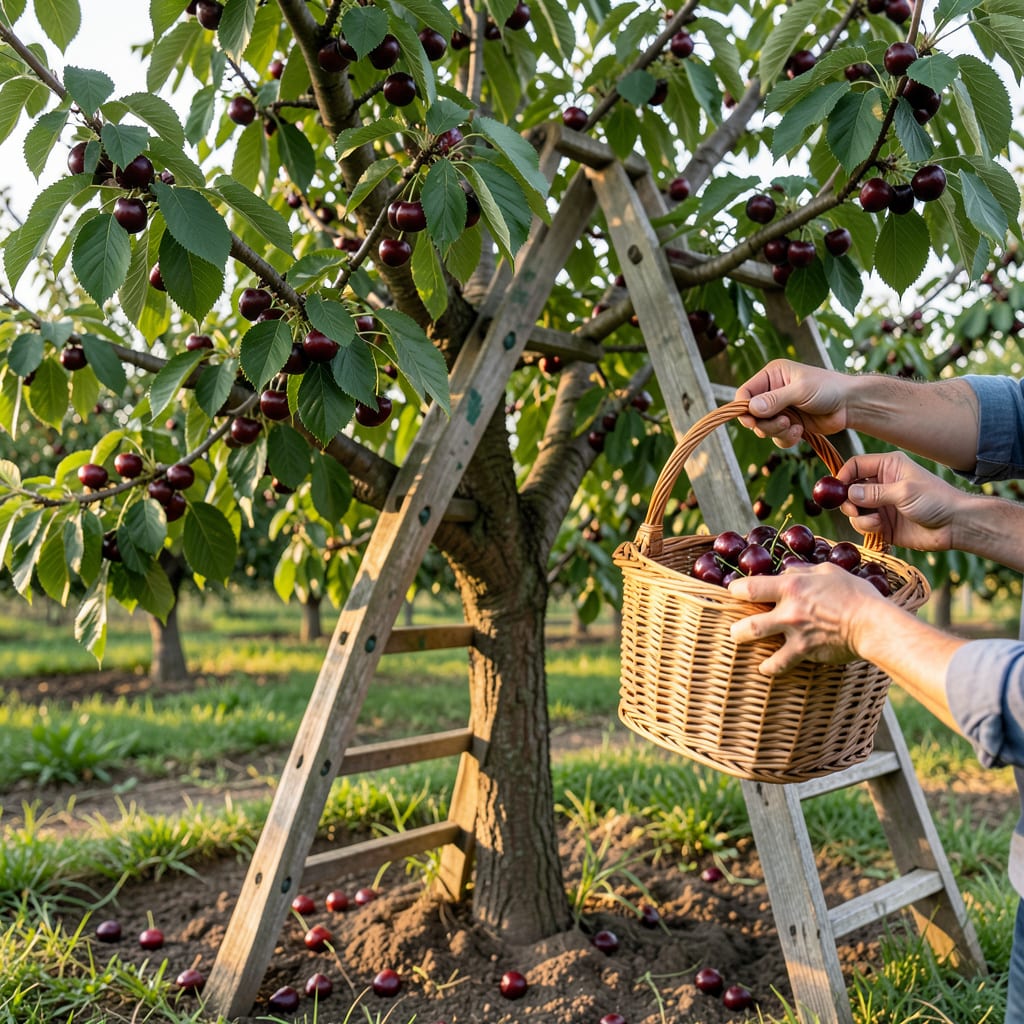
Nothing beats the taste of freshly picked cherries straight from your own 🍒 tree. But knowing exactly when and how to harvest can mean the difference between tart disappointment and burst-of-summer sweetness.
I’ll show you the proven methods to pick cherries at their peak, plus the simple techniques to keep your tree healthy and productive for years to come.


Timing your cherry harvest perfectly ensures the best flavor and texture. I always look for deep, uniform color first—whether it’s bright red, dark purple, or nearly black, depending on the variety. Sweet cherries like Bing or Rainier are ready earlier than tart ones. 🌳
The taste test is my go-to method. Sample a few fruits from different parts of the tree. If they’re sweet and juicy, it’s time. Also, check if the fruit separates easily from the stem with a gentle tug. If it does, they’re ready to pick. ☀️
| Sign | Sweet Cherries | Tart Cherries |
| Color | Deep red/black | Bright red |
| Firmness | Slightly soft | Firm but not hard |
| Harvest Window | Late May – July | Early to mid-July |
| Taste | Very sweet | Tart, tangy |
Weather plays a huge role in determining harvest time. A warm spring speeds up ripening, while a cool, wet season may delay it. I’ve noticed that birds often start eyeing the fruit just as it’s ready, so keep an eye out for feathered visitors. 🪴
Early varieties like Stella may ripen in late May, while late varieties such as Sweetheart can hang on the tree until late July. Check your tree daily once the color starts to change. It’s amazing how quickly cherries can go from almost ready to overripe. ✂️
For tart cherries, which are often used for pies and preserves, the color is a bright red, and they’ll be slightly softer than unripe fruit. Unlike sweet cherries, they’re not typically eaten fresh off the tree but are perfect for processing. Montmorency is a popular tart variety that’s easy to spot when ready. 🌿
If you’re unsure, pick a few cherries from different branches. Ripeness can vary even on the same tree. The ones on the sunniest side often ripen first. I also look for a sweet aroma near the clusters, which is a sure sign they’re ready to enjoy. 🌱
Avoid harvesting after rain or heavy dew, as wet fruit can split or develop mold. Early morning is the best time to pick, as the fruit is firm and the temperatures are cooler. This helps preserve the cherries’ freshness and flavor during storage. 💧
If you miss the perfect window, don’t worry. Cherries can be left on the tree for a few extra days without losing quality, but they won’t continue to ripen once picked. So, it’s better to wait until they’re fully ready. Overripe cherries may split or attract pests, so timing is key. 🌳
Finally, remember that young trees may produce less fruit, but the quality is often exceptional. As your cherry tree matures, you’ll get a better sense of its unique harvest window. Keep notes each year to track patterns and refine your timing. ✂️
Harvesting cherries properly keeps your tree healthy and your fruit intact. I always start with clean, sharp tools like pruners or a fruit picker for high branches. Avoid tugging fruit by hand, as this can damage the spurs that produce next year’s crop. ✂️
For low-hanging cherries, gently grasp the fruit and lift it upward with a slight twist. The stem should separate cleanly from the spur. If it doesn’t, the fruit isn’t ready yet. I use a small ladder for higher branches to avoid overreaching. 🌳
Follow These Steps:
If you’re dealing with tall cherry trees, a sturdy orchard ladder is a game-changer. I position it carefully to avoid leaning against branches, which can break under pressure. A harvest bucket with a shoulder strap keeps my hands free. 🪴
For tart cherries, which often grow in dense clusters, I use a gentle rake or my fingers to comb through the branches. This method helps detach ripe fruit while minimizing damage. Always work from the outside in to avoid bruising. ☀️
Never pull cherries downward, as this can strip the fruit spurs and reduce future yields. Instead, lift and twist each fruit upward. If the cherries resist, they’re not ripe yet. Patience here prevents long-term harm to your tree. 🌿
After harvesting, I inspect the tree for any broken branches or signs of stress. Removing damaged wood immediately helps prevent disease. A quick cleanup under the tree also removes fallen fruit that could attract pests. 💧
Once you’ve harvested your cherries, proper storage is key to maintaining their freshness and flavor. I always start by sorting the fruit, removing any damaged or overripe cherries that could spoil the rest. 🌳
For short-term storage, keep cherries unwashed in a perforated bag or container in the refrigerator. The cold slows ripening and preserves their sweet taste for up to 10 days. High humidity helps prevent shriveling. 💧
Preservation Methods:
✅ Pros
❌ Cons
For long-term preservation, freezing is my top choice. Simply wash, dry, and pit the cherries, then spread them on a tray to freeze before transferring to a freezer bag. This prevents clumping and keeps them fresh for months. 🪴
If you prefer canning cherries, use a light syrup to retain their natural sweetness. A water bath method works well for high-acid fruits like tart cherries. Always follow tested recipes for safety. ☀️
Drying cherries is another great option. A food dehydrator or oven set to low heat works well. Slice cherries in half and remove pits for even drying. Store in an airtight container in a cool, dark place. ✂️
Early morning is ideal when temperatures are cool and fruit is firm. This helps prevent bruising and preserves freshness during storage.
Avoid picking after rain or heavy dew, as wet cherries can split or develop mold. Always wait for dry conditions to ensure quality.
Use a sturdy orchard ladder positioned carefully to avoid branch damage. A harvest bucket with a strap keeps hands free for picking.
No, cherries won’t continue to ripen once harvested. It’s best to wait until they’re fully ripe on the tree for peak sweetness.
