
Beautiful Plants For Your Interior
Beautiful Plants For Your Interior

Muscadine vines offer delicious, nutrient-packed grapes perfect for fresh eating, jellies, or wine. These ten essential tips will help home gardeners cultivate healthy, productive vines that thrive for decades with proper care and techniques.
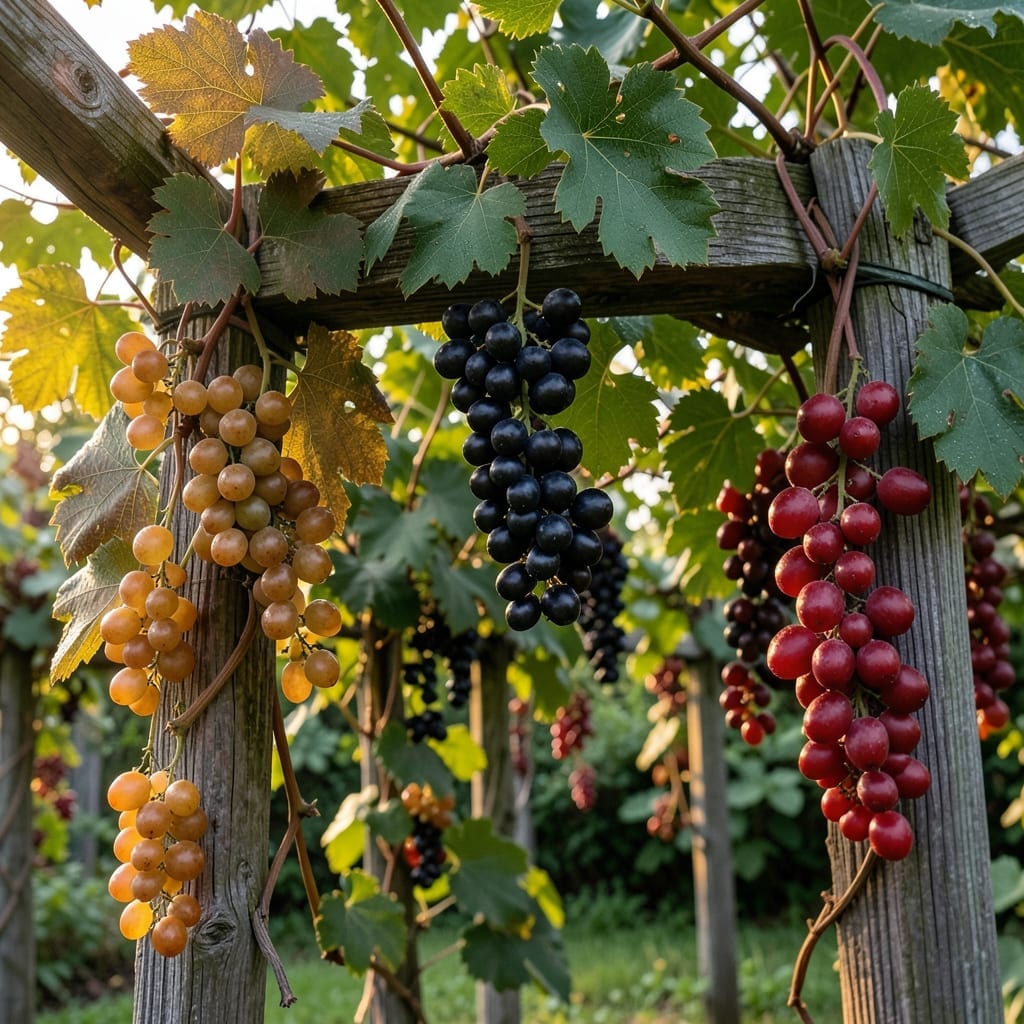
Your muscadine vine’s success starts with picking the perfect variety for your garden. Bronze, black, and red types each offer unique flavors and thrive in different climates.
Bronze varieties like ‘Scuppernong’ are sweet and tropical, ideal for warm southern climates. Black types such as ‘Carlos’ provide rich, bold flavors and do well in cooler areas. Remember that some are self-fertile, while others require both male and female plants for pollination.
Choosing the right variety ensures a bountiful harvest tailored to your taste and growing conditions. 🌿
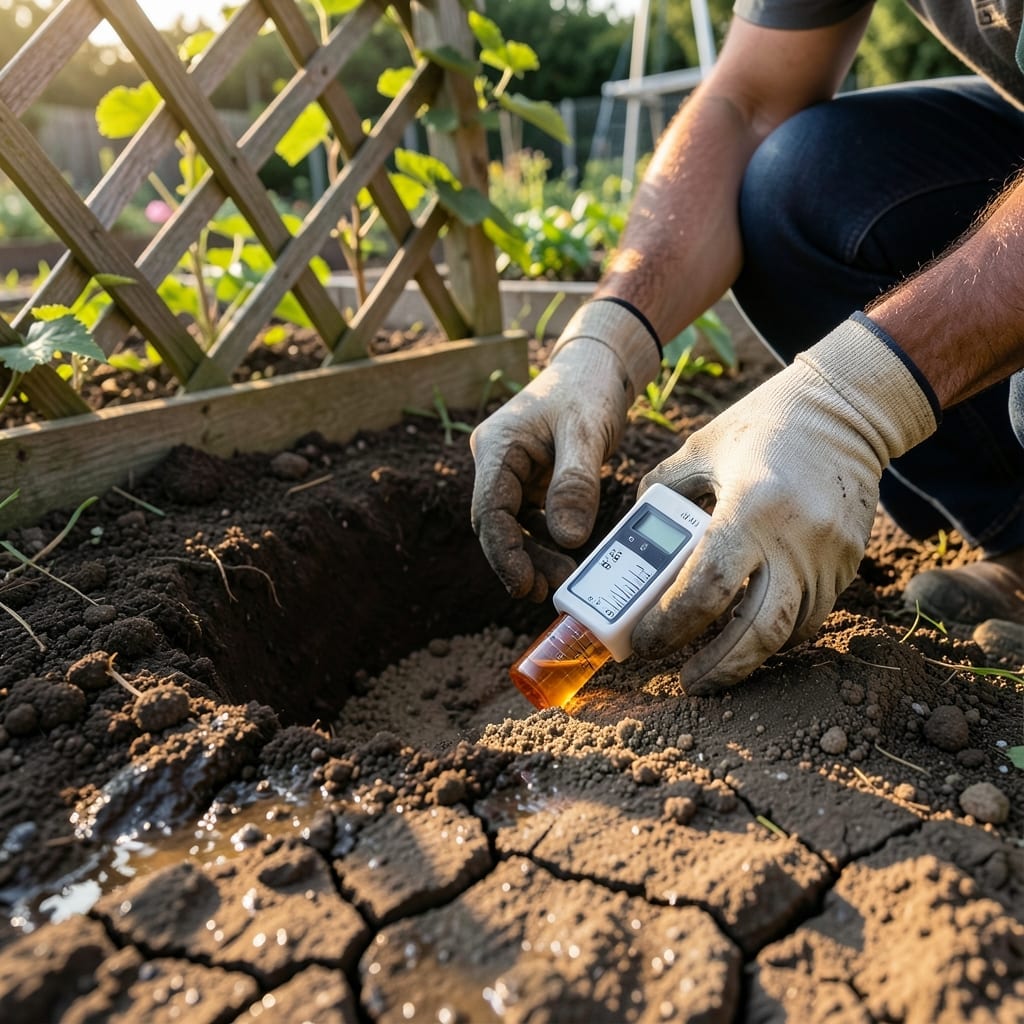
Before planting, test your soil’s pH—muscadines prefer slightly acidic soil (5.5–6.5). Heavy clay or compacted soil will suffocate roots, so amending is key.
Mix in compost for nutrients and sand to improve drainage, ensuring water flows away from roots but moisture stays accessible. This prep prevents rot and encourages strong, deep root systems from day one.
Gardeners in humid climates will see the biggest payoff, as well-prepared soil helps vines resist disease and drought stress. 🌱
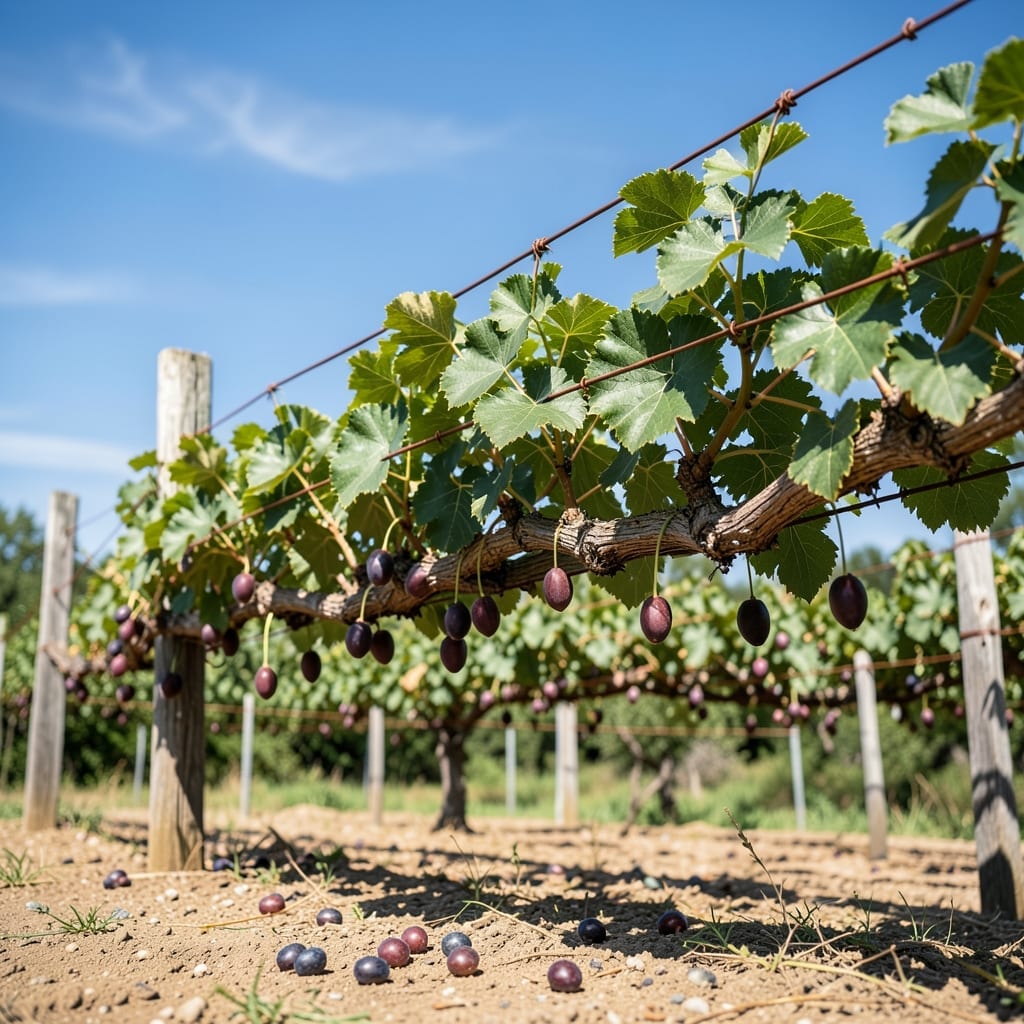
For the sweetest, most abundant muscadine harvests, sunlight is non-negotiable. These vines demand full sun exposure to develop their signature rich flavor and plentiful clusters.
Choose a south-facing spot that receives at least 8 hours of direct sunlight daily. Shield your vines from strong winds, which can damage tender new growth and reduce fruit set. A sunny, sheltered location ensures vigorous growth and maximum sugar development in the grapes.
This setup works especially well for gardeners in warmer climates where muscadines thrive. 🌿
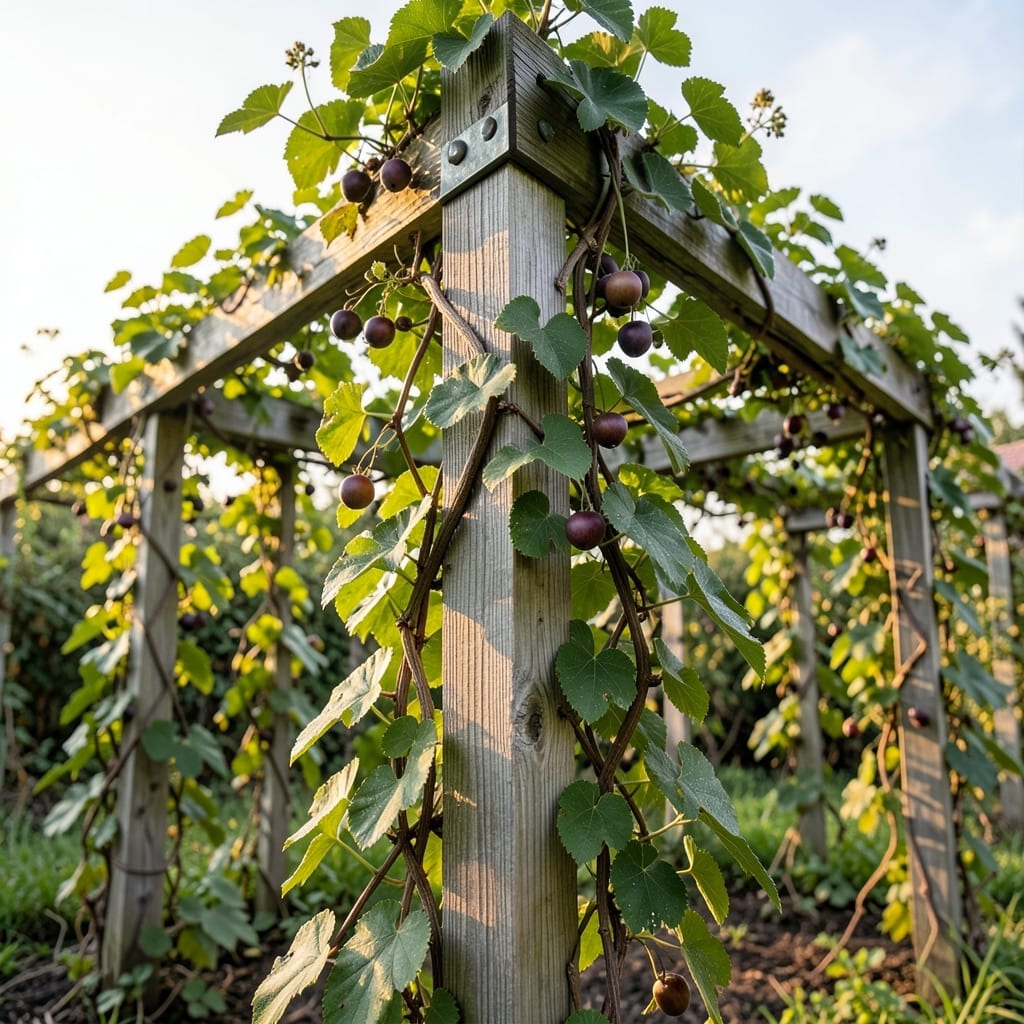
Without proper support, muscadine vines can become tangled messes that are hard to manage. A well-built trellis transforms your garden by keeping vines organized and accessible.
Install a 6-8 foot high trellis made from sturdy materials like pressure-treated wood or metal. This height accommodates the vigorous growth habit of muscadines while improving air circulation, which reduces disease risk and makes harvesting a breeze.
This setup is ideal for gardeners who want healthy vines and easy maintenance for years to come. 🌿
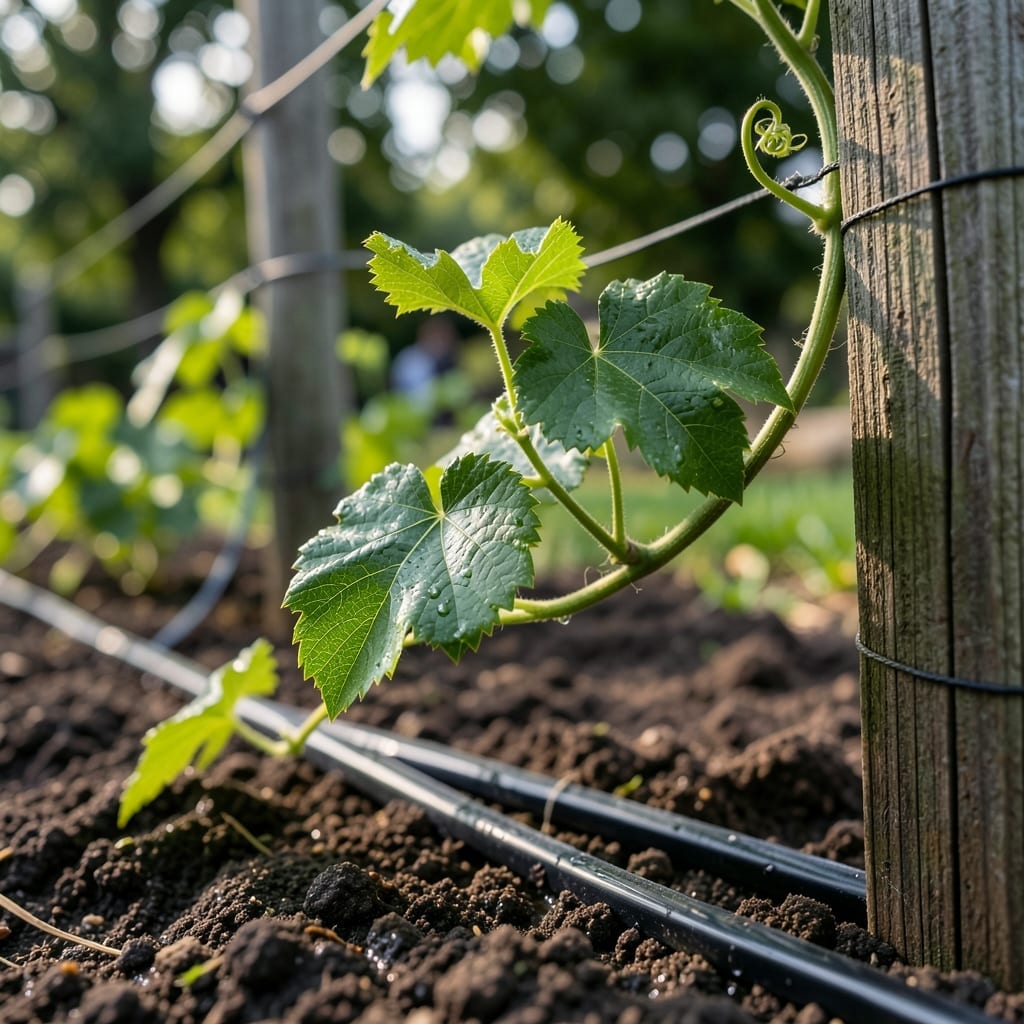
Young muscadine vines are thirsty in their first year, but overwatering can be just as harmful as drought. Aim for 1-2 inches of water weekly to keep the root zone consistently moist without waterlogging.
Drip irrigation is your best friend here—it delivers water directly to the roots while keeping leaves dry, which prevents fungal diseases. This method also encourages deep root growth, making your vines more resilient in the long run.
Consistent moisture now means stronger vines and better fruit production later. Beginners will find this approach forgiving and effective. 🌱
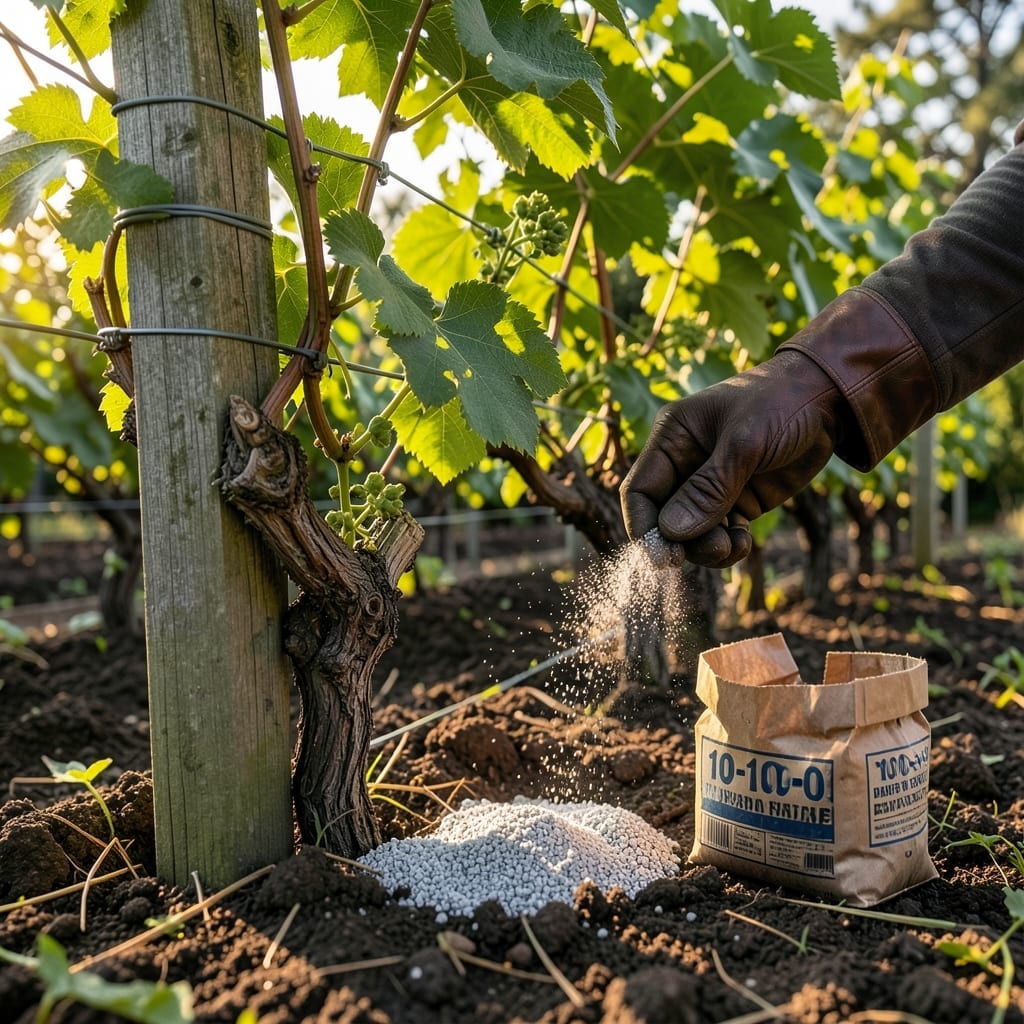
Feed your muscadine vines right to balance growth and fruit. A 10-10-10 fertilizer applied in early spring kickstarts the season, while a summer follow-up keeps momentum going.
Stick to the recommended amounts—overdoing it pushes leafy growth at the expense of your grape harvest. Think of fertilizer as seasoning: just enough enhances the result, but too much ruins the batch.
This simple schedule works for most gardeners, especially those new to growing muscadines. 🌱
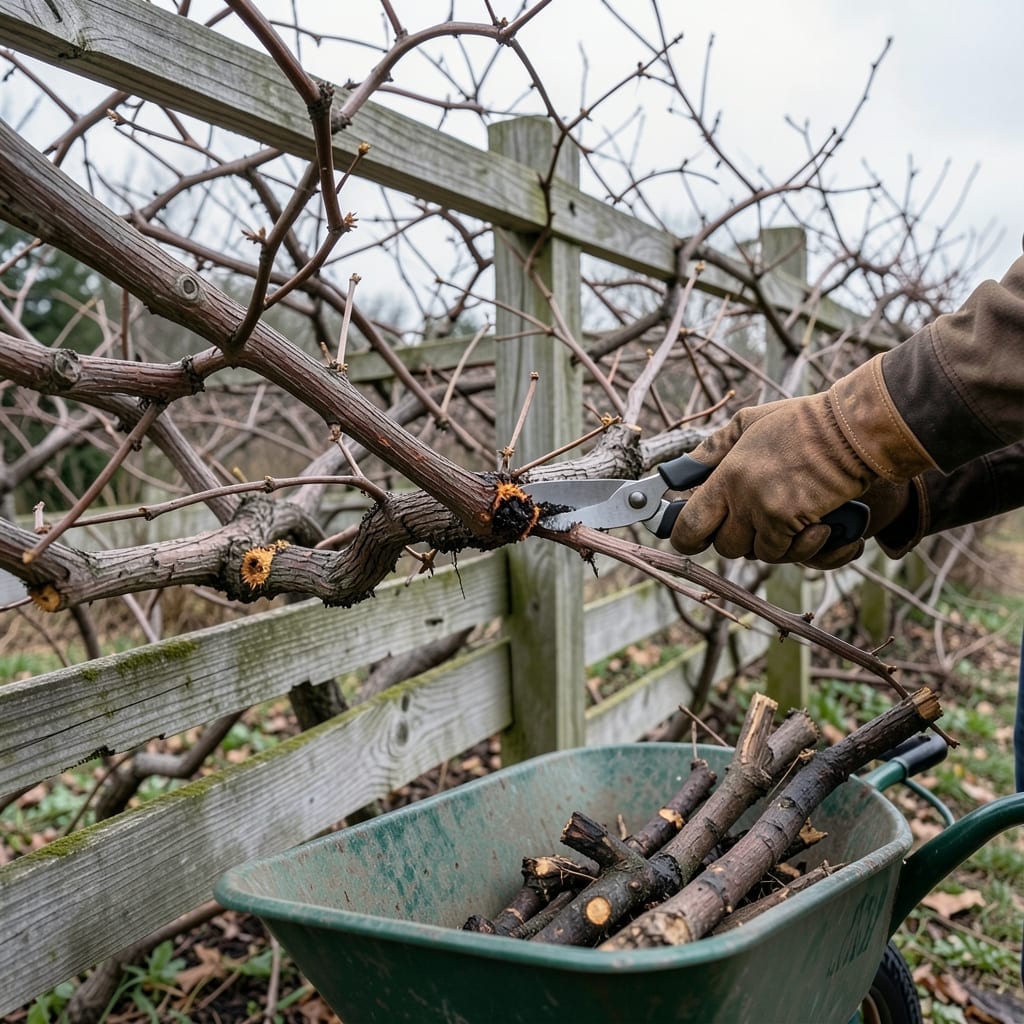
Late winter is the perfect time to give your muscadine vines a productivity boost through strategic pruning. This annual ritual removes dead or diseased wood while shaping the vine for better air circulation and sunlight penetration.
Focus on cutting back about 70-80% of last year’s growth, leaving 2-4 buds per cane. This encourages larger, sweeter fruit clusters and prevents overcrowding that can lead to fungal issues. Always use clean, sharp pruners for precise cuts.
Gardeners who prune consistently report healthier vines with 20-30% higher yields. It’s the secret to transforming a good harvest into a great one. 🌿
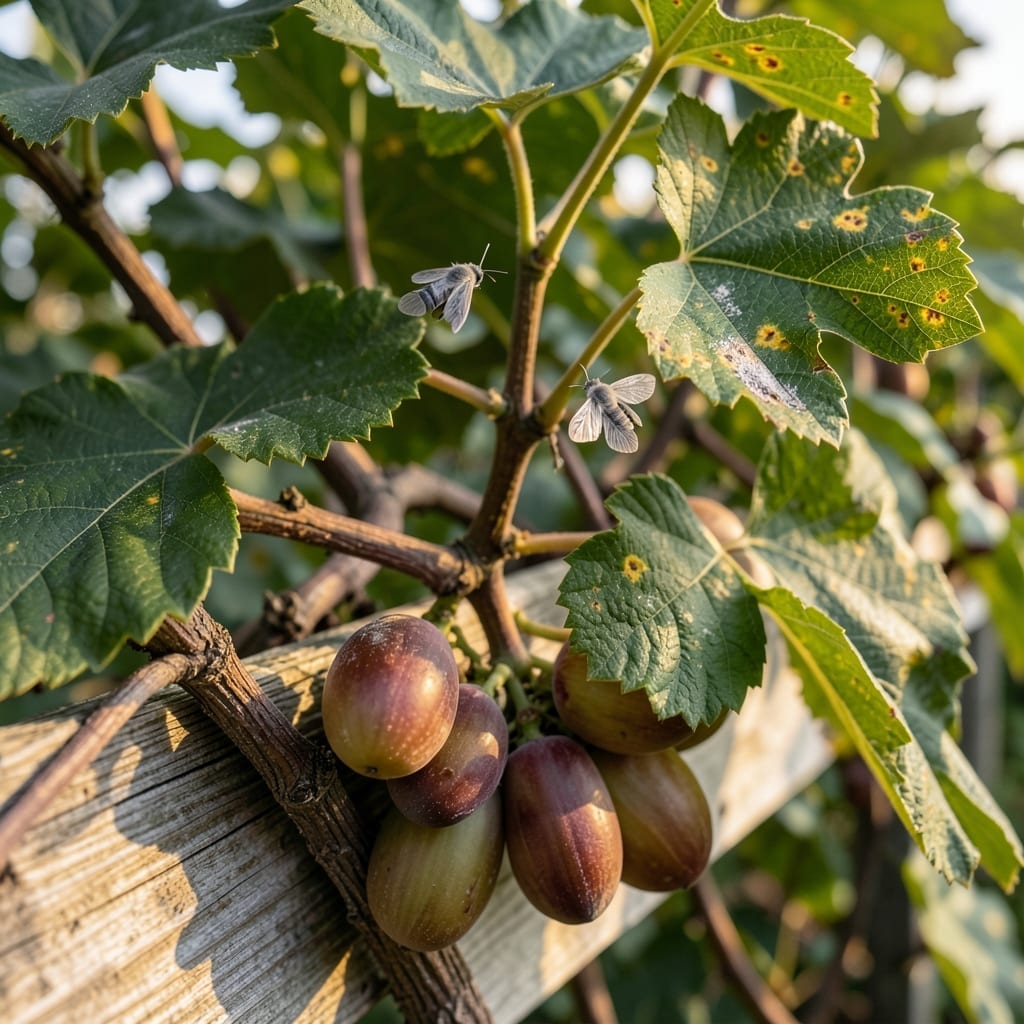
Healthy muscadine vines can fall prey to pests like the grape berry moth or fungal diseases if left unchecked. Early detection is your best defense against these common threats.
Inspect leaves and fruit regularly for signs of trouble. Use organic sprays like neem oil or sulfur-based treatments at first sign of issues. Ensure good air circulation by pruning excess growth and spacing vines properly to discourage fungal spread.
This chemical-free approach keeps your vines productive while protecting beneficial insects. Perfect for gardeners who prefer natural solutions. 🌿
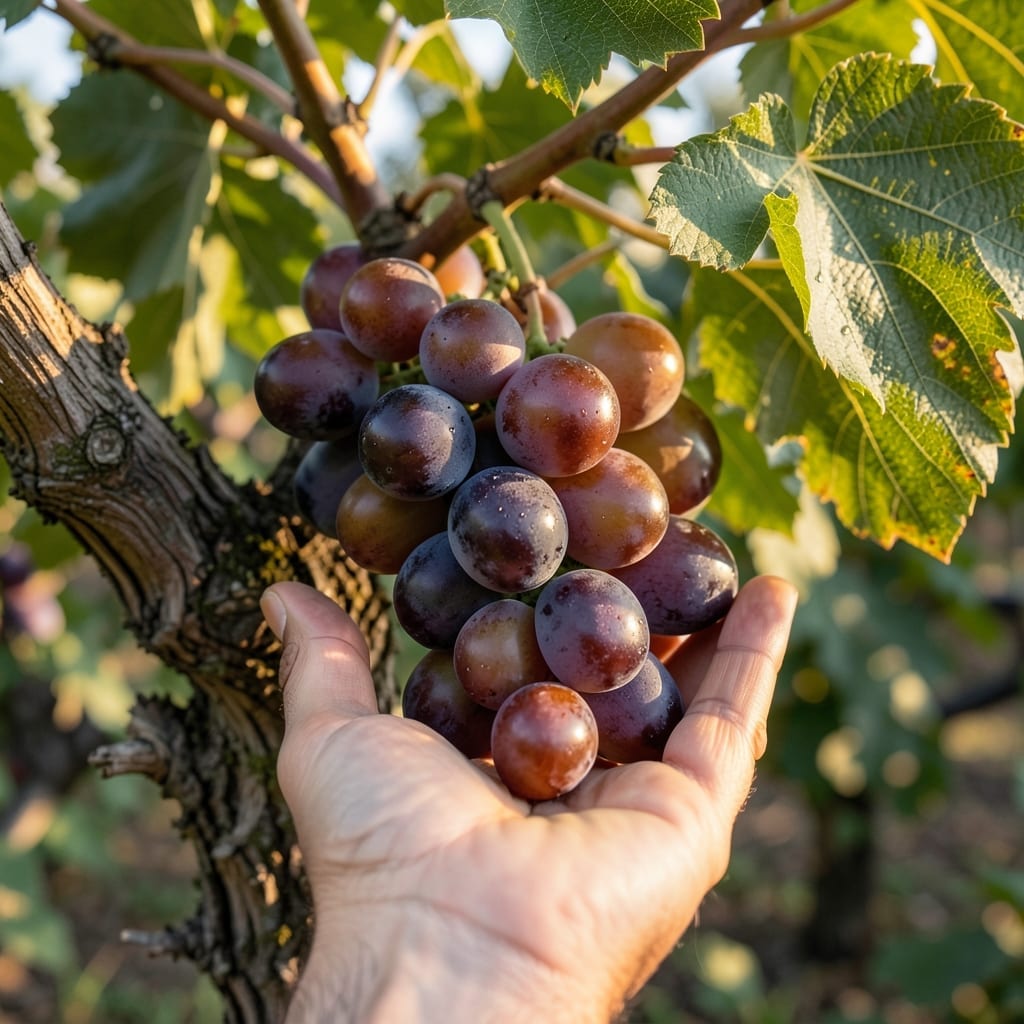
Timing your harvest perfectly ensures the sweetest, juiciest muscadine grapes from your vines. Unlike store-bought grapes, these won’t all ripen at once, so daily checks are essential during the late summer to early fall window.
The telltale signs are simple: grapes should slip effortlessly from the stem with a gentle tug and emit a rich, sweet aroma. Their color deepens too, shifting from green to bronze, purple, or black depending on the variety.
This method works best for gardeners who want maximum flavor and minimal waste from their harvest. 🌿
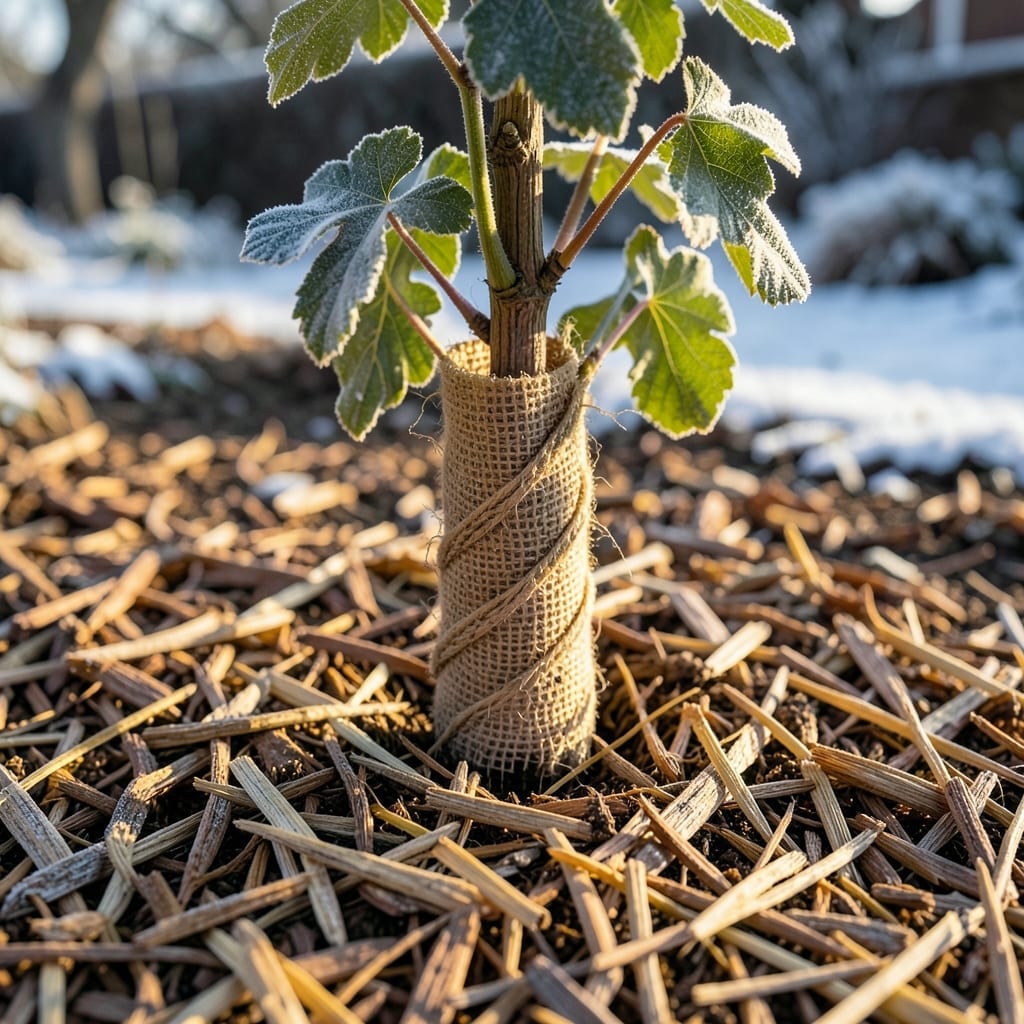
Cold winters can threaten young muscadine vines, especially in zones where temperatures dip below freezing. A little prep work goes a long way in safeguarding your investment.
Apply a 4-6 inch layer of mulch around the base to insulate roots, and wrap the vine’s lower portion with burlap or frost cloth. This combination protects against freeze damage while allowing the plant to breathe.
This step is crucial for gardeners in colder regions who want to ensure their vines return strong and productive next season. 🌱