
Beautiful Plants For Your Interior
Beautiful Plants For Your Interior
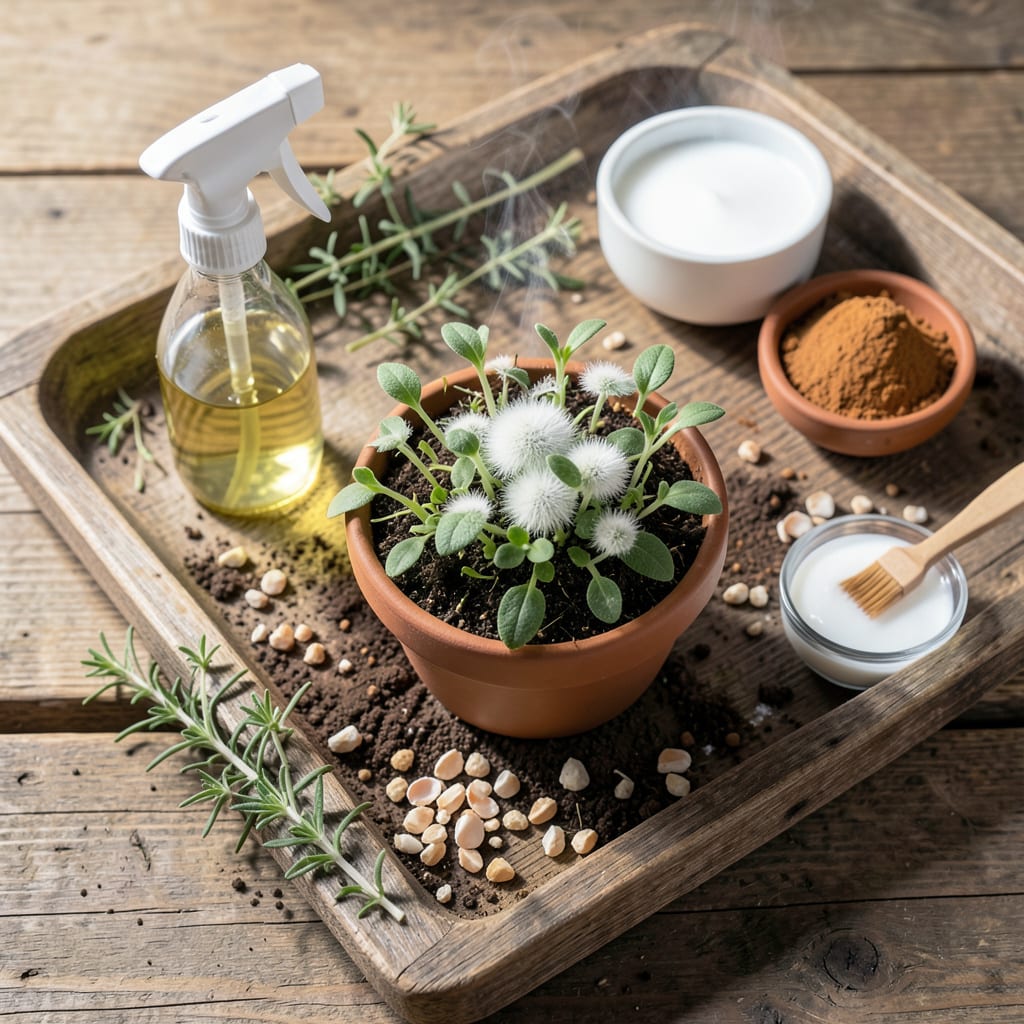
White fuzzy mold on seedlings hits hard. I lost an entire tray of tomato starts to this last spring, and it spreads faster than you can say “damping off.”
The good news? This is 100% preventable with better airflow, proper watering, and a few simple habit changes. Most cases start with overcrowded trays or soggy soil.
Caught early, you can save your seedlings with natural treatments that work in 24-48 hours. I use a baking soda spray that stops the spread without harsh chemicals.
By next season, you’ll spot the warning signs before they appear. Here’s how to fix it now and keep your starts mold-free for good.
White fuzzy mold, often Sclerotinia sclerotiorum or Botrytis cinerea, thrives on seedlings due to specific environmental and cultural conditions. Understanding these causes helps you take targeted action to prevent its return.
When seedlings are planted too closely together, air circulation is restricted. Stagnant air traps moisture around stems and leaves, creating a humid microclimate perfect for fungal spores to germinate and spread. This is especially common in indoor starts or greenhouses where natural airflow is limited.
Overwatering or consistently damp soil provides the ideal breeding ground for white fuzzy mold. Seedlings in poorly draining containers or trays without drainage holes are particularly vulnerable. High humidity (above 70%) exacerbates the issue, as fungal spores require moisture to activate and grow.
Fungal growth accelerates in cool, damp conditions—typically between 60–75°F (15–24°C). If seedlings are kept in a chilly, shaded spot with lingering moisture (e.g., from condensation or misting), mold can quickly take hold. This is why damping off—a common seedling disease—often coincides with white fuzzy growth.
Dead leaves, uneaten seeds, or decaying plant matter on the soil surface serve as food for fungi. As these materials break down, they release nutrients that fuel mold growth while also increasing local humidity. Keeping the growing area clean reduces this risk significantly.
White fuzzy mold on seedlings is fixable with the right approach. Address the root causes and apply these targeted solutions to save your young plants.
Let the soil dry slightly between waterings. Use a moisture meter or the finger test: stick your finger an inch into the soil—if it’s damp, wait. Water only at the base to keep foliage dry, and use a well-draining potting mix to prevent soggy conditions.
Increase air circulation with a small fan on low or by spacing seedlings farther apart. If indoors, open windows briefly daily. For greenhouses or trays, remove lids once sprouts appear. This reduces humidity and discourages mold growth.
Prevention tip: 💡 Use a oscillating fan for 1–2 hours a day to keep air moving gently.
Lower humidity by avoiding misting and using a dehumidifier if needed. If growing under a dome or plastic cover, remove it as soon as seeds germinate. Wipe condensation off domes daily to prevent dampness buildup.
Remove affected seedlings immediately to prevent spread. Spray remaining plants with a baking soda solution (1 tsp baking soda + 1 quart water + a drop of dish soap). Alternatively, use neem oil or hydrogen peroxide (1 tbsp 3% H₂O₂ per cup of water) as a foliar spray. Apply in the morning so leaves dry quickly.
Prevention tip: ✨ Sterilize seed trays and tools with a 10% bleach solution before reuse.
Overcrowding traps moisture and blocks airflow. Thin seedlings to the strongest 1–2 per cell or pot. If they’re too dense, transplant some to new containers. This gives each plant room to grow and reduces mold-friendly conditions.
It can spread within 24-48 hours in damp, crowded conditions. Isolate affected seedlings immediately and improve airflow to stop it.
No, discard infected soil as spores linger. Sterilize containers with 10% bleach solution before reuse.
Water in the morning so foliage dries by evening. Always water at the base, not over leaves.
A fan helps but won’t solve it if overwatering or poor drainage persists. Combine with proper watering and ventilation.
