
Beautiful Plants For Your Interior
Beautiful Plants For Your Interior
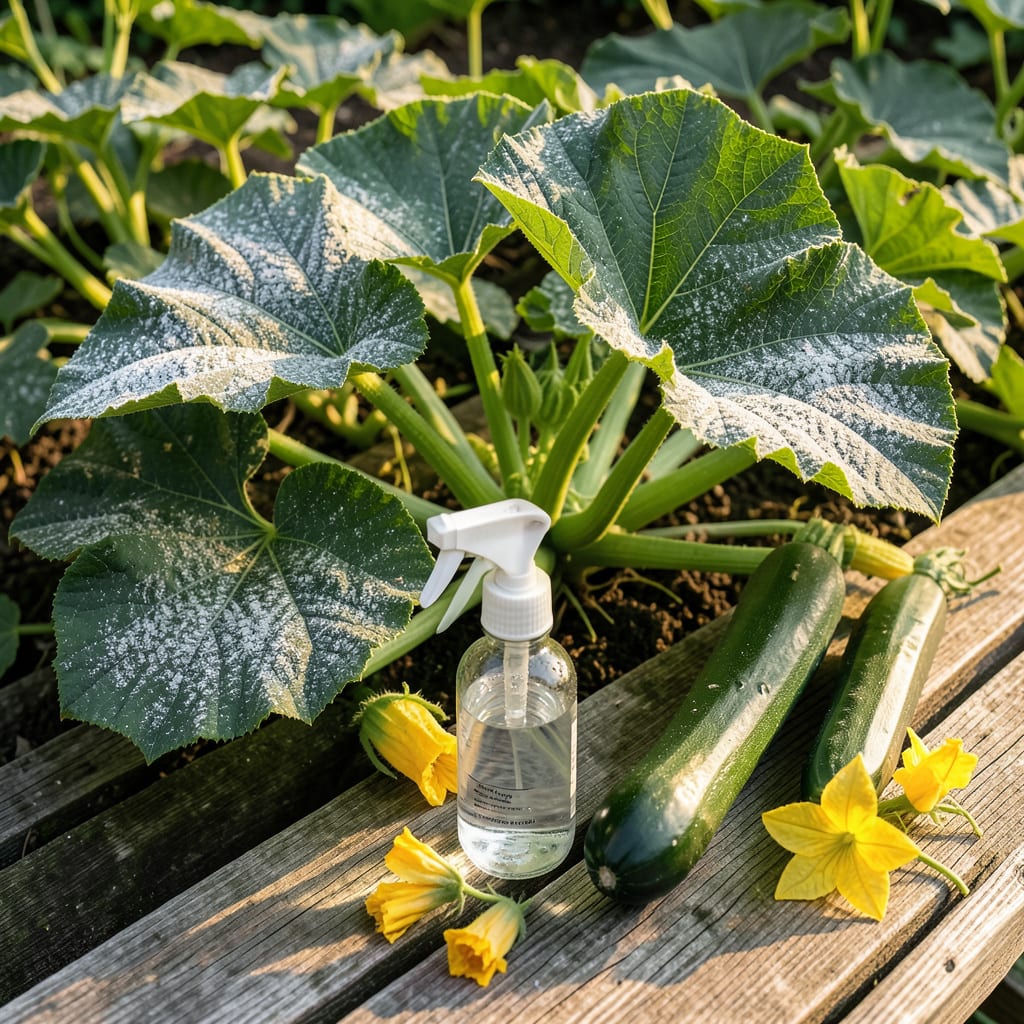
White powder on your zucchini leaves spells trouble. ✨ I lost half my crop to powdery mildew before learning this simple treatment that stops it in 48 hours.
The solution starts with better air circulation and a homemade spray that costs pennies. Most gardeners overlook the morning watering habit that spreads spores faster than anything else.
Your plants will show improvement within days, with new growth coming in clean and healthy. The spray works on other squash too, and prevents future outbreaks when used weekly.
No fancy equipment needed—just a spray bottle and ingredients from your kitchen. Works in any climate, any garden size.
Powdery mildew thrivess on zucchini plants due to a few key environmental and biological factors. Understanding these causes helps you prevent outbreaks before they start. Below are the primary triggers for this stubborn fungal disease.
This fungus, Podosphaera xanthii, flourishes in environments with 60–80% humidity and stagnant air. Dense plantings or shaded areas trap moisture, creating the perfect breeding ground. Zucchini leaves with poor airflow retain surface moisture longer, accelerating spore germination.
Wetting the foliage—especially in the evening—extends leaf dampness overnight. Powdery mildew spores require free water to infect, and prolonged leaf wetness (over 2 hours) significantly boosts infection rates. Drip irrigation at the soil level is a safer alternative.
Some zucchini cultivars lack genetic resistance to P. xanthii. Older or stressed plants are more vulnerable, as their weakened defenses can’t fend off initial spore attachment. Choosing resistant varieties (e.g., ‘Dunja’ or ‘Astia’) can reduce risk.
Excess nitrogen promotes lush, soft growth—ideal for powdery mildew. Conversely, low potassium or phosphorus weakens plant cell walls, making them easier for the fungus to penetrate. Balanced fertilization strengthens natural defenses.
Powdery mildew on zucchini plants is treatable with a few simple steps. Here’s how to tackle each cause and restore your plants’ health.
Trim overcrowded leaves and space plants at least 2-3 feet apart to allow airflow. Prune affected foliage to reduce humidity buildup. Prevention tip 💡: Stake vining zucchini to keep leaves off the ground, where moisture lingers.
Water at the base of the plant (not overhead) early in the day, so leaves dry quickly. Use drip irrigation if possible. Prevention tip 🌡️: Avoid evening watering—damp leaves overnight invite mildew.
Spray affected plants with a mix of 1 tablespoon baking soda + 1 teaspoon dish soap + 1 gallon water. Apply weekly or after rain. For stubborn cases, use neem oil (follow label instructions). Prevention tip ✨: Remove fallen leaves and debris to eliminate spore hiding spots.
Strengthen zucchini with balanced fertilizer (e.g., 10-10-10) and avoid over-fertilizing with nitrogen, which promotes leafy growth (a mildew magnet). Prevention tip 🎯: Choose mildew-resistant zucchini varieties like ‘Dundee’ or ‘Emerald Delight’.
Use the spray every 7-10 days or after rain. Reapply immediately if leaves get wet, as water can wash it off. Consistency is key for preventing new spores from taking hold.
Yes, the fruit remains safe to eat. Powdery mildew only affects leaves and stems, not the zucchini itself. Just wash produce thoroughly before consumption to remove any surface spores.
Spores can survive in soil and plant debris. Remove all fallen leaves and rotate crops next season. Improve airflow and avoid evening watering to break the cycle.
Neem oil works well for severe cases, but baking soda is gentler for prevention. Both are effective—neem disrupts fungal growth, while baking soda changes leaf pH to inhibit spores.
