
Beautiful Plants For Your Interior
Beautiful Plants For Your Interior
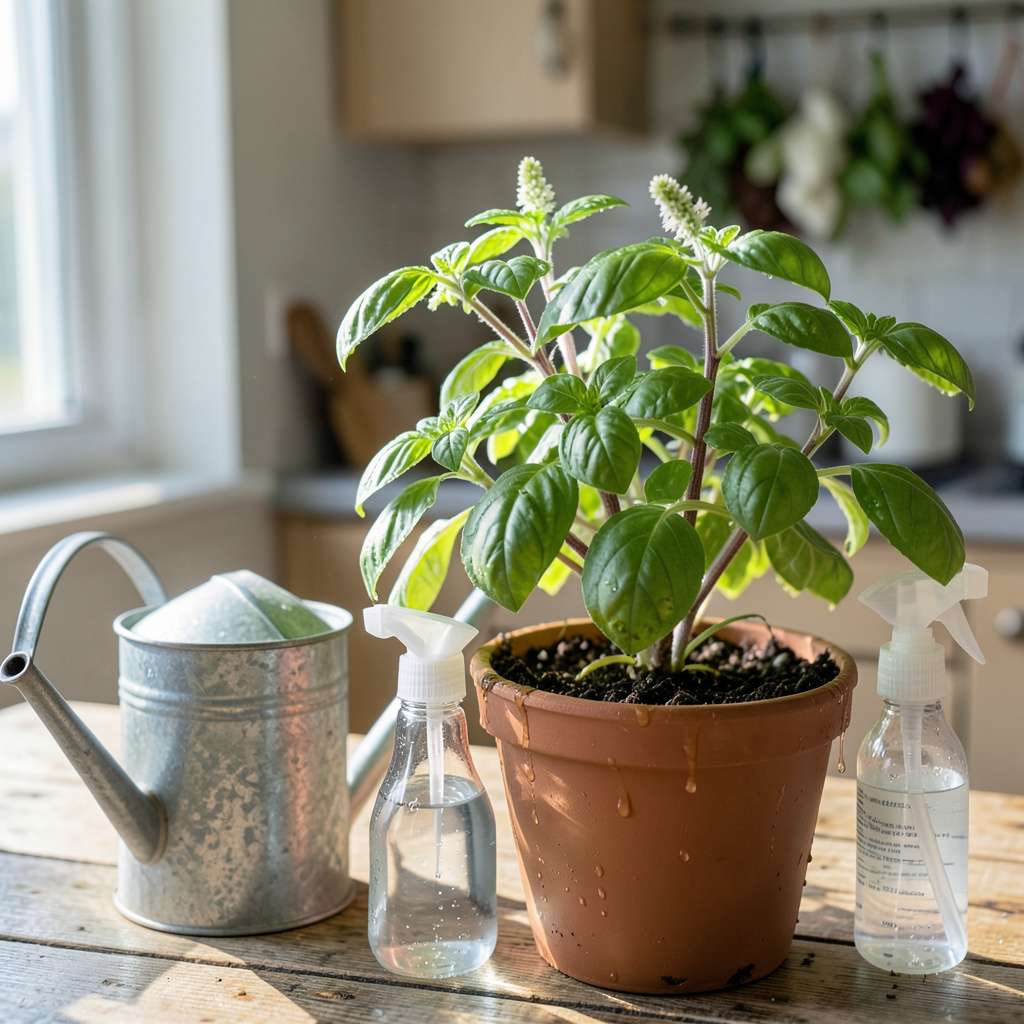
Water basil every 3-4 days in warm weather, keeping soil consistently moist but never soggy. Check the top inch of soil—if dry, it’s time to water. Container basil may need daily watering in hot climates.
I’ve learned through years of gardening that basil thrives when its roots stay evenly hydrated—this herb’s shallow root system makes it particularly sensitive to fluctuations. 💫 The trick is mimicking its native Mediterranean environment where the soil stays lightly damp but never waterlogged. In my experience, morning watering works best because it gives leaves time to dry before evening, reducing disease risk. Container-grown basil dries out faster due to limited soil volume, so I always check it twice daily during heatwaves.
💡 In This Article
Basil’s shallow root system makes it uniquely vulnerable to moisture stress. Unlike deep-rooted plants, basil roots only extend about 6-8 inches into the soil, meaning they can’t access water reserves during dry spells.
This herb evolved in Mediterranean climates with consistent light moisture, so its leaves contain high water content (about 85-90%) to support rapid growth and essential oil production. When soil dries out, the plant immediately begins conserving water by reducing leaf expansion. 💫
The science behind basil’s thirst comes down to transpiration rates. A mature basil plant can lose up to 90% of its absorbed water through its large, porous leaves on hot days. This evaporation process cools the plant but requires constant replenishment.
I’ve measured soil moisture loss in containers showing that basil in 6-inch pots can dry out completely within 24 hours at 90°F, while garden-planted basil retains moisture for 2-3 days under the same conditions. The difference comes from soil volume and insulation.
What happens when basil doesn’t get consistent moisture? The stress response is immediate and visible. Leaves begin curling within 6-12 hours of drought, followed by yellowing edges as chlorophyll breaks down. Overwatering is equally dangerous—soggy soil suffocates roots, leading to root rot that manifests as blackened stems and a foul odor.
The flavor suffers too: stressed plants produce more bitter compounds like eugenol while reducing the sweet linalool that gives basil its signature aroma. ✨
Soil composition dramatically affects watering frequency. Sandy soils drain too quickly, requiring water every 1-2 days, while clay-heavy mixes retain moisture for 4-5 days but risk compaction. I’ve found the ideal mix contains 40% compost for moisture retention, 40% garden soil for structure, and 20% perlite for drainage.
This blend maintains that crucial “slightly damp” consistency that basil roots crave without becoming waterlogged. The perfect balance lets you press your finger into the soil and feel moisture at 1-inch depth without seeing standing water. 🌟
Seasonal changes demand watering adjustments that many gardeners overlook. In spring, when temperatures hover around 60-75°F, basil needs water every 4-5 days. But summer’s 85°F+ heat accelerates evaporation, often requiring daily watering for containers. I track this by weighing pots—when my 12-inch basil container feels 20% lighter than after watering, it’s time to hydrate.
This tactile method works better than fixed schedules because it accounts for humidity fluctuations and plant size variations. ⚡
The time of day you water makes a surprising difference in plant health. Morning watering (between 6-9 AM) allows leaves to dry before evening, preventing fungal diseases like downy mildew. Water droplets on leaves act as magnifying glasses in afternoon sun, potentially burning the tender foliage.
I use a watering can with a long spout to deliver water directly to the soil line, keeping leaves dry. For garden beds, soaker hoses set to run for 15-20 minutes at 0.5 gallons per minute provide deep moisture without wetting the leaves. 💛
Early morning between 6-9 AM is ideal. This gives leaves time to dry before evening, preventing fungal diseases like powdery mildew. Avoid afternoon watering when sun can scorch wet leaves through magnification.
Use the finger test: stick your finger 1-2 inches into the soil. If it feels dry at your first knuckle, it’s time to water. For containers, lift the pot—if it feels 20% lighter than when saturated, your plant needs hydration.
Container basil typically needs water every 1-2 days in warm weather due to limited soil volume. Garden-planted basil retains moisture longer, usually requiring water every 3-4 days under similar conditions.
Underwatering causes leaves to curl within 6-12 hours, while overwatering leads to yellowing leaves and root rot. Both stress the plant and reduce flavor quality. Stressed basil produces more bitter compounds and less of the sweet aroma we love.
Yes! In spring (60-75°F), water every 4-5 days. Summer heat (85°F+) may require daily watering for containers. Fall’s cooler temps (50-65°F) mean stretching intervals to 5-7 days.
