
Beautiful Plants For Your Interior
Beautiful Plants For Your Interior
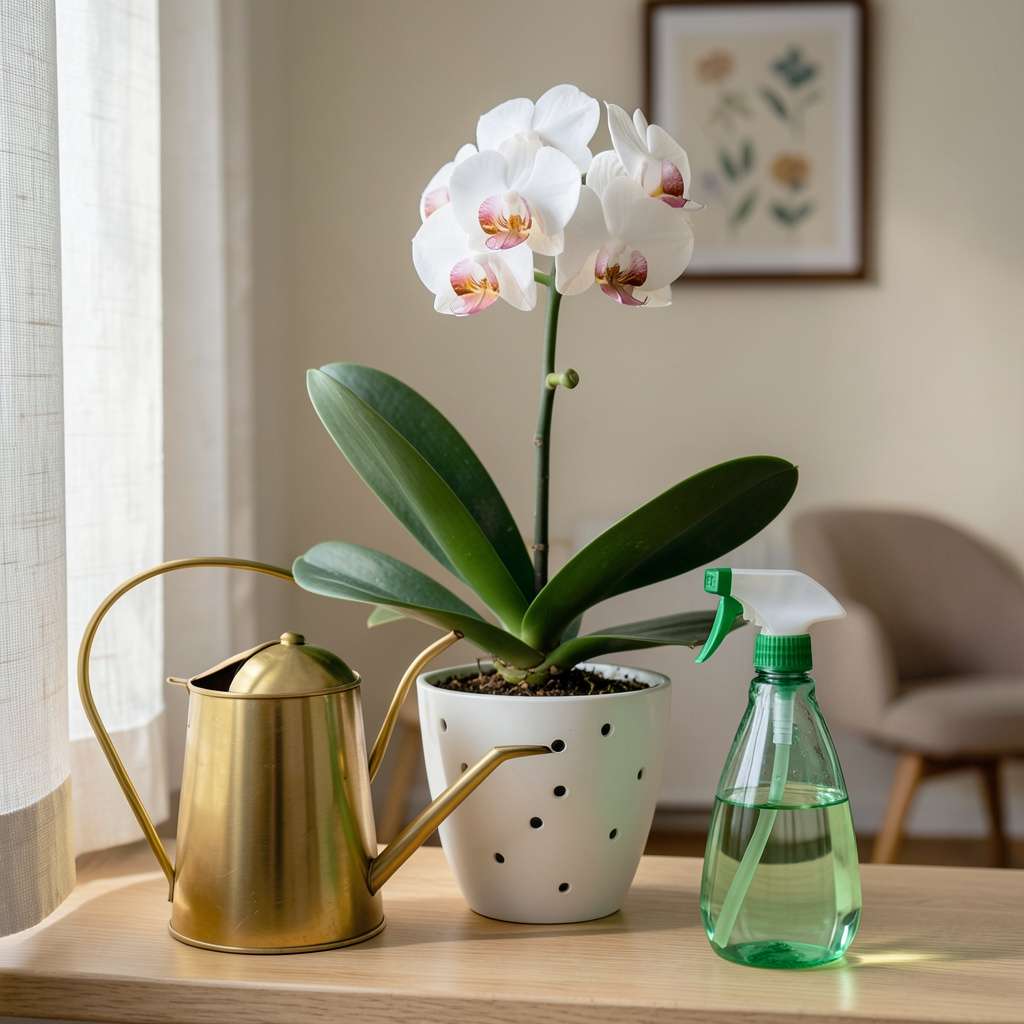
Water orchids when the potting mix is nearly dry in summer, typically every 5-7 days. Adjust based on humidity, pot size, and orchid type to prevent overwatering.
During the summer months, factors like temperature and humidity can significantly influence how often I water my orchids. 🌞 For instance, if the air is particularly dry, I may find myself watering more frequently. Additionally, different types of orchids, such as Phalaenopsis or Dendrobium, have varying moisture requirements. It’s crucial to monitor the potting mix and look for signs of stress in the plant to ensure optimal care.
Checking moisture levels with my finger helps me avoid both underwatering and overwatering. I usually prefer watering in the morning, as this allows any excess moisture to evaporate throughout the day. 🌿 Maintaining a consistent routine tailored to my specific environment keeps my orchids thriving and blooming beautifully.
💡 In This Article
The frequency of watering orchids during summer is influenced by various factors, including temperature and humidity. Orchids thrive in environments that mimic their native habitats, often characterized by warm temperatures and high humidity. When the temperature rises, evaporation from the potting medium increases, necessitating more frequent watering to prevent dryness. 🌞
For example, if the temperature consistently reaches around 80°F, I typically check the moisture levels every 5 days. However, if humidity levels drop below 40%, I might need to adjust this to every 3-4 days.
Understanding the specific moisture needs of different orchid species is essential; for instance, Phalaenopsis orchids prefer slightly more moisture compared to Dendrobiums, which enjoy drier conditions between waterings. 🌿
Identifying signs of underwatering or overwatering is crucial for maintaining healthy orchids. Yellowing leaves and wilting can indicate underwatering, while root rot often manifests as mushy, brown roots due to overwatering. Regularly inspecting the roots and leaves helps me catch these issues early and adjust my watering routine accordingly. 🔍
Another factor to consider is the pot size. Smaller pots dry out more quickly than larger ones, so I adjust my watering schedule based on the size of the potting container. For example, a 4-inch pot may require watering every 5 days, while a 6-inch pot could go 7-10 days without water. 🌱
In addition to monitoring moisture levels, I find that watering in the morning is ideal because it allows the plant to absorb moisture throughout the day while minimizing the risk of fungal diseases from excess dampness.
Using room-temperature water is also beneficial, as cold water can shock the roots, hindering their ability to absorb nutrients effectively. 💧
