
Beautiful Plants For Your Interior
Beautiful Plants For Your Interior
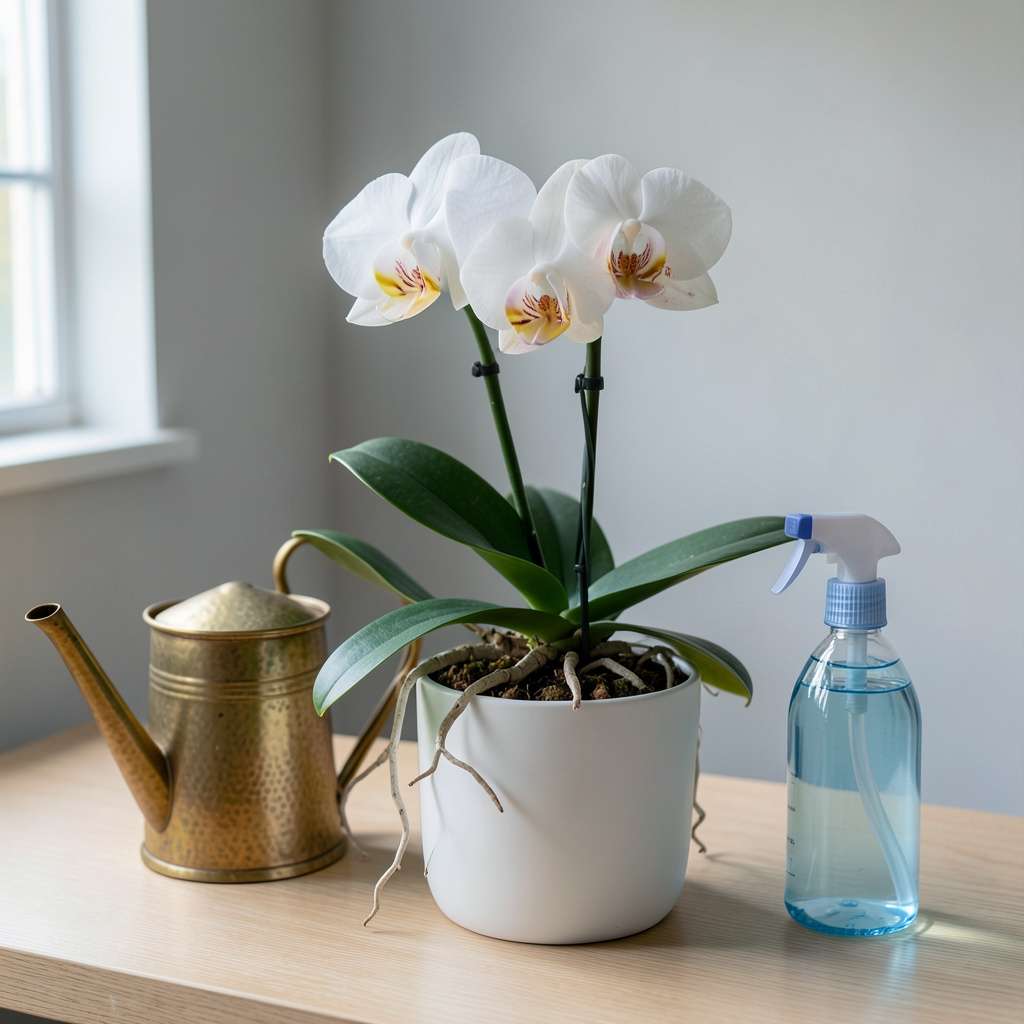
Water orchids in dry environments every 7-10 days, adjusting based on potting mix and humidity. Check roots and soil moisture before watering to avoid overwatering, which is more harmful than underwatering.
Understanding the right watering schedule is essential for maintaining healthy orchids in arid climates. 🌵 The frequency can vary depending on factors like the type of potting medium used and the humidity levels in your home. I often recommend checking the roots and soil moisture regularly to get a feel for when your plant truly needs water, ensuring it thrives without the risk of over-saturation.
Additionally, factors such as seasonal changes can impact how often you should be watering. 🌦️ For instance, during hotter months, your orchids may require more frequent hydration, while cooler periods might allow for longer intervals between watering sessions. Keeping an eye on your plant’s specific needs will lead to better growth and blooming. 🌼
💡 In This Article
The watering frequency for orchids is crucial, especially in dry environments where moisture retention becomes a challenge. Orchids possess specialized root systems designed to absorb water efficiently while minimizing loss. Their roots can adapt to arid conditions by developing a thickened outer layer, which helps reduce evaporation. 🌱
Additionally, the choice of potting mix significantly impacts moisture retention. A blend that includes bark, sphagnum moss, or perlite can help maintain humidity around the roots. For instance, a mix with approximately 30% sphagnum moss and 70% bark provides an ideal balance, allowing for adequate drainage while holding moisture effectively.
This combination can be crucial in preventing both under- and overwatering. 🌿
Overwatering can be particularly harmful in low-humidity conditions. When roots remain soggy, they are susceptible to rot, which can lead to plant death. It’s vital to monitor the orchid’s environment and adjust your watering schedule accordingly.
A rule of thumb is to check the soil every 7-10 days, but this may vary based on the specific conditions of your home. 🔍
In addition to understanding the watering needs, observing your orchid’s physical signs is essential. Leaves that appear limp or wrinkled often indicate a need for water, while overly plump leaves might suggest excess moisture. Adjusting your watering routine based on these cues will promote healthier growth and blooms. 🌼
Seasonal changes also affect how frequently you should water your orchids. During warmer months, evaporation rates increase, leading to drier soil more quickly. In contrast, cooler months often allow for longer intervals between watering sessions. Keeping a close watch on your plant’s specific needs throughout the year will ensure optimal hydration and health. 🌦️
Overall, understanding the relationship between your orchid’s root system, potting mix, and environmental factors is key to maintaining a successful watering routine.
