
Beautiful Plants For Your Interior
Beautiful Plants For Your Interior
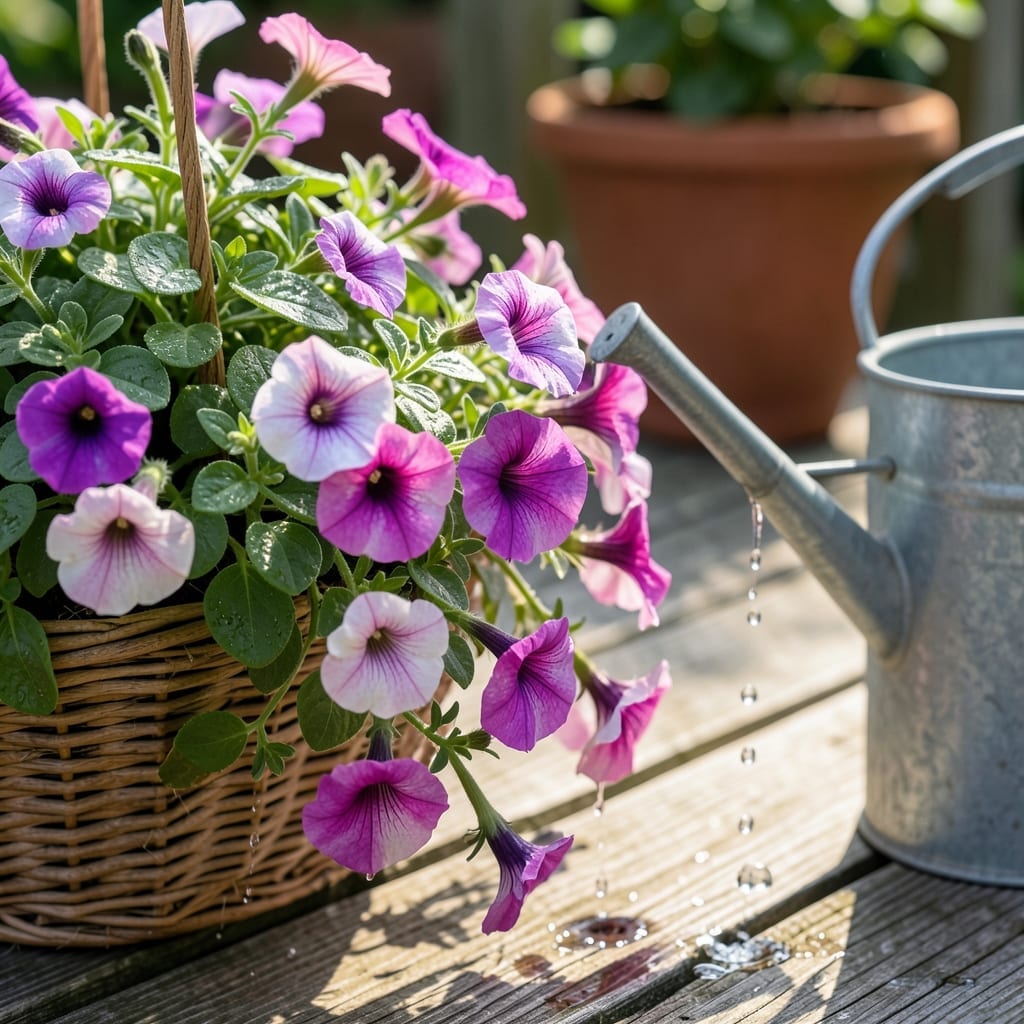
Hanging baskets can transform any space with vibrant 🪴 Hanging Baskets, but their elevated position makes proper watering a challenge many gardeners overlook.
Discover the secrets to keeping your hanging plants thriving all season long. I’ve tested countless methods to find what truly works.
Let me share the easiest way to maintain lush blooms without the guesswork. You’ll learn exactly when and how to water for the best results.
I’ve found that hanging baskets need more frequent watering than ground plants due to their exposed position and limited soil volume. This makes them dry out much faster, especially in warm weather.
The exact watering frequency depends on your plant type, the basket size, and the local climate. For example, petunias and fuchsias drink more than succulents or ivy. ☀️
| Plant Type | Water Frequency | Climate Notes |
|---|---|---|
| Petunias | Daily in heat | More in full sun |
| Ferns | Every 2-3 days | Keep moist always |
| Succulents | Weekly | Let soil dry fully |
| Ivy | Every 3-4 days | Tolerates dry spells |
| Begonias | Daily in summer | Avoid waterlogged soil |
In hot climates with temperatures above 85°F, I water my baskets twice daily—once in the early morning and again in the late afternoon. This prevents wilting and stress.
For humid areas, I reduce watering to every other day since moisture lingers longer. Always check the top inch of soil—if it’s dry, it’s time to water.
Wind exposure is another factor. Baskets on balconies or patios with strong breezes lose moisture faster. I’ve noticed my wind-exposed baskets need 25% more water than sheltered ones.
During spring and fall, I adjust to every 2-3 days as temperatures are milder. In winter, I cut back to weekly watering if the baskets are indoors or in a protected area.
Basket size matters too. My 12-inch baskets need watering more often than 16-inch ones because they hold less soil. A good rule is to water when the soil feels dry about an inch down.
Watch for signs of underwatering like drooping leaves or dry soil. Conversely, yellowing leaves or mushy stems can indicate overwatering. I use my finger to test moisture levels daily.
In my experience, consistency is key. Stick to a morning watering routine to give plants time to absorb moisture before the heat of the day. This also reduces the risk of fungal diseases that thrive in damp evening conditions. 🌿
I’ve learned that timing matters when watering hanging baskets. The best time is in the early morning before 10 AM to reduce evaporation and prevent fungal growth. 🌿
For even water distribution, I use the top-watering method with a long-spout watering can. This ensures water reaches the entire root ball without spilling over the sides.
I prefer bottom watering for my fern baskets by placing them in a shallow tray of water for 15-20 minutes. This encourages deep root growth and prevents soil erosion.
A moisture meter is my go-to tool for accuracy. I insert it 2-3 inches deep to check the root zone. If the reading is below 30%, it’s time to water.
For large hanging baskets, I use a drip irrigation system with a timer. This saves time and ensures consistent watering even when I’m away.
Finally, I always empty the saucer after watering to prevent root rot. Standing water is a common issue with hanging baskets that can quickly kill your plants. 💧