
Beautiful Plants For Your Interior
Beautiful Plants For Your Interior
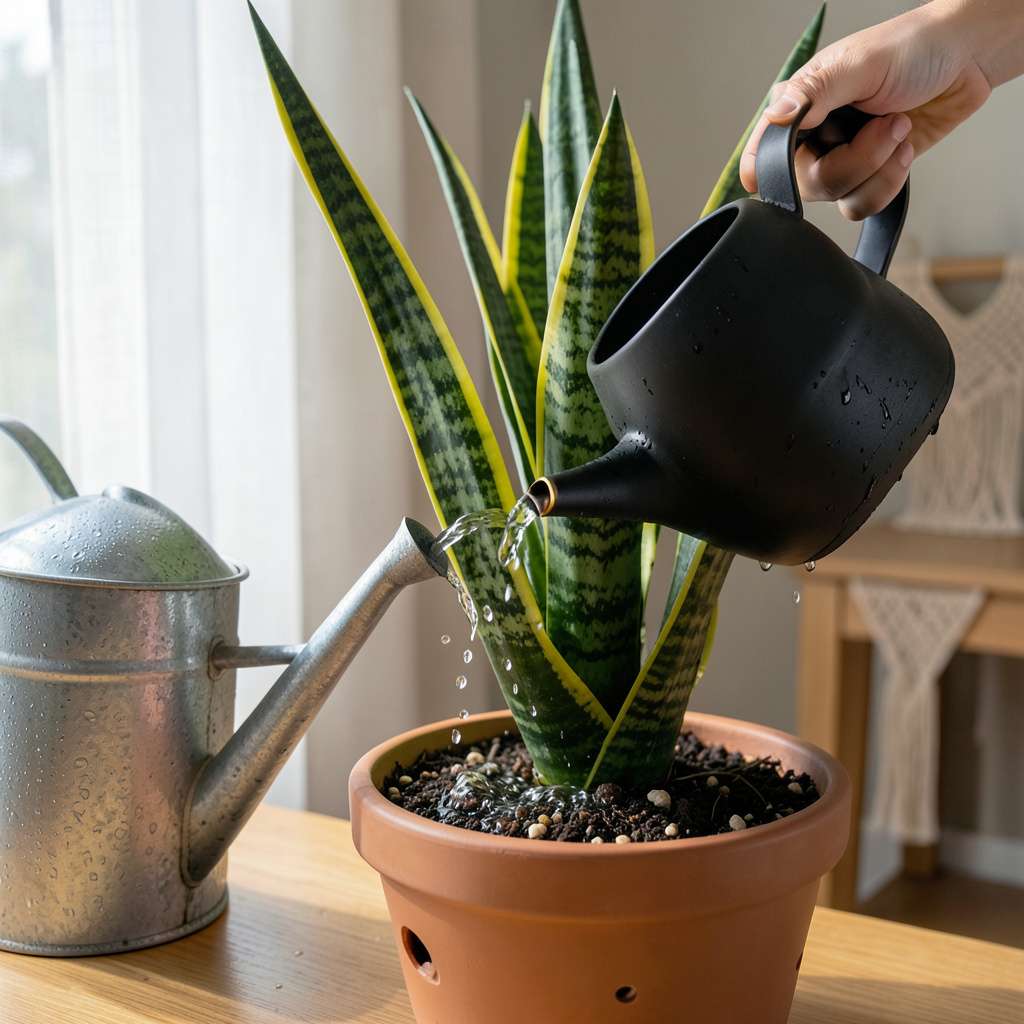
Snake plants need water every 2-8 weeks, depending on light, humidity, and season. Water only when the top 2-3 inches of soil are completely dry to prevent overwatering and root rot.
I’ve learned through years of gardening that these hardy plants thrive on neglect rather than constant attention. 🌱 Their succulent leaves store water efficiently, which explains why they can go weeks without a drink. What surprises most beginners is how dramatically their water needs shift between summer growth spurts and winter dormancy periods. I always recommend checking the soil moisture with your finger—it’s the most reliable method I’ve found for avoiding the common mistake of watering too soon.
The key is understanding your specific environment—bright windowsills dry out soil faster than dim corners, and clay pots wick away moisture differently than plastic ones. 💧 I keep a small notebook to track watering dates and plant responses, which has saved many of my snake plants from root rot over the years. This simple habit helps me adjust my care routine as seasons change and my plants grow.
💡 In This Article
The watering needs of snake plants fluctuate dramatically based on their environment. Light exposure is the biggest game-changer—plants in bright, indirect light may need water every 2-3 weeks, while those in low-light corners can go 6-8 weeks between drinks.
This happens because photosynthesis rates accelerate in brighter conditions, causing the plant to use stored water faster. 🌱
Seasonal changes transform how often you should water. During summer’s active growth phase, you might water every 3-4 weeks, but winter dormancy slows metabolism so dramatically that 6-8 week intervals become ideal. Temperature plays a role too—cooler rooms (below 60°F) reduce evaporation, while warmer spaces (above 75°F) dry soil quicker.
I’ve noticed my plants in south-facing windows need 50% more frequent watering than those in north-facing spots.
Pot material makes a surprising difference. Terracotta pots wick away moisture through their porous walls, often requiring water 25% more often than plastic containers. A 6-inch pot will dry out faster than a 12-inch pot because of the smaller soil volume.
Humidity levels matter too—plants in dry climates (below 40% humidity) may need water 1-2 weeks sooner than those in humid bathrooms. ✨
The plant’s size and maturity affect water needs. Newly potted snake plants require more frequent watering (every 2-3 weeks) as they establish roots, while mature specimens with extensive root systems can go longer between drinks.
I’ve found that variegated varieties (like ‘Moonshine’) often need slightly less water than solid green types because their white sections contain less chlorophyll for photosynthesis.
Soil composition plays a crucial role in moisture retention. Well-draining cactus/succulent mixes (with 30-40% perlite/pumice) dry out faster than standard potting soil, which can hold moisture for 2-3 extra weeks. The age of your soil matters too—fresh mixes retain water better than compacted, year-old soil that’s lost its porosity. 💧
Here’s what most people overlook: air circulation affects drying time. Plants in drafty areas or near vents may need water 30-50% more often than those in still corners. I’ve seen dramatic differences between plants on open shelves versus those tucked into bookshelves—sometimes a 2-week difference in watering frequency for identical plants in the same room!
Overwatering is the #1 killer of snake plants. When roots sit in soggy soil, they can’t breathe and develop root rot—a fungal disease that turns roots mushy and brown. You’ll notice yellowing leaves, soft stems, and a foul odor from the soil. These plants store water in their leaves, so they prefer drought over dampness.
I don’t recommend this method. While ice cubes melt slowly, they create localized cold spots that can shock sensitive roots. Snake plants prefer room-temperature water applied thoroughly until it drains from the bottom. The gradual melt also makes it hard to judge when you’ve watered enough for complete soil saturation.
During colder months, snake plants enter dormancy—like bears hibernating! Their growth slows dramatically, so they use less water. Cooler temperatures also reduce evaporation from the soil. I’ve found my plants need about 50% less water in winter compared to summer’s active growing season.
Try these no-mess tricks: Lift the pot—if it feels surprisingly light, it’s likely dry. Or tap the pot’s side—dry soil makes a hollow sound, while moist soil sounds dull. For tech lovers, inexpensive moisture meters (under $10) give precise readings without the guesswork. Just avoid the “water on schedule” approach!
Rainwater or distilled is ideal, as tap water contains minerals that build up in soil over time. If using tap water, let it sit overnight so chlorine can evaporate. For hard water areas, occasional flushing with distilled water prevents white crusty deposits on soil. I collect rainwater in clean buckets—my plants thrive on it!
