
Beautiful Plants For Your Interior
Beautiful Plants For Your Interior
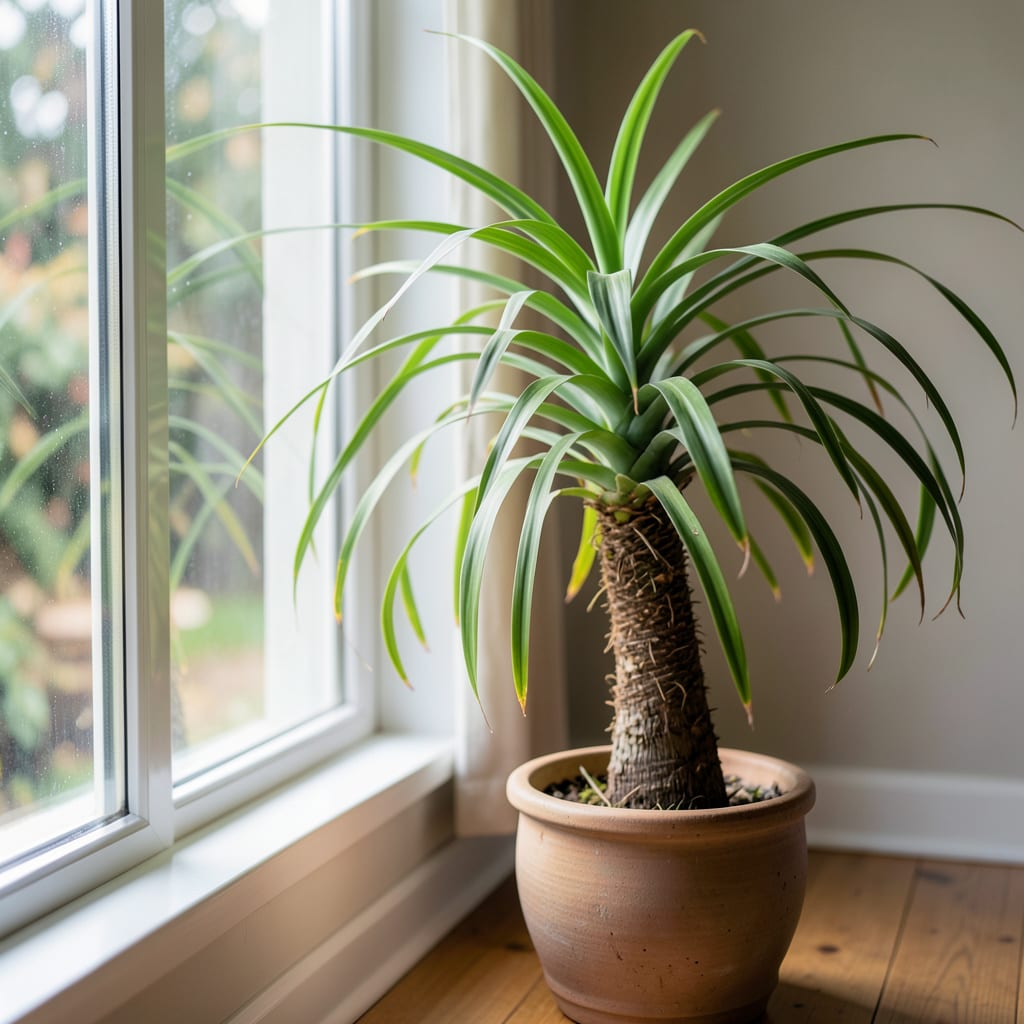
As I care for my Ponytail Palm 🌵, I’ve learned that getting its light just right is crucial. Too little, and it won’t thrive; too much, and it might even get scorched.
In USDA Zone 9b, where my plant lives, it needs 4-6 hours of bright, indirect light daily. I’ll share how to provide the perfect light conditions to keep your Ponytail Palm happy and healthy.

Ponytail plants are native to the deserts of Mexico, where they thrive in bright, indirect sunlight. In their natural habitat, they receive intense sunlight for part of the day, followed by shade or filtered light. This adaptation allows them to store water in their bulbous trunk, making them drought-tolerant 🌵.
To replicate these conditions indoors, it’s essential to understand their light preferences. Ponytail plants prefer bright, indirect light but can tolerate some direct sunlight. However, too much direct sunlight can cause leaf scorch, while too little light can lead to etiolation or slow growth.
The ideal light condition for ponytail plants is bright, indirect light for 4-6 hours daily. East or west-facing windows are perfect for providing the right amount of light without the intense midday sun 🌞.
It’s also important to note that ponytail plants can adapt to different light conditions, but their growth and appearance may vary. In low light, they may not produce as many leaves, while in too much light, they may develop leaf scorch or become stressed 🔥.
To ensure optimal growth, it’s crucial to monitor your plant’s response to its lighting conditions. If you notice any signs of stress, such as yellowing leaves or leggy growth, adjust the lighting accordingly 🌱.
In addition to natural light, ponytail plants can also benefit from supplemental lighting. Using LED grow lights can help provide the necessary light spectrum and intensity, especially during the winter months when natural light is scarce 💡.
When using supplemental lighting, ensure it’s not too intense, as this can cause stress to the plant. A general rule of thumb is to provide 12-14 hours of light per day, simulating the natural daylight hours 🌟.
Ponytail plants are relatively low-maintenance when it comes to lighting. However, being mindful of their light requirements will help you provide the best conditions for them to thrive 🌿.
By understanding and meeting the light needs of your ponytail plant, you’ll be rewarded with a healthy, thriving plant that adds beauty and interest to your indoor space 🏠.
In summary, ponytail plants require bright, indirect light for optimal growth. By providing the right light conditions and being mindful of potential issues, you can enjoy a beautiful and thriving ponytail plant for years to come 🌸.
To recap, the key takeaways for ponytail plant light requirements are: 4-6 hours of bright, indirect light, east or west-facing windows are ideal, and supplemental lighting can be beneficial during winter months 📝.
To keep your ponytail plant thriving, it’s essential to provide the right amount of light. I recommend placing it near an east or west-facing window where it can receive 4-6 hours of bright, indirect light daily 🌞.
When choosing a location, consider the time of day and the intensity of the sunlight. For example, a south-facing window can provide too much direct sunlight, especially during the peak hours of 10 am to 4 pm. To avoid leaf scorch, you may need to filter the sunlight using a sheer curtain or shade 🌟.
Rotate your ponytail plant every 1-2 weeks to ensure even growth and prevent leaning towards the light source 🔄.
If you don’t have a suitable window, you can also use artificial lighting to supplement the natural light. LED grow lights are an excellent option, as they provide the necessary light spectrum and intensity for healthy plant growth 💡.
When using artificial lighting,
It’s also important to monitor your plant’s response to its lighting conditions. If you notice any signs of stress, such as yellowing leaves or leggy growth, adjust the lighting accordingly 🌱.
In my experience, ponytail plants are relatively low-maintenance when it comes to lighting. However, being mindful of their light requirements will help you provide the best conditions for them to thrive 🌿.
To summarize, providing the right amount of light for your ponytail plant involves choosing the right window orientation, using artificial lighting when necessary, and monitoring your plant’s response to its lighting conditions 📝.
By following these tips, you’ll be able to create an optimal lighting environment for your ponytail plant, promoting healthy growth and maintaining its unique, attractive appearance 🌸.
Ponytail plants can experience several light-related issues if not properly cared for. One common problem is leaf scorch, which occurs when the plant receives too much direct sunlight 🔥.
To avoid leaf scorch, ensure your ponytail plant is placed in a spot with bright, indirect light. If you notice any signs of scorching, such as brown tips or yellowing leaves, adjust the lighting conditions accordingly 🌟.
Too much direct sunlight can cause irreversible damage to your ponytail plant’s leaves. Monitor your plant’s condition and adjust its position if necessary 🌿.
Another issue ponytail plants may face is etiolation, which occurs when they don’t receive enough light. This can cause the plant to become leggy and lose its natural shape 🌱.
To prevent etiolation, ensure your ponytail plant receives adequate light. If necessary, consider using supplemental lighting, such as LED grow lights, to provide the necessary light spectrum and intensity 💡.
When using supplemental lighting, be cautious not to overdo it, as this can also cause stress to the plant. A general rule of thumb is to provide 12-14 hours of light per day, simulating natural daylight hours 🌟.
By being aware of these common light-related issues and taking steps to prevent them, you can help your ponytail plant thrive and maintain its unique, attractive appearance 🌸.
East or west-facing windows are perfect for ponytail plants as they provide 4-6 hours of bright, indirect light daily. This direction avoids the intense midday sun that can cause leaf scorch .
Yes, you can use LED grow lights to supplement natural light, especially during winter months when daylight is scarce. Provide 12-14 hours of light per day to simulate natural daylight hours .
Watch for signs of stress: yellowing leaves or leggy growth indicate too little light, while brown tips or scorching mean too much direct sunlight. Adjust the lighting conditions accordingly .
Rotate your ponytail plant every 1-2 weeks to ensure even growth and prevent leaning towards the light source. This simple habit promotes a balanced and healthy plant .
