
Beautiful Plants For Your Interior
Beautiful Plants For Your Interior
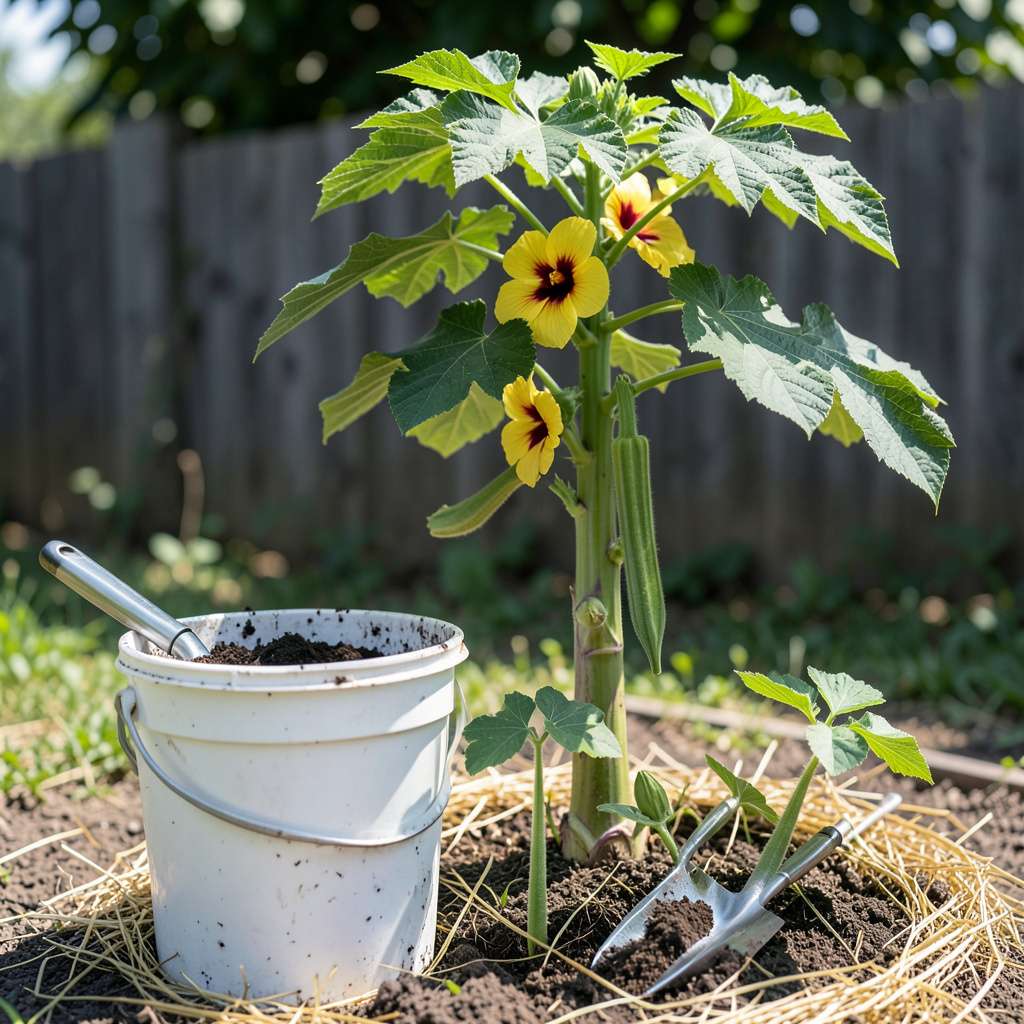
For optimal growth in a 5-gallon container, plant one okra plant per bucket to prevent root competition and ensure proper airflow. Overcrowding reduces yields and increases disease risk.
I’ve learned through years of container gardening that okra plants develop extensive root systems that need room to expand. When you try to squeeze multiple plants into a single 5-gallon container, they end up competing for the same nutrients and water resources. 🌱 This competition stunts growth and often leads to weaker stems that can’t support the heavy pods. The real magic happens when you give each plant its own space—they’ll reward you with taller growth and more abundant harvests throughout the season.
💡 In This Article
Okra plants develop an extensive taproot system that can reach 3-4 feet deep in ideal conditions, with lateral roots spreading 2-3 feet wide. In a 5-gallon container (which typically holds about 0.7 cubic feet of soil), these roots become confined and start circling.
This restriction limits nutrient uptake and water absorption, forcing the plant to divert energy from pod production to root expansion. 🌱
The science behind this is fascinating: okra roots release organic acids that help dissolve minerals in the soil. In confined spaces, these acids accumulate and can actually alter the soil pH over time, potentially making nutrients like phosphorus and iron less available.
A single plant in a 5-gallon bucket has just enough space to maintain this chemical balance, while multiple plants would create a competitive environment where all suffer.
Moisture management becomes another critical factor in containers. The limited soil volume means water drains faster and temperature fluctuations are more extreme. A single okra plant can effectively use the available moisture before it becomes stagnant, but with multiple plants, you risk either overwatering (leading to root rot) or underwatering (causing stress and reduced yields).
The ideal moisture range for okra is 60-70% field capacity, which is much easier to maintain with one plant per container.
Airflow around the foliage is equally important. Okra plants in containers need good circulation to prevent fungal diseases like powdery mildew. With one plant per 5-gallon bucket, you can space containers 18-24 inches apart to allow air movement.
Crowded plants create a humid microclimate that encourages disease development, especially in the dense foliage of okra varieties.
Consider the aboveground growth too: a mature okra plant can reach 4-6 feet tall with a spread of 2-3 feet. In containers, this means the plant’s energy goes into supporting its structure rather than producing pods.
The 1:1 ratio of plant to 5-gallon container provides the perfect balance between root space and aboveground growth potential, allowing the plant to focus on pod production rather than competing for resources. ✨
Overcrowding leads to stunted growth and reduced yields. Multiple plants compete for nutrients, water, and root space in the limited 5-gallon environment. You’ll likely see smaller pods, weaker stems, and increased susceptibility to diseases like powdery mildew.
Not recommended. Okra needs at least 5 gallons of soil volume to develop properly. Smaller containers restrict root growth, causing plants to become root-bound quickly. This stress leads to premature flowering and significantly lower pod production.
Feed every 2-3 weeks with a balanced 5-5-5 fertilizer. Container plants deplete nutrients faster than in-ground plants. I recommend liquid fertilizers for even distribution in the limited soil space. Always water before fertilizing to prevent root burn.
Add a 3-foot bamboo stake when plants reach 18 inches tall. Container-grown okra has shallower roots and is more prone to toppling. Tie the main stem loosely with soft garden twine, allowing room for growth while providing stability.
Yes, but refresh it first. Remove old roots, then mix in 30% new compost and 10% perlite. Okra is a heavy feeder that depletes soil nutrients. This replenishment ensures your second planting has the resources it needs to thrive.
