
Beautiful Plants For Your Interior
Beautiful Plants For Your Interior
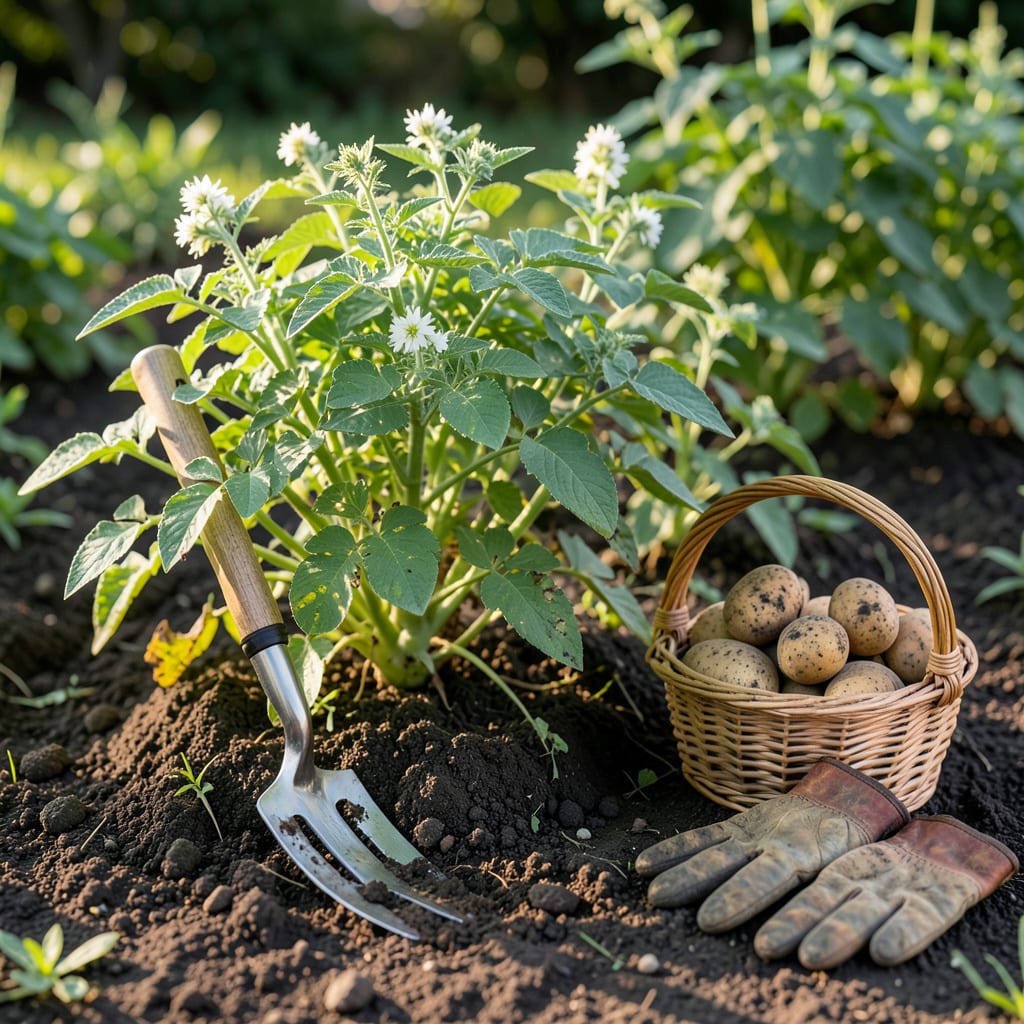
There’s nothing quite like the satisfaction of pulling fresh 🥔 Potatoes from your garden soil. But knowing exactly when they’re ready can be tricky.
I’ll show you the most reliable signs to watch for and the ideal timeframe for harvesting your crop. Let’s dig into what you need to know.


Timing your potato harvest perfectly depends on the variety you’ve planted. Early varieties like ‘Yukon Gold’ are ready in about 60-70 days, while mid-season types need 80-100 days to mature.
Late-season potatoes, such as ‘Kennebec’, can take 110-135 days. Watch for flowering and foliage yellowing as key visual cues that your spuds are nearing readiness.
| Variety Type | Days to Maturity | Key Harvest Signs |
|---|---|---|
| Early | 60-70 days | Flowers appear, small tubers |
| Mid-Season | 80-100 days | Foliage yellows, skin sets |
| Late | 110-135 days | Tops die back, thick skin |
I always check the soil temperature too. 60°F is ideal for harvesting. If it’s cooler, I wait a few more days to ensure the tubers have fully developed their protective skin.
For new potatoes, you can start harvesting as soon as 2-3 weeks after the plants have flowered. These will be smaller and have a thinner skin, perfect for immediate use.
Maincrop potatoes need more time. I wait until the foliage has completely died back. This usually happens about 2-3 weeks after the plants have finished flowering.
The skin test is crucial. Gently rub a dug-up potato with your thumb. If the skin doesn’t come off easily, it’s ready. If it does, I give them another week in the ground.
Weather conditions play a role too. I avoid harvesting during wet periods as this can lead to rot. A dry spell of a few days is perfect for digging up your crop.
Remember that storage potential improves with maturity. Early potatoes don’t store as well as fully mature ones, so I use those first. Late varieties, when properly cured, can last several months in a cool, dark place.
In my experience, morning harvesting works best. The soil is firmer, making it easier to dig without damaging the tubers. Plus, the cool temperatures help preserve freshness during the process.
Finally, always use a garden fork rather than a shovel to avoid cutting through your potatoes. I start digging about 6-8 inches away from the plant to prevent any accidental damage.
With these timing tips and visual cues, you’ll be pulling up perfect potatoes every time 🌱
Before committing to a full harvest, I always do a readiness test to ensure my potatoes are at their peak. The dig-test method is my go-to: I gently dig around the plant base with my hands.
I look for tubers that are firm and have reached the expected size for their variety. If they’re still small or have thin skin, I know they need more time in the ground.
The skin test is particularly important. I gently rub a dug-up potato with my thumb. If the skin stays firm, it’s ready. If it peels off easily, the potatoes need another week or two.
For new potatoes, I start testing 2-3 weeks after flowering. These will have thinner skins and are best used immediately. For storage potatoes, I wait until the skin is fully set and won’t come off.
I also pay attention to the foliage. When it starts to yellow and die back, that’s a clear sign the tubers are nearing maturity. But I always confirm with the dig test to be sure.
Testing a few sample potatoes from different plants gives me a good idea of the overall crop’s readiness. This way, I can plan my full harvest for when most of the tubers are at their peak 🌱
I’ve seen many gardeners rush their harvest and end up with underdeveloped potatoes. Harvesting too early means you’ll get small tubers with thin skins that don’t store well.
On the other hand, waiting too long can be just as problematic. Overmature potatoes may split in the ground or become susceptible to disease and pest damage.
⚠️ Warning: Avoid these harvest timing mistakes:
One of the biggest mistakes is ignoring weather conditions. Harvesting during rainy periods can lead to rotten potatoes and poor storage quality. I always wait for a dry spell of at least 2-3 days.
Another common error is not curing potatoes properly after harvest. I let mine sit in a dark, well-ventilated area for 1-2 weeks to toughen their skins before storage.
Finally, using the wrong tools can damage your crop. I always use a garden fork instead of a shovel to gently lift the potatoes from the soil, reducing the risk of cuts and bruises 🌱
You’ll end up with small tubers that have thin, delicate skins. These won’t store well and are best used immediately. Early harvesting means missing out on the full size and flavor potential of your crop.
Yes, overmature potatoes may split in the soil or become vulnerable to pests and diseases. They might also start sprouting or developing a tough, bitter skin. It’s best to harvest once the foliage dies back completely.
New potatoes can be harvested as soon as 2-3 weeks after flowering. Look for small tubers with thin skins, perfect for immediate cooking. They won’t store long, so use them fresh.
Morning is ideal when soil is firm and cool. This makes digging easier and helps preserve the potatoes’ freshness. Avoid harvesting in wet conditions to prevent rot.
