
Beautiful Plants For Your Interior
Beautiful Plants For Your Interior
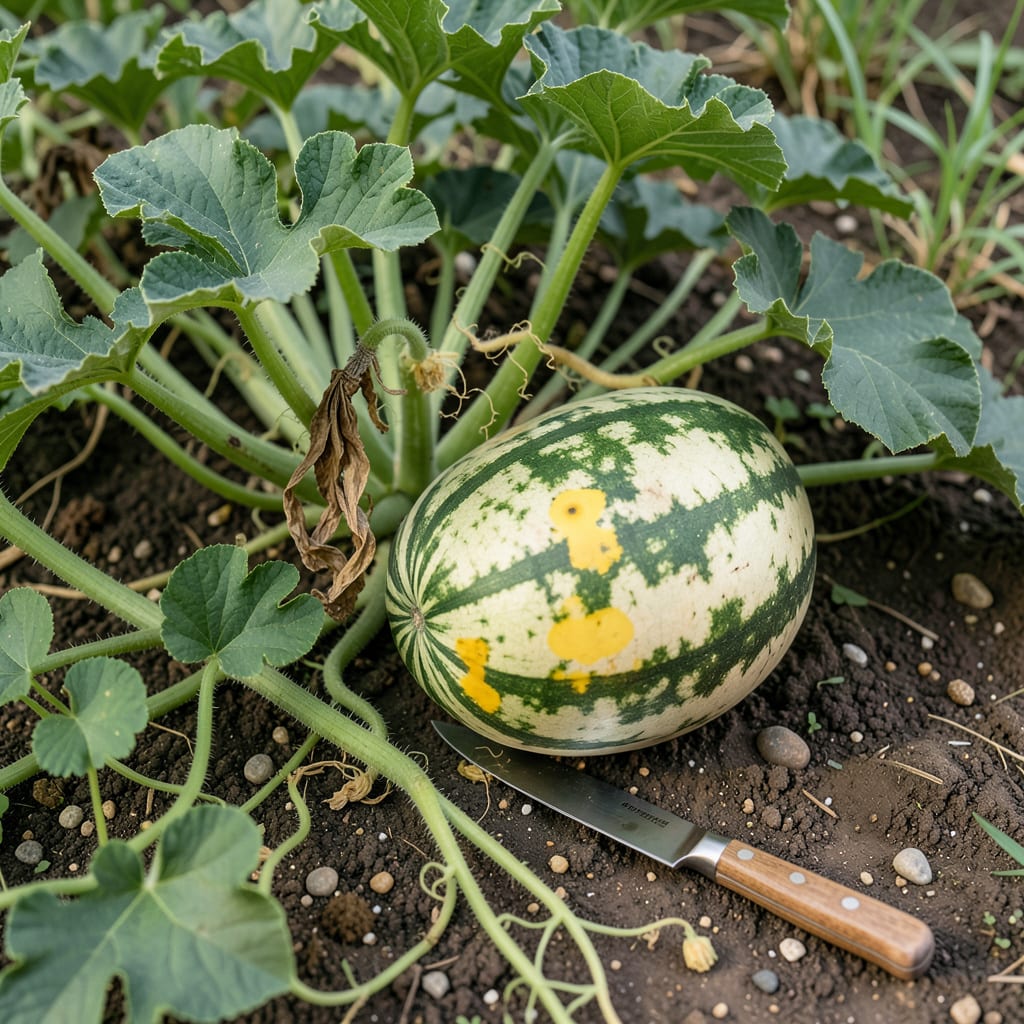
Picking a Watermelon 🍉 too early means bland flavor, while waiting too long leads to mushy fruit. Timing is everything when it comes to harvest.
I’ll show you the most reliable signs to check for perfect ripeness. From the tendril test to the hollow sound, these clues ensure peak sweetness every time.


I always check for multiple ripeness signs before harvesting my watermelons. The curly tendril near the stem is my first clue—it should be brown and dry when the fruit is ready. This is the most reliable indicator I’ve found.
The ground spot—where the melon touches the soil—should turn from white to cream or yellow. A bright white spot means it’s still ripening. I look for this change in color as confirmation.
Another sign I watch for is the rind color. A ripe watermelon loses its shiny green appearance and becomes dull or matte. Some varieties even develop a yellowish tint when fully ripe.
The hollow sound test is a classic method. I tap the melon with my knuckles and listen for a deep, hollow sound. A flat or high-pitched sound means it’s not ready yet. This takes practice, but it’s worth mastering.
Size and weight matter too. I compare my melons to the expected size for their variety. A ripe watermelon should feel heavy for its size, indicating it’s full of juice and sugar.
I also check the stem connection. If the stem separates easily with a gentle twist, it’s a good sign the fruit is ready. However, I avoid pulling the stem off completely, as this can damage the vine.
For seedless varieties, I rely more on the tendril and ground spot since they may not produce the same hollow sound. The tendril method is especially reliable for these types.
Timing is everything. Most watermelons take 70 to 100 days to mature, depending on the variety. I start checking for ripeness signs about 10 days before the expected harvest date.
Finally, I always harvest in the morning when temperatures are cooler. This helps preserve the fruit’s sweetness and texture. Using a sharp knife or pruners, I cut the stem cleanly, leaving a small portion attached to the melon.
☀️I always rely on the hollow sound test as my go-to method for checking watermelon ripeness. It’s a simple tap-and-listen technique that reveals whether the fruit is ready to pick.
This method works because the internal structure changes as the watermelon matures, producing a distinct hollow echo when tapped. It’s especially useful for large watermelons where visual signs might be subtle.
💡 Pro Tip: Tap the watermelon with your knuckles. A ripe watermelon produces a deep, hollow sound. If it sounds dull or flat, it’s not ready yet.
When performing the test, tap the watermelon’s side rather than the top or bottom. The side gives the clearest indication of ripeness. I also recommend testing several fruit to compare sounds.
A hollow sound means the watermelon is at peak sweetness. A metallic or high-pitched sound indicates it’s underripe, while a dull thud suggests it may be overripe.
This technique works best in quiet outdoor settings where you can clearly hear the sound. I find it most effective in the early morning when the garden is calm.
Combine this method with visual cues like dull rind color and a cream-colored ground spot for the most accurate results. This multi-sensory approach ensures you’ll never pick an unripe watermelon again ✂️
Different watermelon varieties show ripeness in unique ways. I’ve learned that seeded watermelons often give a clearer hollow sound when tapped, while seedless types may need closer visual checks.
For Sugar Baby and other small varieties, the ground spot turns deep cream or yellow when ready. I always check this first since their smaller size can make other signs harder to spot.
| Variety | Key Ripeness Signs | Best Test Method |
|---|---|---|
| Seeded (Crimson Sweet) | Dull rind, brown tendril, hollow sound | Hollow sound test |
| Seedless (Triple Crown) | Cream ground spot, dry tendril | Tendril + ground spot |
| Mini (Sugar Baby) | Deep yellow ground spot, easy stem separation | Ground spot + stem check |
Crimson Sweet varieties often have a very pronounced hollow sound. I tap several melons to compare, listening for the deepest echo. The tendril test works well too, but I prefer sound for these.
With seedless watermelons, I focus on the tendril and ground spot since they often lack the classic hollow sound. The ground spot turning cream or yellow is my most trusted sign for these types.
For all varieties, I check multiple indicators to be sure. Combining the tendril, ground spot, and rind color gives me confidence I’m picking at the perfect time 🌱
The curly tendril near the stem should be brown and dry. If it’s still green and flexible, the melon needs more time. This is the most reliable visual sign I check first.
A ripe watermelon’s ground spot turns cream or yellow. A white or pale green spot means it’s not ready yet. This color change confirms the fruit has matured on the vine.
It works best for seeded varieties. For seedless types, rely more on the tendril and ground spot since they may not produce as clear a hollow sound. Always combine multiple tests for accuracy.
Check in the early morning when it’s cool and quiet. This is when the hollow sound test is most effective, and the fruit’s ripeness signs are easiest to spot.
