
Beautiful Plants For Your Interior
Beautiful Plants For Your Interior
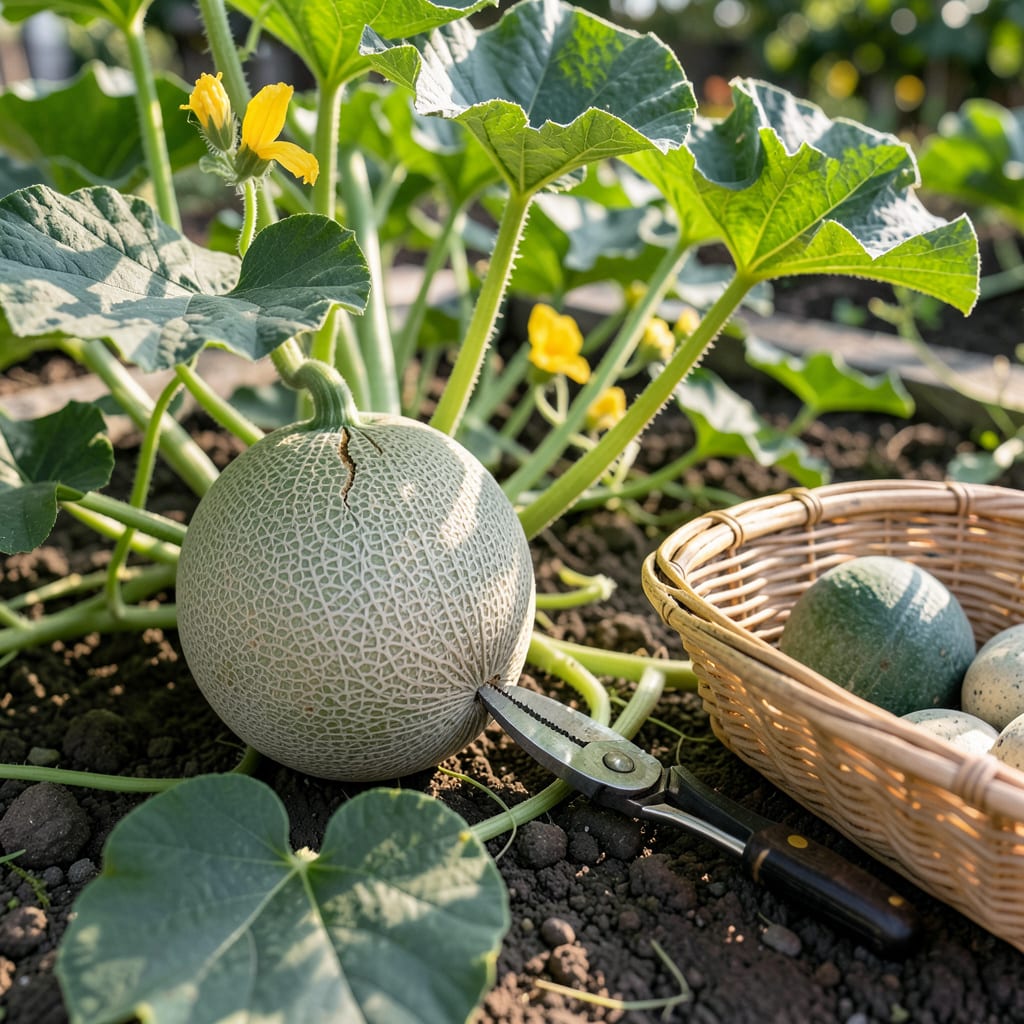
Picking a 🍈 Cantaloupe at the perfect moment means the difference between bland disappointment and sweet, juicy perfection. Knowing the right signals ensures you harvest melons bursting with flavor every time.
I’ll show you exactly how to spot the key signs of ripeness—from stem slip to scent—that guarantee your cantaloupes are ready to enjoy.


Timing your cantaloupe harvest perfectly starts with watching the stem. The most reliable sign is the “full slip” stage, where the stem detaches easily with gentle pressure.
I always check for color changes too. The rind under the netting should turn from green to tan or yellowish-beige when ready. This visual cue is hard to miss once you know what to look for.
| Ripeness Sign | What to Look For |
|---|---|
| Stem Slip | Detaches easily with gentle pull |
| Rind Color | Cream or yellow under netting |
| Netting Texture | More pronounced and rough |
| Scent | Strong, sweet aroma at stem end |
The netting on the skin becomes more pronounced and rough as the fruit matures. This texture change is a great secondary indicator to confirm what the stem and color are telling you.
Don’t overlook the aroma test. A ripe cantaloupe will have a strong, sweet smell at the stem end. If it lacks scent, it’s not ready yet, no matter how good it looks.
I’ve found that morning harvesting gives the best flavor, as the fruits are at their peak hydration after a cool night. This small timing detail can make a noticeable difference in sweetness.
Remember that size alone isn’t a reliable indicator. Some varieties stay small while others grow large, so focus on the ripeness signs we’ve discussed rather than measurements.
The blossom end (opposite the stem) should yield slightly when pressed with your thumb. This gentle give signals the fruit has reached proper internal softness.
For first-time growers, I recommend checking melons daily once they near maturity. The transition from not-ready to perfectly ripe can happen surprisingly quickly, sometimes within 24 hours.
Finally, trust your senses. The combination of visual cues, tactile feedback, and aroma will never lead you wrong when determining if your cantaloupe is ready to pick. 🌱
Many gardeners pick too early, missing the full slip stage where the stem detaches easily. This often results in underripe fruit that lacks sweetness and proper texture.
Another common error is ignoring the stem entirely. The stem connection is your most reliable indicator, yet some rely solely on color or size, which can be misleading depending on the variety.
⚠️ Warning: Don’t judge ripeness by size alone. Some cantaloupes stay small while others grow large. Always check the stem, color, and scent first.
I’ve seen gardeners overlook the blossom end, which should yield slightly when pressed. This tactile test is simple but often forgotten in the excitement of harvest time.
Some growers make the mistake of harvesting in the heat of the day. For best flavor, pick your cantaloupes in the cool morning hours when they’re most hydrated.
Another pitfall is waiting too long after the full slip stage. Once the stem detaches easily, the fruit is ready and won’t continue ripening on the vine.
Finally, don’t rush the process. Cantaloupes typically need 75-85 days from planting to harvest. Picking too early means missing out on that perfect sweetness. 🌱
Testing your cantaloupe for ripeness is simple with the thumb test. Press gently on the blossom end (opposite the stem) – it should yield slightly when ready.
I always start with the scent check. A ripe cantaloupe emits a strong, sweet aroma at the stem end. If there’s no smell, it needs more time on the vine.
The tap test is my favorite backup method. Gently tap the melon and listen for a deep, hollow sound – this indicates proper ripeness inside.
For best results, I combine all three tests. The thumb test confirms internal softness, the scent check verifies sugar development, and the tap test ensures overall ripeness.
The stem detaches cleanly with gentle pressure when ready. If it resists, the fruit needs more time on the vine.
No, size varies by variety. Always check the stem, color under the netting, and scent. Size alone can be misleading.
Underripe melons have a green rind under the netting, no sweet aroma, and a stem that won’t detach easily.
Yes! Picking in the cool morning ensures the fruit is fully hydrated and sweeter.
