
Beautiful Plants For Your Interior
Beautiful Plants For Your Interior
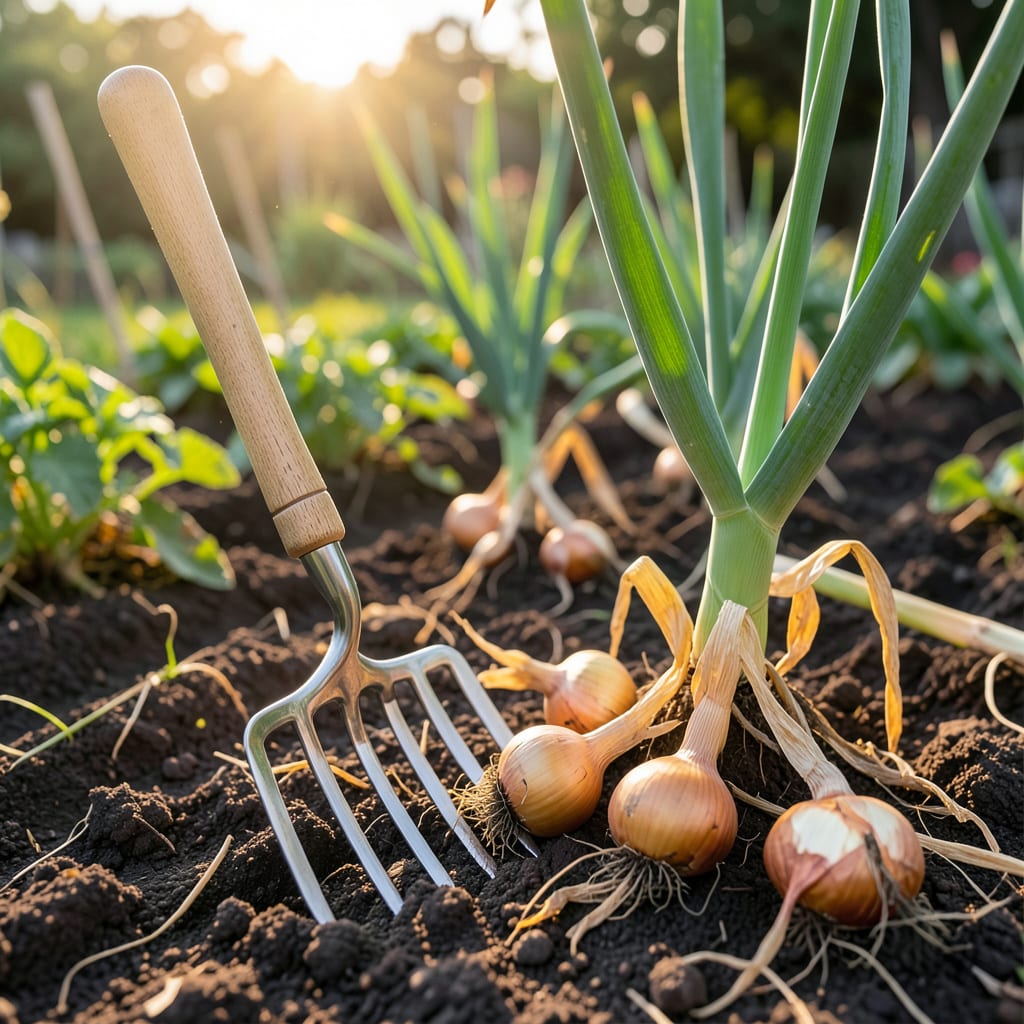
Harvesting Onion 🧅 at the perfect moment can transform your garden yield. Many gardeners struggle with knowing when these bulbs are truly ready to leave the soil.
I’ve learned that missing the right window can affect both flavor and storage life. Let me show you the key signs to watch for so you never guess again.


Timing your onion harvest perfectly starts with watching the foliage closely. When the green tops begin to yellow and flop over, it’s the first clear signal that your bulbs are nearing maturity.
Another key indicator is the neck softening. As onions mature, the neck just above the bulb becomes weak and papery rather than thick and firm. This change happens about 1-2 weeks after the tops start yellowing.
| Sign | Appearance | What It Means |
|---|---|---|
| Tops yellowing | Green leaves turn brown/yellow | Energy redirecting to bulb |
| Tops falling over | Stems collapse naturally | Maturity nearly complete |
| Neck softening | Neck becomes weak and papery | Bulb has finished growing |
| Skin drying | Outer layers turn papery | Ready for curing |
The bulb itself offers important clues too. A mature onion will have dry, papery outer skins that rustle when touched. This papery coating helps protect the bulb during storage.
For size verification, gently brush away soil to check the bulb diameter. Most mature onions reach 2-4 inches across, though this varies by variety. Short-day onions often mature slightly smaller than long-day types.
I always check for uniform maturity across the bed. If 80% of plants show these signs, it’s time to harvest the entire crop. This prevents some bulbs from becoming overmature while others stay underdeveloped.
Remember that weather conditions can accelerate these signs. In hot, dry climates, onions may mature 1-2 weeks earlier than in cooler areas. Always prioritize the plant’s signals over calendar dates.
Once you see these combined signs—yellowing tops, soft necks, and dry skins—your onions are ready. Harvest on a sunny morning when the soil is dry for the best results.
After pulling, let them cure in the sun for 2-3 days before moving to a dry, airy space. This curing process is crucial for long-term storage and prevents rot.
With these clear visual cues, you’ll never question onion harvest timing again. Your bulbs will reward you with maximum flavor and storage potential 🌱
Your onion harvest timing isn’t just about plant appearance—it’s heavily influenced by climate and variety. I’ve found that short-day onions mature faster in warmer southern climates, often ready in 60-90 days.
Long-day onions thrive in northern regions with 14+ hour daylight, typically needing 90-120 days to reach full maturity. This daylight sensitivity is why your location matters so much.
In hot, dry summers, I notice onions often mature 10-14 days earlier than expected. The stress of drought can cause tops to yellow prematurely, so check for true maturity signs before pulling.
Conversely, in cool, wet springs, onions may take extra time to develop. I always recommend extending the growing season by 1-2 weeks in these conditions while watching for the classic visual cues.
For green onions, timing is different. These can be harvested at any size, but for best flavor, I pull them when tops are 6-8 inches tall and stems are pencil-thick.
Remember that local microclimates can create variations even within your garden. I’ve seen south-facing beds produce mature onions a week earlier than north-facing ones in the same yard.
By understanding these environmental influences and variety characteristics, you can fine-tune your harvest timing for optimal results every season 🌱
Even experienced gardeners sometimes mishandle onion harvests, leading to poor storage life or reduced flavor. One of the most common errors I see is harvesting too early, before the necks soften and skins dry.
Another frequent mistake is waiting too long. Overmature onions may split open or start regrowing, which ruins their keeping quality. I always check plants daily once they near maturity to catch the perfect window.
Harvesting wet onions: Always wait for dry soil to prevent rot during curing.
Improper curing: Onions need 2-3 days of sun exposure before storage.
Rough handling: Bruised bulbs spoil faster—handle with gentle care.
I’ve also learned that watering too close to harvest time causes problems. Stop watering 1-2 weeks before pulling to let the outer skins dry properly. This simple step prevents mold growth during storage.
Many gardeners forget that green onions require different handling. Unlike mature bulbs, these should be harvested young and used fresh, as they don’t store well. Pull them when tops are 6-8 inches for best texture.
Finally, don’t overlook storage conditions. Even perfectly harvested onions will spoil quickly in humid or warm environments. I store mine in mesh bags in a cool, dry place for maximum shelf life.
Avoiding these common mistakes ensures your hard work in the garden translates to long-lasting, flavorful onions 🌱
Harvesting before tops yellow and necks soften results in underdeveloped bulbs with thin skins. These won’t store well and may spoil within 2-3 weeks instead of months.
Wait for soil to dry completely first. Wet onions are prone to rot during curing. I recommend harvesting on a sunny morning when both soil and foliage are dry.
Most mature bulbs show yellowing tops and soft necks, but green onions are ready when tops reach 6-8 inches. Short-day types may mature slightly smaller than long-day varieties.
Once fully mature, bulbs can stay in soil for 1-2 weeks if weather is dry. But don’t wait too long—overmature onions may split or begin regrowing, reducing storage life.
