
Beautiful Plants For Your Interior
Beautiful Plants For Your Interior
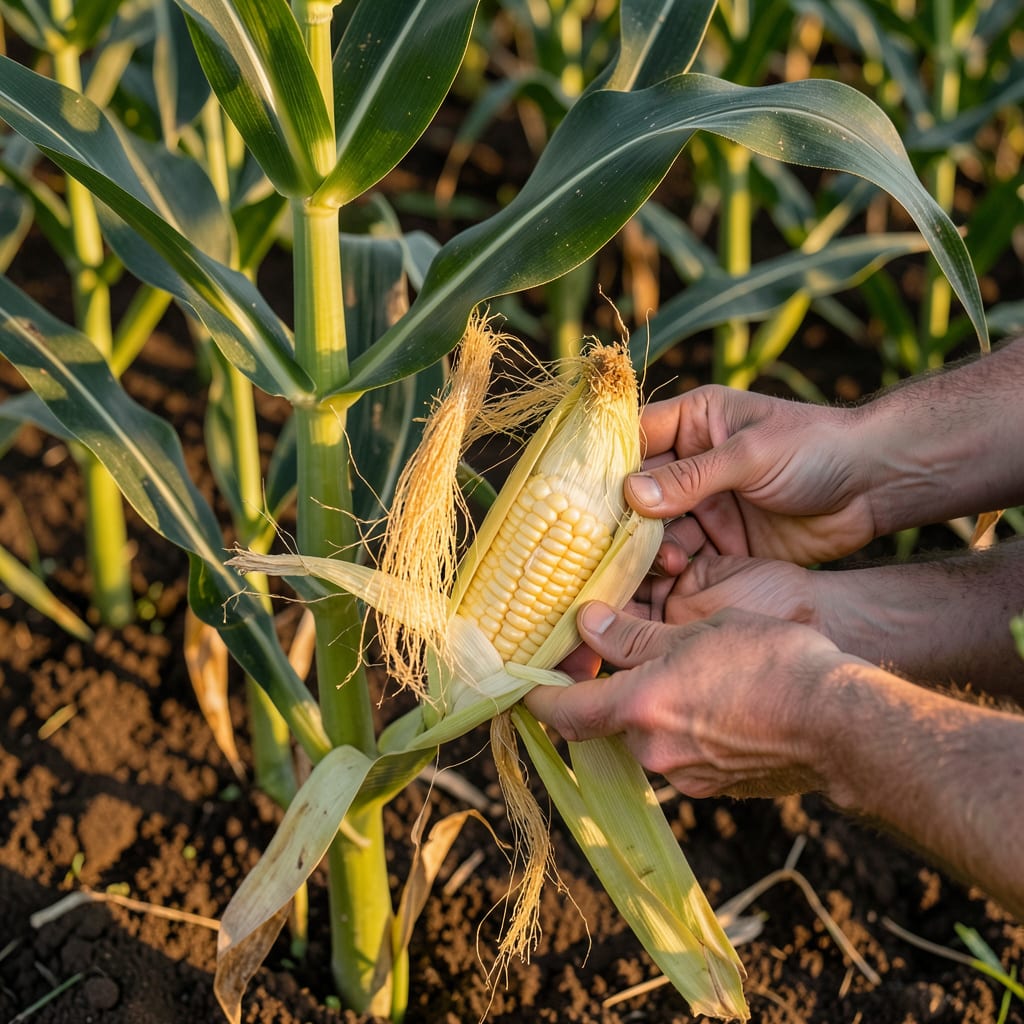
Picking Sweetcorn 🌽 at just the right time makes all the difference between a juicy, sweet bite and a starchy disappointment. Timing is everything with this garden favorite.
I’ll show you the easiest way to test for perfect ripeness and the visual cues that guarantee your harvest will be bursting with flavor. Let’s get started.


Timing your sweetcorn harvest perfectly is the key to that burst of sweetness we all crave. The kernel milk test is my go-to method for determining peak ripeness with absolute certainty.
This simple technique involves piercing a kernel and observing the liquid that comes out. When it’s milky white, your sweetcorn is at its sweetest and ready to pick.
I always check several ears of sweetcorn on the same plant because they don’t all mature at exactly the same time. This ensures I don’t miss any that are ready.
The milky liquid you see is actually the sugars converting to starch. This is the ideal stage for eating fresh from the garden. If the liquid is clear, the kernels aren’t fully developed yet.
Another sign to look for is the silk color. When the silks turn from yellow to brown and dry, it’s usually time to test the kernels. This visual cue works well with the milk test.
I’ve found that early morning is the best time to harvest sweetcorn. The cooler temperatures help preserve the sweetness until you’re ready to enjoy it.
The ear should feel firm when you squeeze it gently. If it feels soft or the kernels are dented easily, it might be overripe. The husk should still be green and tightly wrapped.
Remember that sweetcorn varieties can have slightly different maturity times. Check your seed packet for the expected days to harvest, but always verify with the milk test.
With practice, you’ll develop an eye for spotting perfectly ripe sweetcorn at a glance. But I still rely on the milk test for that final confirmation before picking. ☀️
Beyond the kernel milk test, there are several visual cues that help confirm your sweetcorn is at peak ripeness. These signs are easy to spot once you know what to look for.
I always check the silk color first. When the silks turn from bright yellow to a dry, brown shade, it’s a strong indicator that the ear is maturing nicely.
| Sign | Appearance |
|---|---|
| Silk | Brown and dry |
| Husk | Green and tight |
| Ear | Firm and plump |
| Kernels | Full and rounded |
The ear angle is another helpful sign. When sweetcorn is ready, the ear often begins to droop slightly from the stalk, making it easier to spot in the garden.
I also look at the husk condition. A fresh, green husk that’s tightly wrapped around the ear is a good sign. If the husk is yellowing or drying out, the corn may be past its prime.
Another visual indicator is the kernel development. When you gently press on the husk, you should feel round, plump kernels inside. They should feel full and uniformly sized.
Combining these visual signs with the milk test gives me the most accurate assessment. This way, I never miss the perfect harvesting window for my sweetcorn. 🌽
Harvesting sweetcorn at the wrong time can turn a potentially perfect crop into a starchy disappointment. One of the most common mistakes I see is picking too early when kernels are still watery and underdeveloped.
Another frequent error is waiting too long, resulting in overripe ears that are tough and less sweet. The sugars start converting to starch as soon as the corn is picked, so timing really is everything.
Avoid these common mistakes: picking in hot afternoon sun, ignoring silk color changes, or harvesting when kernels are dented. Always use the milk test to confirm.
I always recommend harvesting in the early morning when temperatures are cooler. This helps preserve the natural sweetness of the kernels until you’re ready to use them.
Improper handling after picking can also affect quality. I gently hold the ear by the husk and avoid squeezing too hard, which can damage the kernels and reduce their shelf life.
It confirms peak sweetness. When pierced kernels release milky liquid, the sugars are at their highest concentration. Clear liquid means it’s too early, while thick paste indicates it’s overripe.
Brown, dry silks signal the ear has finished pollination and kernel development. This color change typically occurs 20-25 days after silks first appear. Always pair this with the milk test for confirmation.
It’s not ideal. Harvest in early morning when temperatures are cooler to preserve sweetness. Afternoon heat accelerates sugar-to-starch conversion, reducing flavor and quality.
Keep them unshucked in the refrigerator for 1-2 days maximum. For best flavor, cook and eat within hours of picking. The sugars begin converting to starch immediately after harvest.
